by Michael Liss
Some may belittle politics, but we know, who are engaged in it, that it is where people stand tall. And although I know it has its many harsh contentions, it is still the arena that sets the heart beating a little faster. And if it is on occasions the place of low skullduggery, it is more often the place for the pursuit of noble causes, and I wish everyone, friend or foe, well, and that is that, the end. —Tony Blair, ending his last PMQ, June 27, 2007

Yes, that was Tony Blair, the man everyone loves to hate, but in those few short words, he managed to capture the highs and lows of a democratic system. Politics can be rough and tawdry, but debates can be substantive, goals high, and accomplishments, perhaps not as high, but still advancing the good of the many. In the end, you fight like cats and dogs, but you shake hands, accept the verdict, and prepare yourself for the next battle.
This belief, that there is always next time, is predicated on three key assumptions—that, in our system, there is, in fact, always a next time, that even winning coalitions will screw up enough to ensure that the next time may be viable, and that the loser (if the incumbent) will cooperate in the orderly transition of power.
That is the theory, and, for most of our history, that has also been the reality. Winning coalitions stay winning because they deliver policies that a majority support. They fray when internal discipline breaks down (usually because of unsatisfied desires or ambitions), and/or when they become so sclerotic, doctrinaire, or just wrong that enough of the public rejects them. Lincoln’s election in 1860 reflected a reality that the disparate needs of North and South could no longer be reconciled within the status quo. FDR’s trouncing of Hoover was the rational judgment of the voters that Hoover had simply failed, and would continue to fail. Trump’s victory in 2016 was a reminder of not only Hillary Clinton’s flaws as a candidate, but also Barack Obama’s shortcomings as a President. As much as I admired Obama, he didn’t do enough for enough people to earn transferable loyalty during a time when, as my friend Bill Benzon notes, the tectonic plates were moving. The voters really do choose. Read more »

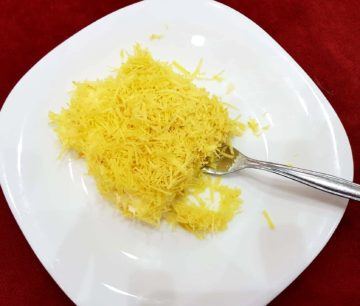 In the summer of 1977 my father invited me to tea at the Hotel Grande Bretagne in Athens. I had turned 13 that spring, and instead of a bar mitzvah, prohibited by matrilineal descent and an antipathy to organized religion, my father and I were en route to Israel, to visit the kibbutz where he had worked in the mid-1950s. We had flown from Vancouver to Amsterdam, proceeded by train to Rome, and continued by rail across Italy to Brindisi, by ferry to Patras, and by coach to Athens. From there we would eventually embark, at Piraeus, on the crossing to Haifa; for the moment we were enjoying some sightseeing in the Greek capital.

 I’ve long been partial to Portuguese culture, so when Portugal transferred its last colonial holding, Macau, back to Chinese rule in 1999 , a friend surprised me with his marveling reaction: “Portugal had an empire? Who knew?”
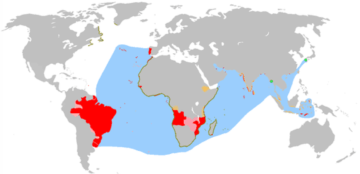 The Portuguese initiated the transatlantic slave trade in 1444, which has bedeviled and tormented much of the world ever since. Sixty years later, the Viceroy Alfonso Albuquerque expanded Portuguese power not only as exploration for economic reasons, but as a brutal crusade against Islam. By 1580, the empire extended from Brazil to Africa, from India to Malaysia and on to the Indonesian island of Timor.

 White Americans get a lot of things wrong about race. And not just the relatively small number of blatant white supremacists, or the many millions (



 Not long ago, a reader complained, politely but firmly, about your humble author’s regrettable tendency to post something called “Blah blah blah pt. 1” and then never get back to it for part two, in particular the post about history, wondering if possibly I thought no one would notice that I had left it hanging. I admit the fault, but I assure my patient reader, or possibly readers, that I do indeed intend to finish each and every one of my multipart posts, and even to make clear how they are related to each other. (That’s the intent, anyway.) So fear not! (I do have to read some more history though … !) This time, though, I finish a different sort of multipart post: my end-of-2020 podcast. Plenty of unfamiliar names, even to me, but some great stuff! As always, widget and/or link below.
 Do you have a right to own a microwave oven? To be clear, ideally in a free society, absent a clear showing of harm to others, there’s a presumption that you can do whatever you want and own whatever you can make or buy. So, you do have a basic right to own things – to acquire property, as political philosophers like to say. But it’s consistent with that right for there to be a lot of rules and regulations around what you can own – and even prohibitions on owning certain kinds of things.


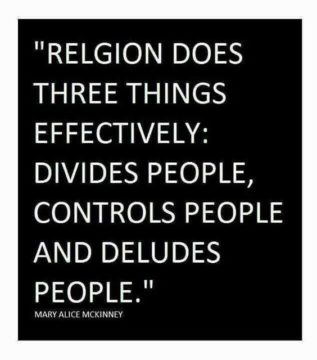 For those of us who classify ourselves as Nones—