
by Adele A Wilby
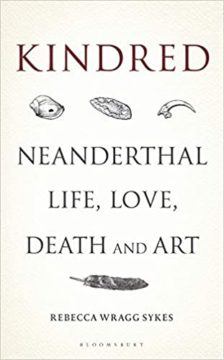 The presence of covid-19 running amok amongst us has momentarily disrupted the perimeters of our lives. That two, three, or possibly four generations are not always able to gather together under one roof has given rise to greater appreciation of the family.
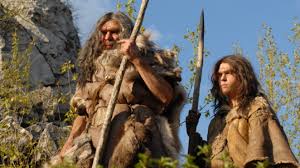
Those four generations that meet or live together frequently span the scope of living memory; anything beyond is found in fading photos, objects that have become family heirlooms, or indeed the tradition of oral family history. But while the existence of three generations gathered under one roof might seem normal today, it is however an extremely limited understanding of the ‘family’ when we consider the generations that have made up the existence of related hominins on the planet; they literally amount to thousands. Learning about these past generations of kindred has been for me therefore, a refreshing read over the holiday period. Rebecca Wragg Sykes has to be applauded for realising one of the purposes of writing her book Kindred, Neanderthal Life, Love, Death and Art which she says, is for ‘those who’ve heard of Neanderthals or not…’
As a curious amateur eager to learn more about out kindred and indeed the work of archaeologists, any hesitation that jargon and too much information might be overwhelming and a turn off as I read the book, was quickly dispelled. Her obvious literary talent manifests so patently in the opening paragraph of the book. ‘Time is devious’, she tells us, ‘…as we exist in a continuously flowing stream of “now”’ How right she is, and so is her view that ‘comprehending the scale of time on an evolutionary, planetary, cosmic level remains almost impossible…’ Despite the profound complexity of the human brain, it would seem at this period in human history, or human evolution, its potential remains limited. Indeed, for Sykes ‘comprehending the gobsmacking hugeness of deep archaeological time…’ is equally as challenging. Nevertheless, her opening paragraph highlights our ‘now’ within the grand scheme of the existence of hominins on the planet and such a prospect is not only exciting but generates in the reader an appetite for what lies ahead in the pages to come, and for me she delivers a fascinating account about other hominins who came before us: the Neanderthals. Read more »
 1. “A more perfect union.” The Founders expressed a breezy confidence, didn’t they? As if such a thing were possible – the distant states cohered into a nation; the various occupants working it all out. Loyal. Collaborative. Taking part in the common welfare. While remaining, of course, individual and autonomous and free, free, free. (Certain restrictions applied.)
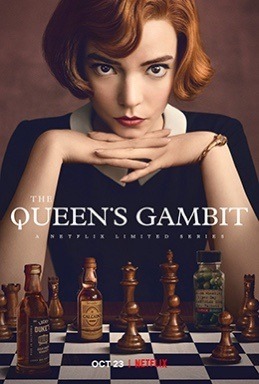 Two series have been streaming recently, to considerable success – The Queen’s Gambit (a Netflix miniseries, now concluded) and Succession (HBO, two series so far and more planned). They are interesting for a number of reasons – both for what they show, and perhaps more for what they do not, possibly cannot, show. So let’s consider some of the things we see and don’t see. I’m not going to recount the plot of either of them, as you can get that from Wikipedia and plenty of other places. But: spoiler alert: some will be divulged. Let’s look first at The Queen’s Gambit.


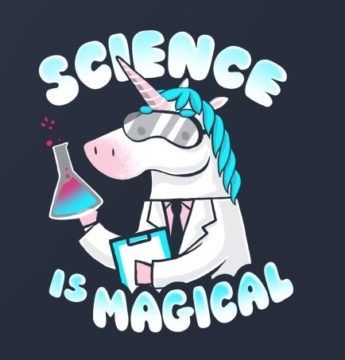 I think it is fair to say that we usually see science and magic as opposed to one another. In science we make bold hypotheses, subject them to rigorous testing against experience, and tentatively accept whatever survives the testing as true – pending future revisions and challenges, of course. But in magic we just believe what we want to be true, and then we demonstrate irrational exuberance when our beliefs are borne out by experience, and in other cases we explain away the falsifications in one way or another. Science means letting what nature does shape what we believe, while magic means framing our interpretations of experience so that we can keep on believing what feels groovy.
 Let me recommend a New Year resolution, in case you don’t have one yet: Be nicer to people you disagree with.