by Emrys Westacott
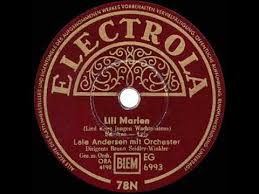 Lili Marleen is one of the best known songs of the twentieth century. A plaintive expression of a soldier’s desire to be with his girlfriend, it is indelibly associated with World War II, in part because it was popular with soldiers on both sides. It was first recorded by the German singer Lale Anderson in 1939. The Nazi propaganda minister Joseph Goebbels disliked the song and initially banned it from the radio, probably because it expresses a preference for staying at home rather than going off to war. But in 1941 he granted a Belgrade-based radio station in German-occupied Yugoslavia permission to broadcast it. Apparently, Rommel, commander of the German troops in North Africa, liked the song, Goebbels relented, and soon Radio Belgrade (which had a very limited supply of disks available) was playing it every night as their sign-off tune. It quickly became popular with both German and allied forces. Anderson recorded an English version in 1942.
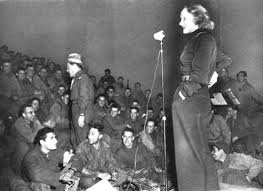 Marlene Dietrich, who worked tirelessly during world war two entertaining allied troops, also recorded both a German version and an English version of the song. Compared to the Anderson recordings, with their strong, marching tempo, Dietrich’s versions, which begin with the melancholy strains of an accordion, are slower, sweeter, and more wistful. The English version retains the melody and the general theme, but beyond the first line the lyrics are not even a loose translation of the original German.
The song began life as a poem of three stanzas, written in 1915 by Hans Leip (1893-1983), a schoolteacher from Hamburg who had been called up into the German army and was training in Berlin prior to leaving for the Eastern front. In the years following world war one, Leip became a successful author. His poem, with two further verses added, was eventually published in 1937, as “Das Lied eines jungen Soldaten auf der Wacht” (The song of a young soldier on watch). It was put to music in 1938 by Norbert Schultze, already by then a well-known composer who wrote numerous songs to be used by Goebbels’ propaganda ministry. Read more »

 While waiting, shivering and jetlagged, for a train home from the Paris airport this week, I alternately stared into space and checked the train timetables. My train was an hour late. I later learned, thanks to the friendliness of a fellow traingoer, that the train had hit a deer.
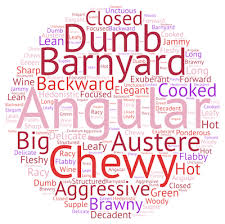 Wine writers, especially those who write wine reviews, are often derided for the flowery, overly imaginative language they use to describe wines. Some of the complainants are consumers baffled by what descriptors such as “brooding” or “flamboyant” might mean. Other complainants are experts who wish wine language had the precision of scientific discourse. The Journal of Wine Economists
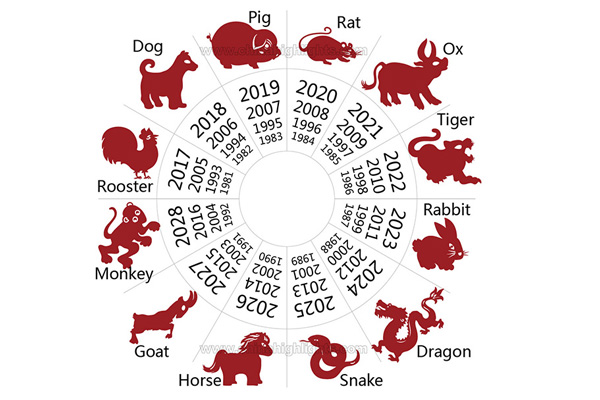 In the Chinese calendar, 2015 was the year of the sheep. I’m a sheep, and I briefly got into it. When you’re a sheep, you gotta own it.
 Schoolteachers across the grades are responsible for teaching their students how to write. Their essential pedagogical role is instrumental. With particular attention paid to format, grammar, spelling, and syntax, students ideally learn to write what they know, think, or have learned. It matters little if the student is in a class for “creative writing” or “composition,” writing is taught and practiced as a way to record thoughts, compose ideas in a coherent manner, and clearly communicate information. A student’s writing is then assessed for how well she adhered to these instrumental standards while the teacher is assessed for how well she adhered to the standards of instrumental teaching.

 1.
1.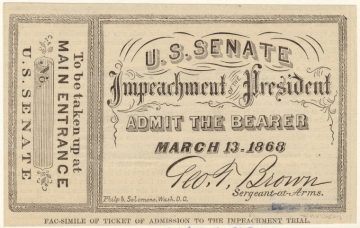 I have an awful confession to make. I haven’t made up my mind about whether President Trump should be convicted and removed from office.
 When Bob Dylan was awarded the Nobel Prize in Literature in 2016, the poet Nora Gomringer expressed her satisfaction at the recognition thus afforded not only poetry, but in particular songwriting, which she identified as the very wellspring and guarantee of literature, citing in her appraisal such classical forebears as Sappho and Homer. In an article published in the Neue Zürcher Zeitung, Gomringer mocked the conventional Western view of letters, a canon founded on prose and the novel, and now challenged by the award to Bob Dylan: “Literature is serious, it is beautiful, it is a vehicle for the noble and the grand; poetry is for what is light, for the aesthetically beautiful, it can be hermetic or tender, it can tell its story in a ballad and, if especially well made, can invite composers to set it to music…”. But “such categories”, she went on to suggest, “are stumbling blocks and increasingly unsatisfying, since they have ceased to function”, in part because of the Academy’s willingness to step outside its comfort zone and award the prize to a popular “singer/songwriter”.
 Fifty years ago, when healthcare expenditures were a mere 6% of US GDP, Martin Feldstein was afraid that the seemingly imminent adoption of some form of national health insurance would cause health care spending to grow unchecked.