by Brooks Riley

by Brooks Riley
by Anitra Pavlico
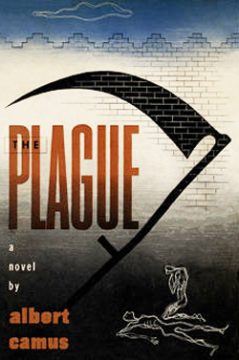
As we wait for life in this era to regain a sense of normalcy and rationality, we take refuge in other eras. There is a severe shortage of contemporary human activities–art-making, conversation, building things. The past becomes closer and larger. The future has shrunk and become clouded, even dark. We have nowhere to go but back, but the past is likewise little comfort, partly because five months ago feels like five decades ago–quaint, old-fashioned, hopelessly out of touch.
The themes of time, memory, and collective humanity in Albert Camus’s The Plague have preoccupied me lately. The Algerian town of Oran is cut off from the rest of the world in an attempt to contain the pestilence that has taken hold there.
But the plague forced inactivity on them, limiting their movements to the same dull round inside the town, and throwing them, day after that, on the illusive solace of their memories. . . . they drifted through life rather than lived, the prey of aimless days and sterile memories, like wandering shadows that could have acquired substance only by consenting to root themselves in the solid earth of their distress.
It is difficult to tell whether time for us has slowed to a near-stop or has sped up. We have less variety in our days, and yet there are times when the hours race by and we haven’t accomplished a fraction of what we set out to do that day. It is more likely that we have slowed down, dulled by inaction to insipidity, than that time has accelerated, but the result is the same: nothing results. As Camus writes: Those who had jobs went about them at the exact tempo of the plague, with dreary perseverance. Read more »
by Tim Sommers

In high school, I attended a “debate camp” at a small university in southeastern Missouri. I was thrilled to visit my first college bookstore while there and I bought a cheap, slender volume out of the remainders bin called “Parables and Paradoxes”. It was written by Franz Kafka. I am embarrassed to say that I recognized the name only because I was a big fan of the stories of Jorge Luis Borges and he mentioned Kafka here and there. In one essay, for example, Borges used Kafka to illustrate how great writers rewrite the works of their own precursors. Surveying a disparate collection of works, Borges says that “Kafka’s idiosyncrasy is present in each of these writings, to a greater or lesser degree, but if Kafka had not written, we would not perceive it; that is to say, it would not exist.”
The difference between Kafka and Borges that struck me almost immediately was that despite the labyrinthine, elliptical, and self-referential character of Borges’ stories it always seemed more or less clear to me what they meant; whereas Kafka’s stories seemed clearly to mean something, but it was never clear to me exactly what. What is the meaning of that hideous machine that writes on human flesh, the secret trial where Joseph K. is never charged but loses his life, of Gregor Samson transformed into a gigantic bug? The very elusiveness of meaning in Kafka intensifies the search for it.
It’s not just me. Psychologists asked subjects to read either “The Country Dentist” by Kafka or a rewritten version that changed all the weird, unexplained bits. Subjects who read the Kafka story were better able to spot hidden patterns in rows of letters afterwards than those who read the “normalized” version. The experimenters theorize that encountering the unexpected can increase people’s ability to creatively search for meaning. They call it “The Kafka Effect”. Read more »

Wild martagon lilies growing in a forest near Fane Alm in the South Tyrol in July of 2020.
by Adele Wilby
 Nothing focuses minds like grave events that bring about severe disruption to everyday living. Over recent times, two major happenings, one with global and the other with more regional implications, have jolted people out of their complacency and compelled some reflection on unpredictability and uncertainty in life, and what is going on around us.
Firstly, the coronavirus pandemic has concentrated governments and the people throughout the world on measures to control this previously unknown deadly virus that has taken the lives of hundreds of thousands of people and infected more than double that amount in the process. The ‘lockdown’ of entire populations in a bid to starve the virus of hosts for its reproduction has been the key strategy adopted by many governments in dealing with this lethal viral infection. People have stayed at home, ‘lock-downed’, and travelling has been brought to a halt. ‘High’ and ‘low’ and all those in between have had to garner themselves for tough times behind closed doors, cutting themselves off from loved ones and friends as the most effective strategy of containment of the lethal potential of this minute protein invisible to the human eye.
The second issue that has jolted the thinking of many people across the globe, particularly the western liberal world, stems from the recent murder of an innocent black man, George Floyd, by the police in Minneapolis, in the United States (US). The video of this man being viciously and callously murdered by a white police officer as he pleaded for his breath has appeared in all forms of social media throughout the world, sparking widespread abhorrence, condemnation, anger, and for many, utter rage. The image of the US as a liberal, just society with solid institutions based on equality and fairness has been shaken, perhaps irreparably shattered. Tragically, this is not the first incident of police officers killing black men in the US, but it is an incident that proved to be the straw that broke the camel’s back and set off widespread protests across the US and in many other countries in sympathy and solidarity with the US protestors. The murder and subsequent protests have placed racism more generally and institutionalised racism in the United States once again to the fore, elevating it to one of the hottest topics in US politics today. Read more »
by Shadab Zeest Hashmi
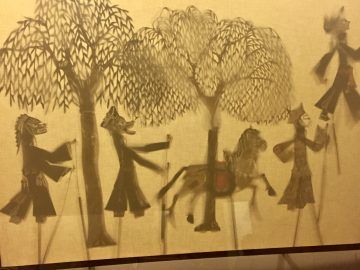 When the Rajah’s barber could no longer keep the secret, he was seen darting by the sparrow in the tamarind, by the flinty owl in the giant oak that was surely a jinn’s abode, by a flock of hill mynahs flying through the buttery light of early spring. What was it that sent him bumbling through the jungle like that? Hours before, he had met the Rajah’s terrible gaze in the mirror when he discovered two sickle-shaped horns under his hair. This secret was as a rock he had swallowed, a rock he needed to expel. He was found panting by the fox of the jungle’s dank center, by a tightly knotted vine clutching a forgotten well. He saw that the well was old and there was bamboo growing in it. He saw it was safe and he screamed his fullest scream into the well: “the-Rajah-has-horns-on-his-head!” The bamboo had been thirsty for a secret and happily soaked it up, but the next day it was cut down by a flute maker who had been in search of just the right bamboo. Soon, all his fine bamboo flutes were sold. Then, all the new flutes of Jaunpur sang out the secret: “the-Rajah-has-horns-on-his-head!” The bamboo had been thirsty for a secret. The hapless barber had poured into it his last song.
***
Note: This is my retelling of a favorite Urdu story from childhood. Many stories like this one are set in Jaunpur in North India, not far from Lucknow. Named after Jauna Khan, Jaunpur was known in the medieval times as a hub of Sufi culture. This story likely has roots in the Persian tradition. “Dhul Qarnain” or the “two-horned one” is a figure from the Quran, said to refer to Alexander the Great whose depictions in art, literature and folklore have been part of the Silk Road’s syncretic cultures for centuries.
by Claire Chambers

Ghazal poetry is an intimate and relatively short lyric form of verse from the Middle East and South Asia. The form thrives in such languages as Arabic, Persian, Urdu, and now English. Like the Western ode, these poems are often addressed to a love object. Influenced by ecstatic Sufi Islam, the ghazal’s subject matter concerns desire for another person and, figuratively, love for the Divine.
Indeed, a mixture of sacred, profane, romantic, and melancholic elements are frequently stitched into the ghazal’s poetic fabric. Many ghazals revolve around the theme of lovers’ separation. This topic also functions as an image for the Muslim worshipper’s longing for Allah. In doing so, the ghazal draws comparisons with seventeenth-century metaphysical poetry. Like ghazalists, John Donne would ostensibly write about love for a woman but also shadow forth devotion to God.
Sound, rhyme, repetition, and rhythm come to the forefront in this form. This makes it unsurprising that many ghazals have been turned into songs. For instance, during the course of his illustrious poetic career, Mohammad (‘Allama’) Iqbal (1877–1938) wrote dozens of ghazals. Some of these poems have been set to music. They were sung by popular South Asian musicians including the late Mehdi Hassan and Nusrat Fateh Ali Khan, as well as contemporary singers Lata Mangeshkar and Sanam Marvi. I also think of the famous playback singers Noor Jehan’s and Nayyara Noor’s renditions of the poetry of Faiz Ahmed Faiz (1911–1984). This crossover often surprises Westerners: it’s as though Carol Ann Duffy’s poems were being sung by Rihanna! Read more »
by Pranab Bardhan
 Many social commentators in the claustrophobic gloom of their self-isolation have shown a tendency to write in somewhat feverish apocalyptic terms about the near future. Some of them expect the pre-existing dysfunctionalities of social and political institutions to accelerate in the post-pandemic world and anticipate our going down a vicious spiral. Others are a bit more hopeful in envisaging a world where the corona crisis will make people wake up to the deep fault lines it has revealed and try to mend things toward a better world. Some others take an intermediate position of what is called upbeat cynicism: hold out for things to be better but guess that will not happen (somewhat akin to Antonio Gramsci’s “pessimism of the intellect, optimism of the will”).
Some have turned to literary narratives of pestilence of one form or another, to make sense of what is happening around us, and referred to the novel by Camus on the plague in the Algerian city of Oran, to the play by Ionesco on the strange disease of humans turning into rhinoceros in a small French village, to the novel by Saramago on a mass epidemic of blindness in an unnamed city with a heavy-handed government, and to the more recent Book of M by Peng Shepherd, where the infected find that they cast no shadow and soon lose their memory, etc.. These are all narratives of human frailty and social breakdown, but also of human resilience as in the portrayal of the respective doctors in the novels of Camus and Saramago. (The narratives of Camus and Ionesco have also been interpreted as analogies for the reactions of ordinary people in the creeping Fascism of occupied France).
In this article we shall look at the prospects of social democracy in the post-pandemic world, at the strengthening or weakening of pre-existing tendencies in this respect, and at new elements, circumstances and challenges. Our attempt should be seen as neither a straight-forward prediction, nor just a matter of wishful thinking, more a clear-eyed analysis of constraints and opportunities that social democrats are likely to face or have to be prepared for. Read more »
by Ashutosh Jogalekar
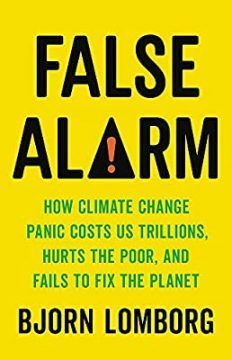 Throughout history there have been prophets of doom and prophets of hope. The prophets of doom are often more visible; the prophets of hope are often more important. The Danish economist Bjorn Lomborg is a prophet of hope. For more than ten years he has been questioning the consensus associated with global warming. Lomborg is not a global warming denier but is a skeptic and realist. He does not question the basic facts of global warming or the contribution of human activity to it. He does not deny that global warming will have some bad effects. But he does question the exaggerated claims, he does question whether it’s the only problem worth addressing, he certainly questions the intense politicization of the issue that makes rational discussion hard and he is critical of the measures being proposed by world governments at the expense of better and cheaper ones. Lomborg is a skeptic who respects the other side’s arguments and tries to refute them with data.
Lomborg has written two books on global warming, but his latest volume is probably the most wide-ranging. The title of the book is “False Alarm”, and the subtitle is “How Climate Change Panic Costs is Trillions, Hurts the Poor and Fails to Fix the Planet.” The book is about 225 pages, clearly and engagingly written, contains many charts and figures and the last 75 pages are devoted to references and a bibliography. The title sounds sensationalist, and while titles are often decided by the publisher, it succinctly captures the three main messages in the book. The first message is that panic about global warming leads people to think irrationally about it. The third message is that all the vocal fixes proposed for fixing global warming won’t make more than a dent in the actual problem. But the second message is perhaps the most important – that not only would global warming fail to alleviate the problems of the poor but it will make them worse. This puts the problem not just in a political but in a moral perspective. Lomborg’s book should be read by all concerned citizens interested in the subject, whether they agree with him or not. Read more »
by Thomas O’Dwyer
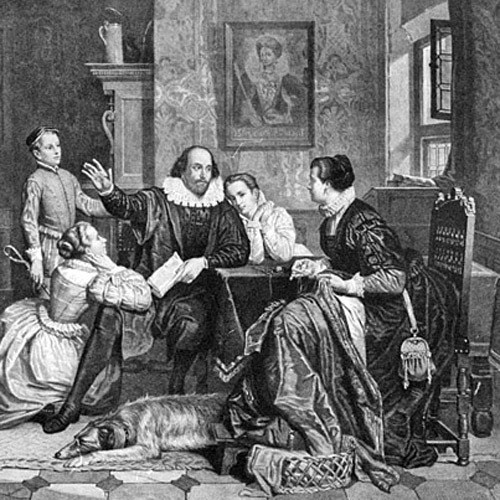
A book subtitled A Novel of the Plague might appear opportunistic at this time. But in Maggie O’Farrell’s new and much-praised Hamnet, the only opportunity the author seems to be taking advantage of is our ignorance of the life of William Shakespeare. “Miraculous,” The Guardian wrote, “a beautiful imagination of the short life of Shakespeare’s son, Hamnet, and the untold story of his wife, Agnes Hathaway, which builds into a profound exploration of the healing power of creativity.”
Around the world, library shelves creak under the weight of books, some centuries old and in a babel of languages, about England’s undisputed greatest genius. Analyses of his works aside, all that is written about the life and character of the man is speculation, fabulation or infatuation. A pencil and a postcard suffice to jot down the facts we know. Sifting through his plays and sonnets for clues to his life, beliefs and relationships will not do – though it has been done ad nauseam. The names Hamlet and Hamnet appear to have been interchangeable in documents dating from his time. Therefore, it must follow that William named his great play in memory of his only son Hamnet who died at the age of 11. That is one great burden of proof to place on the swapping of two letters, n and l, in one word.
A striking feature of O’Farrell’s novel is that the name Shakespeare appears nowhere, although it is entirely about the family of the playwright, a shadowy figure who slips in and out of his native Stratford-Upon-Avon.
“Everyone thought the glover’s son would amount to nothing, what a wastrel he had always seemed, and now look at him – a man of consequence in London, it is said, and there he goes, with his richly embroidered sleeves and shining leather boots.”
It is tempting to respond with Petruchio explaining in The Taming of the Shrew why he moved to Padua:
Such wind as scatters young men through the world,
To seek their fortunes farther than at home
Where small experience grows.
But there we go again, drawing conclusions from random quotes from the man’s theatre world. This novel is not the young man’s viewpoint or biography. Its theme is of women in the roles their times dictated for them. It chronicles their emotions and desires, their sorrows, their work and their ferocious protection of their children in a world where “the man” is absent, but nonetheless makes sure to provide money and a comfortable home for his family, as Shakespeare did. Read more »
by Mike O’Brien
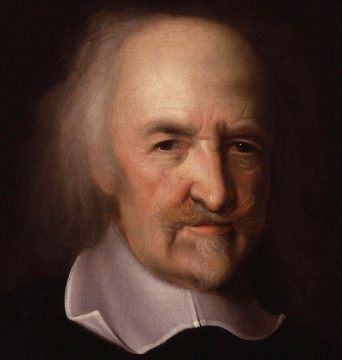
One of the greatest joys of my graduate studies was reading primary sources in full, rather than a mishmash of summaries and excerpts. I could have done this prior to graduate school, but I didn’t, because I was lazy.
(I am still lazy.)
Having to read and re-read the works of authors, in the presentation in which they chose to be received, created a more personal relationship with them. “Personal” meaning, in its literal root sense, pertaining to that which speaks for itself. Rather than dragging the thinker, by means of citations, onto a panel of experts marshalled together for some inquiry, reading all the words, in the order intended, allows the thinker to express themselves as they willed. One has the sense of reading someone rather than just something, and one can posit a mind that understood things in its own way. Getting to know a mind thus, a reader can even guess how a writer might have understood things that are not explicitly mentioned in their work.
One of the misfortunes that befalls great thinkers is that they are cited vastly more often than they are read, and when read are not understood on their own terms because of the frame in which they are presented. When the thinker is someone whom I have read in depth, this can be offensive in the same way that hearing untruths about a friend is offensive. The mistaken claims need not be slanderous or abusive; the mere fact that they have gotten your dear friend wrong is objectionable in itself. But if one has famous friends, one can’t expect every person who speaks of them to know them beyond a public persona. And so one has to distinguish between, for example, discussions about Mark Twain and discussions about Samuel Clemens. (I am not friends with Samuel Clemens, but I like to think we’d get along). Read more »
by Callum Watts
The debacle around the development of the UK coronavirus contact tracing app has got me thinking about the role of technology and startup style businesses in addressing large scale social problems. The UK government’s shambolic app release, pursued at the expense of tried and tested human contact tracing, is an example of a larger trend of using technology led approaches to solve social and political problems.
In the US we see it in the enthusiasm with which Trump asked tech luminaries such as Peter Thiel to become key advisors to his government. In the UK we see a similar obsession with “startup land”, where Dominic Cummings has been attempting to hire developers, data scientists and ‘misfits’ into the civil service, apparently inspired by technology startups. Whilst software businesses have led to some incredible ideas that solve individual problems, I’m sceptical of the potential for these organisations to do anything truly radical when it comes to the societal level issues faced by governments.
There is a double irony here. First, in spite of all their vaunted innovations, the superstar ‘social’ media companies have struggled to match their commercial impact with positive social impact. Secondly, the startups that are so often described with the language of revolution are largely ignorant of the history of true social revolutions. They are culturally disconnected from the reality of the social problems they are being asked to fix. Furthermore the politicians who are so enthusiastic about the potential of technology have a poor understanding of the scope of problems that it can actually solve. It is not difficult to see why this union is likely to end in disappointment for both parties. Read more »
by Fabio Tollon
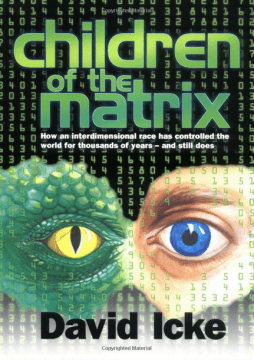
In 2019 Buckey Wolf, a 26-year-old man from Seattle, stabbed his brother in the head with a four-foot long sword. He then called the police on himself, admitting his guilt. Another tragic case of mindless violence? Not quite, as there is far more going on in the case of Buckey Wolf: he committed murder because he believed his brother was turning into a lizard. Specifically, a kind of shape-shifting reptile that lives among us and controls world events. If this sounds fabricated, it’s unfortunately not. Over 12 million Americans believe (“know”) that such lizard people exist, and that they are to be found at the highest levels of government, controlling the world economy for their own cold-blooded interests. This reptilian conspiracy theory was first made popular by well-known charlatan David Icke.
What emerged from further investigation into the Wolf murder case was an interesting trend in his YouTube “likes” over the years. Here it was noted that his interests shifted from music to martial arts, fitness, media criticism, firearms and other weapons, and video games. From here it seems Wolf was thrown into the world of alt-right political content.
In a recent paper Alfano et al. study whether YouTube’s recommender system may be responsible for such epistemically retrograde ideation. Perhaps the first case of murder by algorithm? Well, not quite.
In their paper, the authors aim to discern whether technological scaffolding was at least partially involved in Wolf’s atypical cognition. They make use of a theoretical framework known as technological seduction, whereby technological systems try to read user’s minds and predict what they want. In these scenarios, such as when Google uses predictive text, we as users are “seduced” into believing that Google knows our thoughts, especially when we end up following the recommendations of such systems. Read more »
by N. Gabriel Martin
The pandemic has increased our awareness of the moral significance of our day to day habits. While there have always been moral perfectionists who agonise over every choice and action, most of us tended to draw a line under our day to day habits, taking them for granted and reserving moral scrutiny for the extraordinary.
It’s not that eating out, buying chocolate, or going to a party were ever devoid of all moral significance—it was always possible to scrutinise, for example, the labour practices under which chocolate was grown, or the environmental impact of packaging—it just didn’t seem obligatory. Even though we might have known that the choice to buy a chocolate bar had moral significance, we were, for the most part, used to ignoring it. To do otherwise was a lifestyle choice, and not a necessity. That has changed with the coronavirus. Suddenly, we have had to examine—in our own consciences, with our families, and on social media—the choices we used to take for granted.
The pandemic brought moral considerations home to us, into our lives. We can no longer draw a sharp line between obviously immoral actions—spousal betrayal or shoplifting, for example—and the everyday, morally ambiguous ones that we were not used to subjecting to scrutiny. For any one person, visiting a friend, going to a café, or taking a train are not activities that are more likely than not to cause harm to anyone (even now), but if we all carry on with these activities then people will suffer and die and our public health systems will become overwhelmed. As a result, we are now confronted with the moral seriousness of the choices we used to take for granted. Read more »
by Brooks Riley

by Joan Harvey

It’s summertime. Things are heating up. A comet trips across the night sky; I make out its vast and blurry tail, then watch a sharp bright shooting star fall through the heavens. I drag a mattress out onto the deck and lie under a massive blanket of stars, a very milky way. I’m alone, and because I’m at the moment far from the terrible violence of the current American system, I’m able to experience this space as voluptuous and luxurious. I sleep and eat whenever I want. Rain comes early in the morning and I drag the mattress back inside. I eat peaches and cream, have an extra cup of coffee. Listen to Monk and The Gossip and Beethoven and various obscure djs and some old Tribe Called Quest. I can be random and feral (which a friend said would be a good name for a law firm). I am aware of how rare and, to use a term now obligatory and perhaps too much bandied about, how privileged this is. I am not living in poverty. My child is grown and on his own. I have space and time and no worries in this remote place of being shot by the police. The land and few people I encounter here have a deep quietness.
Meanwhile in the news, virulently anti-feminist lawyer Roy Den Hollander murders the son of a female judge he wasn’t happy with. In front of reporters, Representative Ted Yoho shakes his finger in Representative Alexandria Ocasio-Cortez’s face and calls her a “fucking bitch.” Many of us are pretty sure that if we had elected Hillary instead of Trump, thousands more Americans would be alive today. There have been many reports of how much better countries run by women have done during this plague, and yet, as Peter Beinart writes in the New York Times, Hillary was perceived more unfavorably than Trump, and far more unfavorably than Biden. Bernie Sanders is perceived as more trustworthy than Elizabeth Warren even though there is no basis for this. I’ve seen horrendous attacks by both men and women of the left on female candidates, as well as on anyone who has dared support them in any way. Read more »
by Andrea Scrima
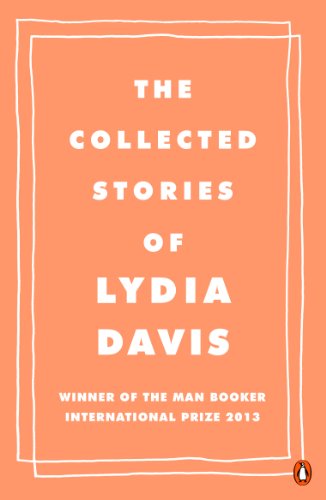 In one sense, the stories of the collection Almost No Memory, originally published in 1997 and reprinted in The Collected Stories of Lydia Davis in 2009, can be read as a psychological portrait of a middle-aged woman coming to terms with all the usual things life has to offer after a certain age: the convolutions of domestic discord, shrinking horizons, the sobering insight that very little can change us anymore. The voices are both many and one, converging in a polyphony of percipient anxiety and resignation: we hear “wife one,” an “often raging though now quiet woman” eating dinner alone after talking on the phone to “wife two”; a professor who fantasizes about marrying a cowboy, although she is “so used to the companionship of [her] husband by now that if I were to marry a cowboy I would want to take him with me”; and a woman who “fell in love with a man who had been dead a number of years.” There is also a woman who “comes running out of the house with her face white and her overcoat flapping wildly,” crying “emergency, emergency”; a woman who wishes she had a second chance to learn from her mistakes; and one who has “no choice but to continue to proceed as if I know altogether what I am, though I may also try to guess, from time to time, just what it is that others know that I do not know.” The list continues, from a woman wondering why she can become so vicious with her children to another whose mind wanders to sex at the sight of “anything pounding, anything stroking; anything bolt upright, anything horizontal and gaping” and one who is filled with “ill will toward one I think I should love, ill will toward myself, and discouragement over the work I think I should be doing.”
Almost No Memory strikes a different set of chords than the collection preceding it, Break It Down. While there is a dry hilarity to some of the stories, others take on a surreal aura. “Liminal” describes “the moment when a limit is reached, when there is nothing ahead but darkness: some thing comes in to help that is not real.” When the innocent cruelty inherent in the relationship between predator and prey stands for truths that lie just beyond our ability to comprehend them, animals take on the weight and magnitude of totems. Read more »
by Guy Elgat
 Undoubtedly many insights and lessons can be drawn and will be drawn for a long time to come from the current worldwide covid19 epidemic; insights, for example, about the responsibility of politicians in the managing of health crises, about the importance of human cooperation both locally and internationally, about the vulnerability of the global economy to disturbances in the regular flow of people and commodities, about the crucial yet contentious role of the various media in the dissemination of information, etc. But here I am interested in focusing briefly on related issues regarding the problematic relationship of science and the general public. Specifically, I want to offer some reflections on why I think science in trying times can be hard to live with.
What I have in mind is this. During times of normalcy (whether on the individual or collective level) our engagement or concern with the institutions and practices of science is rather limited. Of course, we constantly rely on the technological applications of science, but these almost magical apparatuses which pervade our lives do not for the most part raise any questions for us about the role of science in their emergence, as these technologies are typically taken for granted as the natural medium in which we exist. Specifically, we remain oblivious of the long and arduous process that made them possible in the first place: the years of research, the fits and starts, the difficult births, the contingent nature of discovery, etc. – all these remain for us far behind the scenes, deep under the hood. The various devices that we enjoy seem to descend unheeded from the sky – as if bestowed upon us by some benevolent god – and we embrace them (or not) depending on our desires or whims.
Almost the exact opposite is the case in moments of crisis and distress. Here there is a reversal: we, the public, are no longer the passive recipients of technological dispensations, but actively demand that science provide answers and solutions to our urgent, life-and-death, needs. Science is called to account from the bottom up. Additionally, as part of this transformation, we become, to various degrees, more interested in and concerned about the practice of science itself. Read more »
by Charlie Huenemann
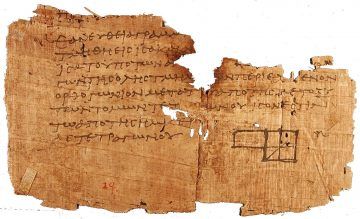
Materialism is the view that everything that exists is made of matter. What’s matter? It’s hard to say with both precision and completeness, but it can’t be far off to think of matter as whatever can engage causally with the known forces of nature: gravity, electromagnetism, and atomic forces (strong and weak). If a thing responds to any of those forces, that thing is material. Of course, maybe there are some unknown forces of nature, and we’ll have to revise as they become known, but right now, this seems to be an adequate criterion for judging what counts as matter.
But I don’t think materialism is true, and it’s not because I believe in spirits or love or imagination or magic. It’s because of math. Math is a science of form: it explores the possible forms or properties or systems that are possible. Some of these possible structures, of course, describe the real systems we come across in our world, which is neat, and makes physics possible. But there are many, many more possibilities than are actual. It doesn’t take many beers before a gang of interested mathematicians will start describing all sorts of things that could never come to exist in our puny world because they are too big or complicated.
As the gang of mathematicians start describing these otherworldly possibilities, they are not just making stuff up. They can get things right, and get them wrong. It’s really hard to do math, because it’s all about proofs, which slide easily from validity into invalidity, or from coherence into incoherence, with a move as subtle as the fall of an eyelash. But communities of mathematicians keep one another in check, and what they do is as rigorous as any human endeavor can be.
So what about all these non-actual possibilities? If they are not just make-believe, what makes them genuine as possibilities? The best answer, I think, is that there are truths about structure, truths about form, which outrun all of the truths about matter. Our material world is the real-life version of a relatively small set of possible structures, but there is a much bigger world in existence, which is the one that math describes. Read more »