by Mike O’Brien
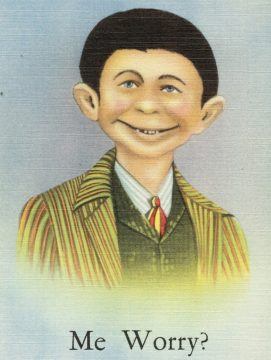 It’s a bountiful feast for discriminating worriers like myself. Every day brings a tantalizing re-ordering of fears and dangers; the mutation of reliable sources of doom, the emergence of new wild-card contenders. Like an improbably long-lived heroin addict, the solution is not to stop. That’s no longer an option, if it ever was. It is, instead, to master and manage my obsessive consumption of hope-crushing information. I must become the Keith Richards of apocalyptic depression, perfecting the method and the dose.
Structure is important. Historical time-frames help. Covid is bad, and current, and a direct threat to me, but a once-a-century pandemic arriving right on time shouldn’t disrupt my worrying on a macro level. I’ve budgeted acute anxiety for just this kind of thing.
The protests in the US are full of promise, both for good and for ill, but the systemic problems whence they sprung are old news. The uprising should have happened decades ago. They may happen again, for the same reasons, decades hence. Waiting for the US to realize necessary and inevitable progress is a mug’s game.
I confess that I’m very Euro/America-centric in my socio-political doom-tracking. I really ought to give fair due to Indian ethno-nationalism, Russian counter-intelligence, African famine, Arab revolutions and South American neo-fascism. Sorry, I’m Canadian. After worrying about the US and the UK, there are barely any hours left in a day. Read more »
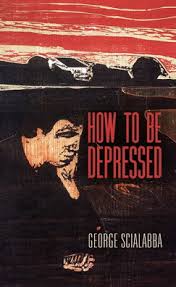 Because I have a lot of experience with depression, I approached George Scialabba’s How to Be Depressed with an almost professional curiosity. Scialabba takes a creative approach to the depression memoir, blending personal essay, interview, and his own medical records, specifically, a selection of notes written by various therapists and psychiatrists who treated him for depression between 1970 and 2016. I don’t know if I could bear to see the records kept by those who have treated me for depression, assuming they still exist, and I wasn’t sure what it would be like to read another person’s medical history.
 Some people claim that the prominent display of statues to controversial events or people, such as confederate generals in the southern United States, merely memorialises historical facts that unfortunately make some people uncomfortable. This is false. Firstly, such statues have nothing to do with history or facts and everything to do with projecting an illiberal political domination into the future. Secondly, upsetting a certain group of people is not an accident but exactly what they are supposed to do.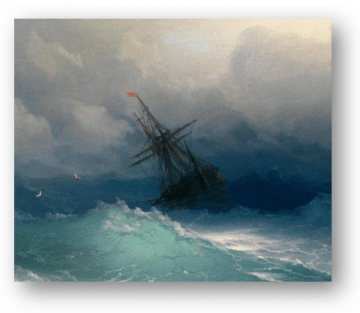
 by Paul Braterman
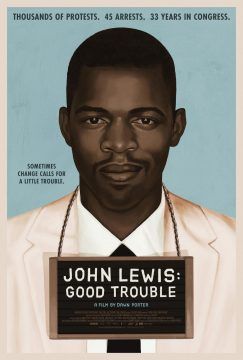 John Lewis: Good Trouble




 The coronavirus pandemic has massively disrupted the working lives of millions of people. For those who have lost their jobs, income, or work-related benefits, this can mean serious hardship and anxiety. For others, it has meant getting used to new routines and methods of working. For all of us, though, it should prompt reflection on how we think about work in general–both as a curse and as a blessing. Here, I want to focus on how work relates to time.
 Beauty has long been associated with moments in life that cannot easily be spoken of—what is often called “the ineffable”. When astonished or transfixed by nature, a work or art, or a bottle of wine, words even when finely voiced seem inadequate. Are words destined to fail? Can we not share anything of the experience of beauty? On the one hand, the experience of beauty is private; it is after all my experience not someone else’s. But, on the other hand, we seem to have a great need to share our experiences. Words fail but that doesn’t get us to shut up.
 In a survey released at the end of May by the AP and the NORC Center for public affairs research, 49% of Americans said they intended to be vaccinated against the new coronavirus, 31% said they were unsure, and 20% said they would not get the vaccine.