 by Paul Braterman
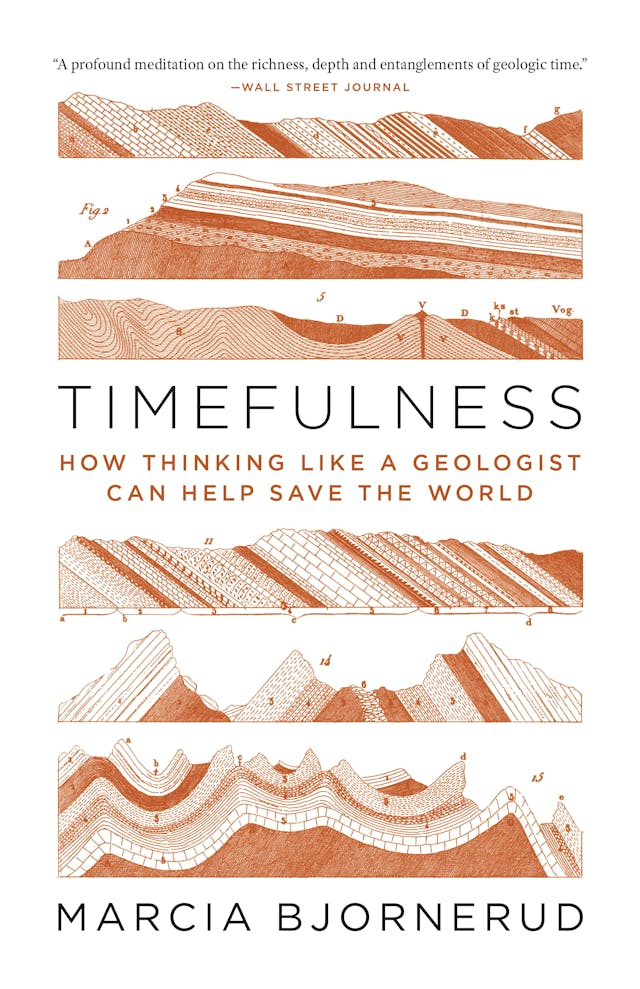
Timefulness: How thinking like a geologist can help save the world, Marcia Bjornerud, Princeton University Press, 2018/2020, pp 208, sale price $8.84/£7.00 through publisher
There are many excellent overviews for the general reader of how life on Earth has changed over time (see, for a recent example, Neil Shubin’s Some Assembly Required, which I reviewed here recently). The history of the Earth itself has not been so well served, and Timefulness: How Thinking Like a Geologist Can Help Save the World, by Marcia Bjornerud, Professor of Geology and environmental Sciences at Lawrence University, is a welcome and timely addition to this badly under-represented genre.[1] The book is beautifully written, in plain language, with complex ideas explained with great simplicity and the use of strikingly appropriate verbal imagery. Behind this transparency of language lies a deep love and knowledge of her subject. The book should appeal to anyone looking for an overview of the Earth as the abode of life, or a perspective on our place in time, and how recklessly we are compressing the tempo of natural change.
The author presents her book as an argument for what she calls timefulness, the perception of ourselves as living in and constrained by time, of time itself as having both extension and texture, of the acceptance of our own mortality, and of our own responsibilities. This she sees as severely lacking in our society. We expect people to know something about distances on the map, but not about the timescale of the events that have shaped the Earth, as if what happened before we were born and what will happen after we die did not really exist. We have an economic system that (at least in normal times) depends on the expectation of continued growth, although if maintained over a very brief interval of geological or even historical time, such growth is clearly unsustainable.[2] Consumerism, rather than conservation, is regarded as good citizenship. Read more »
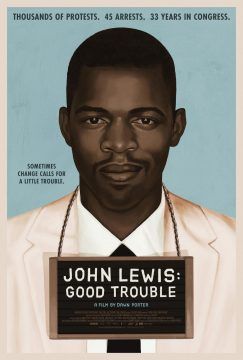 John Lewis: Good Trouble


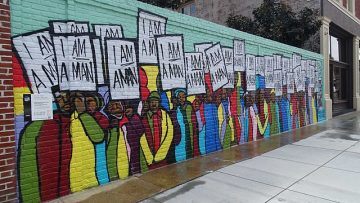

 The coronavirus pandemic has massively disrupted the working lives of millions of people. For those who have lost their jobs, income, or work-related benefits, this can mean serious hardship and anxiety. For others, it has meant getting used to new routines and methods of working. For all of us, though, it should prompt reflection on how we think about work in general–both as a curse and as a blessing. Here, I want to focus on how work relates to time.
 Beauty has long been associated with moments in life that cannot easily be spoken of—what is often called “the ineffable”. When astonished or transfixed by nature, a work or art, or a bottle of wine, words even when finely voiced seem inadequate. Are words destined to fail? Can we not share anything of the experience of beauty? On the one hand, the experience of beauty is private; it is after all my experience not someone else’s. But, on the other hand, we seem to have a great need to share our experiences. Words fail but that doesn’t get us to shut up.
 In a survey released at the end of May by the AP and the NORC Center for public affairs research, 49% of Americans said they intended to be vaccinated against the new coronavirus, 31% said they were unsure, and 20% said they would not get the vaccine.

 Had enough of the 2020 election? Take heart, there are just 134 days left until Vote-If-You-Can Tuesday. That’s less time than it took Napoleon to march his Grande Armée into Russia, win several lightning victories, stall out, and then retreat through the brutal winter, with astronomical casualties, all the while inspiring the equally long