
by Dwight Furrow
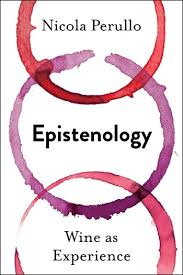 Epistenology: Wine as Experience is a peculiar name for a peculiar book, although its peculiarities make it worth reading. Coined by the author, Nicola Perullo, Professor of Aesthetics at University of Gastronomic Science near Bra, Italy, the term “Epistenology” is a portmanteau blending enology, the study of wine, with epistemology, the philosophical study of knowledge. The book is hard to categorize, which is precisely its point. Although a philosophy book about wine, it is not so much about wine as it is an attempt to think with wine, using wine as a catalyst for making connections to persons, atmospheres, and imaginative play within pregnant moments of immediate, lived experience. Although a serious work of philosophy, it only occasionally names other philosophers and refers to no previous work in the philosophy of wine or aesthetics, while advancing an intriguing alternative to professional wine evaluation and conventional wine education. It is avowedly a narrative of the author’s personal journey with wine and the lessons to be drawn from it. Derrida’s idea that every philosophy is a way of “justifying our lives in the world” is the book’s guiding light. Read more »

 The disappointing new film
  Both morally and politically, equality is a powerful ideal. Over the last two centuries it has been one of the fundamental demands of most movements aimed at improving society. The French Revolution is the paradigm case. Despite its enduring relevance, however, equality has always been a somewhat vague ideal. It was hardly a problem for the revolutionaries in France, where the difference between the aristocracy and the sans-culottes was so stark that further elaboration was unnecessary. Over the years, however, the question ‘equality of what?’ has become more pressing, and many answers have been highlighted: equal rights, equal pay, equal treatment, equal opportunities, equality under the law, equality of outcome, to name but a few. Rather than just looking at these answers, perhaps we should start by identifying the source of the ideal of equality’s ethical power, and see where this leads us.
 In the late fifteenth century, European seafarers began searching for what they called the “Northwest Passage,” a fabled route across the Arctic Ocean, which would allow them to sail northward from Europe directly into the Pacific in search of fortune. But the Arctic
 In the summer of 1977 my father invited me to tea at the Hotel Grande Bretagne in Athens. I had turned 13 that spring, and instead of a bar mitzvah, prohibited by matrilineal descent and an antipathy to organized religion, my father and I were en route to Israel, to visit the kibbutz where he had worked in the mid-1950s. We had flown from Vancouver to Amsterdam, proceeded by train to Rome, and continued by rail across Italy to Brindisi, by ferry to Patras, and by coach to Athens. From there we would eventually embark, at Piraeus, on the crossing to Haifa; for the moment we were enjoying some sightseeing in the Greek capital.
 I’ve long been partial to Portuguese culture, so when Portugal transferred its last colonial holding, Macau, back to Chinese rule in 1999 , a friend surprised me with his marveling reaction: “Portugal had an empire? Who knew?”
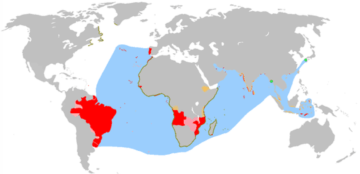 The Portuguese initiated the transatlantic slave trade in 1444, which has bedeviled and tormented much of the world ever since. Sixty years later, the Viceroy Alfonso Albuquerque expanded Portuguese power not only as exploration for economic reasons, but as a brutal crusade against Islam. By 1580, the empire extended from Brazil to Africa, from India to Malaysia and on to the Indonesian island of Timor.
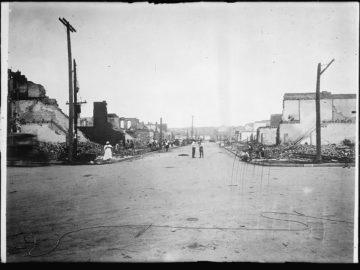
 White Americans get a lot of things wrong about race. And not just the relatively small number of blatant white supremacists, or the many millions (

 Not long ago, a reader complained, politely but firmly, about your humble author’s regrettable tendency to post something called “Blah blah blah pt. 1” and then never get back to it for part two, in particular the post about history, wondering if possibly I thought no one would notice that I had left it hanging. I admit the fault, but I assure my patient reader, or possibly readers, that I do indeed intend to finish each and every one of my multipart posts, and even to make clear how they are related to each other. (That’s the intent, anyway.) So fear not! (I do have to read some more history though … !) This time, though, I finish a different sort of multipart post: my end-of-2020 podcast. Plenty of unfamiliar names, even to me, but some great stuff! As always, widget and/or link below.
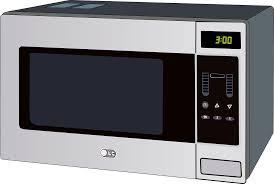 Do you have a right to own a microwave oven? To be clear, ideally in a free society, absent a clear showing of harm to others, there’s a presumption that you can do whatever you want and own whatever you can make or buy. So, you do have a basic right to own things – to acquire property, as political philosophers like to say. But it’s consistent with that right for there to be a lot of rules and regulations around what you can own – and even prohibitions on owning certain kinds of things.