by Claire Chambers
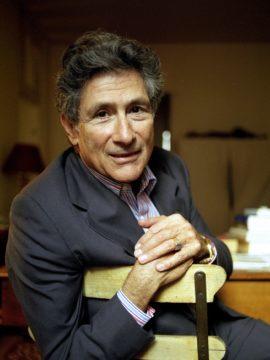
Few twentieth-century books witnessed Silver Jubilee celebrations but, 25 years after the publication of Edward Said’s Orientalism (1978), the monograph was commemorated in this way at his faculty in Columbia University, New York. Just a few months later, in September 2003, the Palestinian-American literary critic and theorist would die at 67 after protracted dealings with leukaemia. (This was the same group of cancers that had caused the quick and untimely death of one of his anticolonial forebears, Frantz Fanon, in 1961.) Said’s volume is routinely hailed in lists of the world’s most influential books. It also continues to shape the discipline of postcolonial studies which his work kickstarted. The Golden Jubilee in 2028 should be a grand affair.
Orientalism’s groundbreaking importance lies in the connections Said makes between culture and empire-building. He draws on Michel Foucault’s theories about the inextricable coexistence of power and knowledge, as well as Antonio Gramsci’s emphasis on the importance of culture in securing the consent of the dominated. In doing so, Said argues that colonization is not only about material acquisition. In addition to physically occupying other countries, colonizers seek to convey that their occupation is universally advantageous. It is absurd to watch the intellectual gymnastics they undertake in arguing that empire is good for both rulers and ruled. Read more »

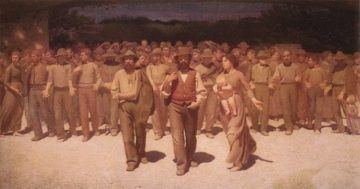 How should people on the ‘progressive’ side of politics view patriotism? That question continues to vex those who would connect with what they suppose are the feelings of the bulk of the population. The answer will vary a good deal according to which country we are considering – the French left, for instance, has a very different relationship to la patrie to that of the US or the UK. In the case of the former, the side cast as traitors has historically been seen as the right. In the USA, at least in the second half of the 20th century it has been very different: those who protested against the Vietnam war were cast as the anti patriots. And today, we still hear that the left ‘hates our country’. The accusation is a damaging one, and has been wielded with glee by conservatives whenever they have the chance. So there is a tricky task for the left, it seems: to be seen as with and not against the mass of people in their identification with the nation and its history, without abandoning an internationalist perspective that rises above the narrow nationalism of the conservative.
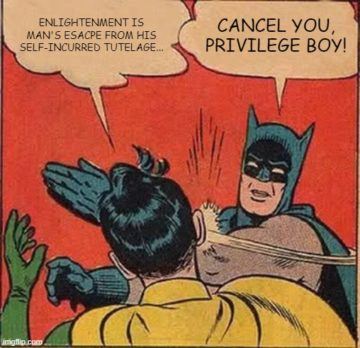 Talking about “The Enlightenment”, when understood as something like “an intellectual and philosophical movement that dominated the world of ideas in Europe during the 17th and 18th centuries” (thanks,
 Sughra Raza. Untitled, April 2021.

 car when driving alone. Yet my momentary career as a musical performer—exceedingly brief as it may have been—enjoyed a spotlight rarely offered to others.