by Chris Horner
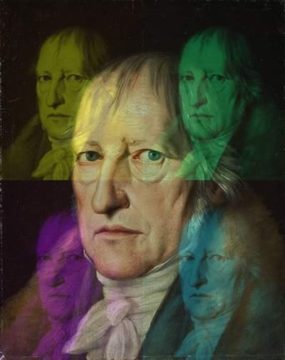
Among the books of the nineteenth century that have something important to say to us now Hegel’s Elements of the Philosophy of Right (1820) deserves a prominent place. It’s not the obvious contender for a popular read in the 21st century. He doesn’t make it easy for himself, if getting readers was the aim as his ‘grotesque and rocky melody’ (Marx) takes some getting used to, and one has to work a bit to to grasp his arguments. So its not a surprise that is more written about than actually read. This is a pity, as it is right up there with Plato’s Republic and Hobbes’ Leviathan as one of the great works of ethical and political philosophy, with arguably even more direct and relevant things to tell us about our society than those other two classics. It’s a text that has been seriously misunderstood and misrepresented – most notoriously by those who represent him as having announced ‘the end of history’. It is true that something, for Hegel, is coming to an end in our time, but it isn’t exactly history. Hegel gives us an acute and pressingly relevant diagnosis of both the promise of modernity, and the contradictions that threaten it. Citizens in the age of Trump, Johnson, Xi Jinping and Biden would do well to attend to what he has to say in these pages.
It is a troubling text for liberals, not because it is anti liberal in the sense of being opposed to the values liberals hold dear (dignity of the individual, freedom of conscience, rights and so on) but rather because its author regards the insights of liberals as dangerously limited. Liberalism, with its focus on the freedom of the individual, sees the function of the state as guarantor of the freedom of the individual, in the context of a civil society and free market. But for Hegel, genuine freedom means more than this. Read more »


 A scar is a shiny place with a story.
 When I first attended the occasional Harvard-MIT joint faculty seminar I was dazzled by the number of luminaries in the gathering and the very high quality of discussion. Among the younger participants Joe Stiglitz was quite active, and his intensity was evident when I saw Joe chewing his shirt collar, a frequent absent-minded habit of his those days. Sometimes one saw the speaker incessantly interrupted by questions, say from one of the big-name Harvard professors, Wassily Leontief (soon to be a Nobel laureate). At Solow’s prodding I agreed to present a paper at that seminar, with a lot of trepidation, but fortunately Leontief was not present that day.
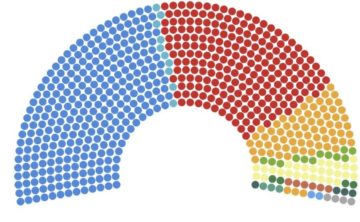 In politics, business, and education, the issue of how to ensure proportional representation of groups is often salient. A salient issue, but usually an impossible task. Why?

 My books are arranged more or less the way a library keeps its books, by subject and/or author, although I don’t use call numbers. I also have various piles of current and up-next and someday-soon reading. In addition, I have a loose set of idiosyncratic categories that guide my choice of what to read right now, out of several books I’m reading at any given time. I choose books for occasions the way more sociable people choose wines to complement their menus.