by Charlie Huenemann
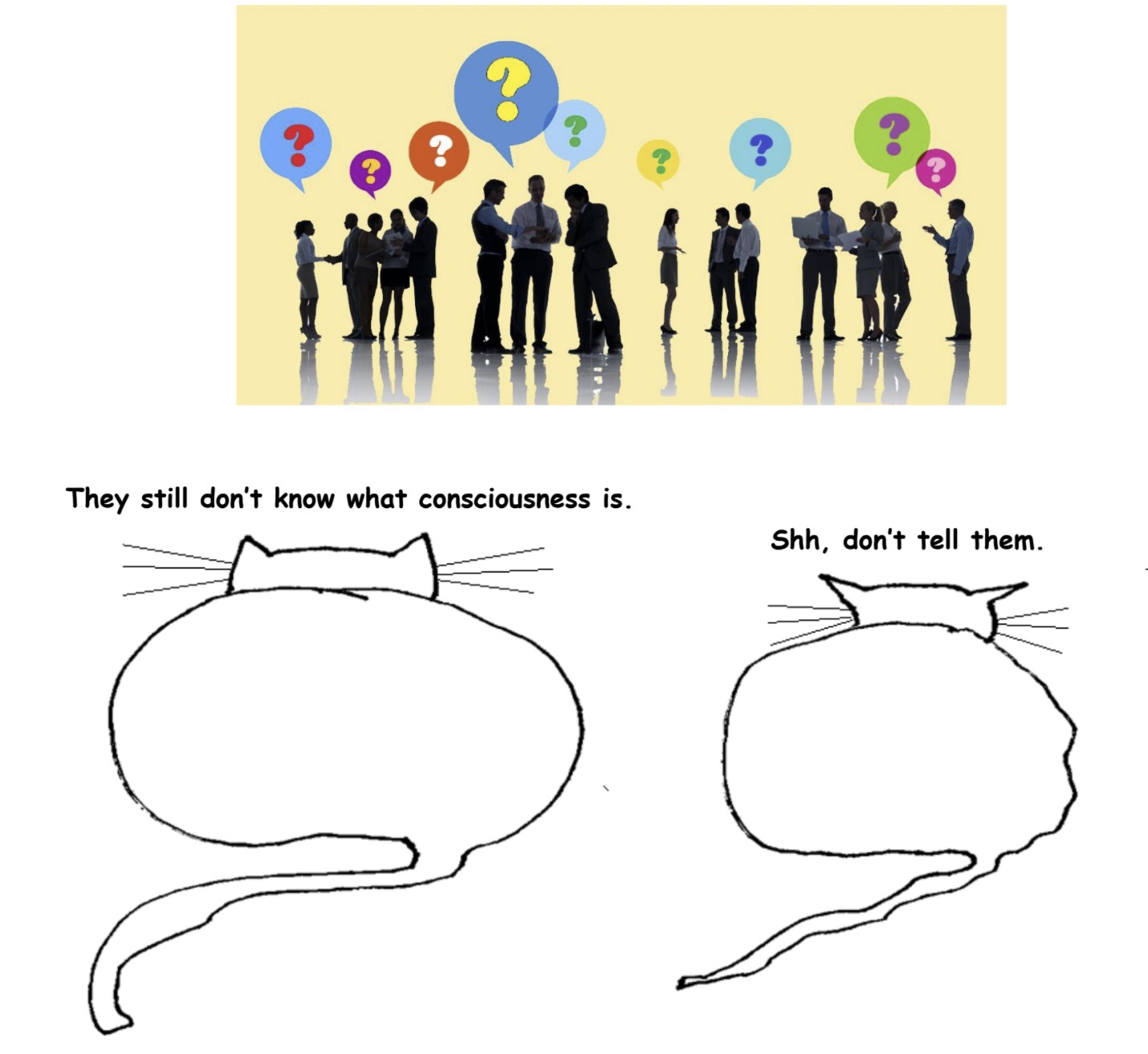
Over years of teaching philosophy, I have observed that people fall into two groups with regard to the Biggest Question. The Biggest Question is one that is so big it is hard to fit into words, but here goes: When everything that can be explained has been explained, when we know the truths of physics and brains and psychology and social interactions and so on and so forth, will there still be anything worth wondering about? I am assuming the “wonder” here is a philosophical wonder, not the sort of wonder over whatever happened to my old pocket knife or whatever. It’s the sort of wonder that has a “why-is-there-something-rather-than-nothing” flavor to it. It’s the sort of wonder that doesn’t go away no matter how much is explained.

Some people think that on that sunny day when everything that can be explained has been explained, well then, that will be that. We will understand why things have happened, and how we came to exist, and what we should do if we want to be healthy and happy, and why works of art move us as they do. It’s not that such people are in any way shallow or unimaginative or tone deaf. They are open to the most wonderful experiences of life, along with the most heart-wrenching and most tragic. It’s just that they think these experiences can be explained and understood in all their glory through that explanation. If there is anything “left over” — some stubborn bit of incredulous wonder we just can’t shake — then that too will be explained through some feature of human psychology, like the way those patterns still seem to swirl in a static optical illusion even when you know the trickery behind it. The feeling that there is a Mystery can itself be explained as an illusory sort of feeling, an accidental by-product of the cognitive engine we happen to think with.
But other people think that the Mystery is not an illusion or accident, and that there still would be something worthy of genuine philosophical wonder even when the grand explainers have completed their grand task. Maybe the Mystery is worthy of some kind of worship or spiritual reverence. Maybe it can be reflected in a poem or in music or in a painting, or even in a shared and silent moment with friends. Maybe it is exactly what remains when all explaining is done — as Wittgenstein the Sage once wrote, “Not how the world is, is the mystical, but that it is”. In his terms, the Mystery is precisely that of which we must remain silent, simply because no amount of talking will capture it. These people would say that the first group of people are the ones with the illusion: namely, the illusion that what can’t be explained isn’t real. Read more »
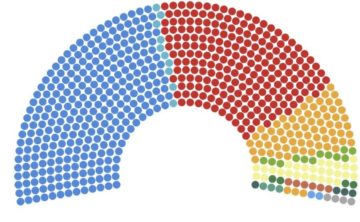 In politics, business, and education, the issue of how to ensure proportional representation of groups is often salient. A salient issue, but usually an impossible task. Why?

 My books are arranged more or less the way a library keeps its books, by subject and/or author, although I don’t use call numbers. I also have various piles of current and up-next and someday-soon reading. In addition, I have a loose set of idiosyncratic categories that guide my choice of what to read right now, out of several books I’m reading at any given time. I choose books for occasions the way more sociable people choose wines to complement their menus.






 There was another well-known economist who later claimed that he was my student at MIT, but for some reason I cannot remember him from those days: this was Larry Summers, later Treasury Secretary and Harvard President. Once I was invited to give a keynote lecture at the Pakistan Institute of Development Economics at Islamabad, and on the day of my lecture they told me that Summers (then Vice President at the World Bank) was in town, and so they had invited him to be a discussant at my lecture. After my lecture, when Larry rose to speak he said, “I am going to be critical of Professor Bardhan for several reasons, one of them being personal: he may not remember, when I was a student in his class at MIT, he gave me the only B+ grade I have ever received in my life”. When it came to my turn to reply to his criticisms of my talk, I said, “I don’t remember giving him a B+ at MIT, but today after listening to him I can tell you that he has improved a little, his grade now is A-“, and then proceeded to explain why it was not an A. The Pakistani audience seemed to lap it up, particularly because until then everybody there was deferential to Larry.
 What does it mean to say that everyone is equal? It does not mean that everyone has (or should have) the same amount of nice things, money, or happiness. Nor does it mean that everyone’s abilities or opinions are equally valuable. Rather, it means that everyone has the same – equal – moral status as everyone else. It means, for example, that the happiness of any one of us is just as important as the happiness of anyone else; that a promise made to one person is as important as that made to anyone else; that a rule should count the same for all. No one deserves more than others – more chances, more trust, more empathy, more rewards – merely because of who or what they are.
 Obviously, “Donald Trump” here is a placeholder for any political figure who one wishes to insult. But the joke raises an interesting question. What kind of work , if any, is shameful? And it also suggests a way of posing the question: viz. what kind of work might a child be ashamed to admit that their parents performed? This is an interesting dinner table conversation topic.