
by Brooks Riley
Every beloved object is the center point of a paradise. —Novalis
 The first full moon I saw after the procedure looked as if it might burst, like a balloon with too much helium. It was just above the horizon, fat and dark yellow —moving slowly upward to the firmament where it would later appear smaller and take on a whiter shade of pale. I could distinguish its tranquil seas, the old familiar terrain coinciding with a long abandoned memory.
It had been a while since I’d seen the full moon this way. For far too many moons, all I had seen were the fractured doubled contours of an indeterminate object in the night sky where the moon should have been. The problem was cataracts, or clouding of the ocular lens.
Advancing age metes out decline in increments. I hardly noticed the changes in my vision. Spending so much time on the internet, I was getting second-hand access to the world and its visual splendor and diversity through photographs and videos—none of which prepared me for the increasing inexactness that met my gaze wherever I went.
***
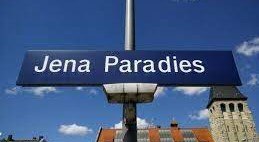 Even before the bandage came off, the implant’s ID card seemed to confirm it: I am a camera—with a new Zeiss lens made in Jena. Jena is back in my life.
How can that be, when I’ve never visited the city, only passed through its train station on my way to nearby Weimar? As I cautiously open my left eye to a rush of fine details I couldn’t see a week ago, the first words that come to mind are Jena Paradies, the name of the train stop that always made me smile. Jena’s Paradise is a nearby park. Mine is a second chance at sight. Read more »



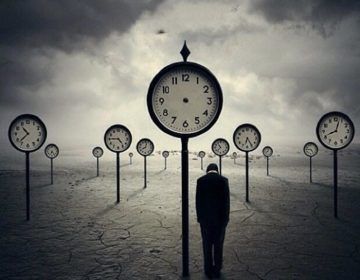 In the middle 1990’s along with journal-editing I did another job in Berkeley which was even more arduous, but also in some ways quite exciting and instructive. I was invited by the campus academic senate to serve for 3 years in a high-powered committee that decided on all appointments, promotions, salaries and merit payment increases for all Berkeley faculty (then roughly about 2,000 in size). This committee is called the Budget Committee in Berkeley; technically it advises the Chancellor, but the latter took our advice in 99% of cases—in the less than 1% cases when the Chancellor did not follow our advice, the rule was that the Chancellor was obliged to meet us in a special session of the committee and explain why he/she would not follow our advice (most often this involved some legal issues) and we had a chance to rebut their arguments.
 In his book
 Sughra Raza. This Moment … late June 2022.
 I know



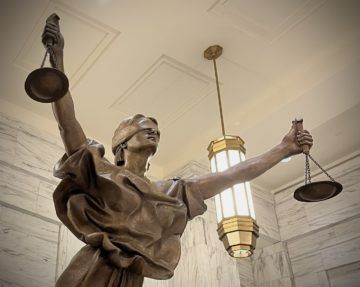 Carved in marble above the entrance to the Supreme Court Building is the motto: “Equal Justice Under The Law.”
 Napoleon Jones-Henderson. TCB, 1970.