 Jeffrey Gibson. Chief Black Coyote, 2021.
Mixed media collage, acrylic paint, vintage beads, nylon thread etc.

by Mindy Clegg
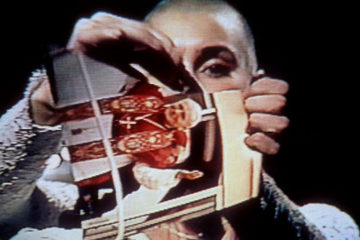
I had plans this month for a discussion of the phenomenon of easter eggs in film and TV. Instead, the sudden death of singer/songwriter Sinead O’Connor demands our attention, although I doubt I’ll have much of an argument about her career, other than it matters, much as Allyson McCabe argued in her new book.1 Much like McCabe, I want to remind us of how and why the life and career of this extraordinary women matters, and to dwell a bit on what she can tell us about the past and present. This will mostly a bit of disconnected ramblings, so I hope you bear with me to honor this incredible woman, who refused to be cowed and always told her truth, whatever it cost her. So, let’s discuss a bit about her feminism and women in music, what she told us about the history of Ireland and the Catholic Church, and what her very public struggles with mental health tell us about our evolving understanding of mental illness.
As a historian of punk and postpunk musics, I harbor a healthy skepticism of artists who hit the big time—or rather I find myself critical about how the recording industry shapes artists to make them more palatable to the widest possible audience. It rarely is about pure talent but about marketability. In the face of this, O’Connor stood firm on her own artistic ground, even as there were attempts to market her in particular ways. The industry demands women shape their image to primarily appeal to men’s tastes, so she rebelled, shaving her head and wearing baggy clothing. This has been changing in recent years, as more women dominate the charts, more often on their own terms–that seems in part thanks to O’Connor. Despite all this pressure, she flatly refused to play the adorable manic pixie girl role that some in the industry hoped to slot her into. She insisted on her voice being heard and her experiences being honored above the misogynistic din of the recording industry. Read more »
by Richard Farr
 Lucky you, reading this on a screen, in a warm and well-lit room, somewhere in the unparalleled comfort of the twenty-first century. But imagine instead that it’s 800 C.E., and you’re a monk at one of the great pre-modern monasteries — Clonard Abbey in Ireland, perhaps. There’s a silver lining: unlike most people, you can read. On the other hand, you’re looking at another long day in a bitterly cold scriptorium. Your cassock is a city of fleas. You’re reading this on parchment, which stinks because it’s a piece of crudely scraped animal skin, by the light of a candle, which stinks because it’s a fountain of burnt animal fat particles. And your morning mug of joe won’t appear at your elbow for a thousand years.
What could be worse than the cold, the fleas, the stink, and no coffee? Well. The script you are reading is minuscule, to save ink and space, and it’s written in scriptio continua. That’s right: you are plagued by headaches because spacesbetweenthewordsaremodernconveniencesthathavelikepunctuationandcoffeeandreadingglassesanddeodorantforthatmatternotyetbeeninvented. Even for someone like you, with years of prayer and special training under your greasy rope belt, this is a constant source of difficultyambiguityfrustrationeyestrainanderrer.
Thank goodness for modernity, eh? Except for one strange fact. In our smugly “digital” age, our numbers are still waiting for modernity to happen. Read more »
by Brooks Riley
by Nate Sheff
 Harry Frankfurt died on July 16, 2023. As a philosophy student I came to appreciate him for his work on freedom and responsibility, but as a high school word nerd, I came to know him the way other shoppers did: as the author of one of those small books near the bookstore checkout line. That book, On Bullshit, had exactly the right title for impulse-buying, which has to explain how Frankfurt became a bestselling author in a field not known for bestsellers.
Happily for all of us, On Bullshit turned out to be philosophically rich, not just by impulse-buy standards, but by the standards of academic philosophy. I like to imagine that when members of the book-buying public got home and sat down grinning with the funny little hardcover in their bag, they cracked it open and read straight through to the end, not even realizing that an hour or two had slipped through their fingers.
I’ve taught On Bullshit to intro philosophy students. The title makes them laugh (they can’t believe what they’re getting away with in college), but things get real quickly. Frankfurt is having fun, but he isn’t messing around. He takes his topic seriously, and even if you find his analysis unconvincing, the problem of bullshit lingers. It’s a platitude that we seem to be up to our necks in the stuff, but hardly anyone ever thought to say what this stuff is. Characteristic of the best philosophy, Frankfurt asks a question that seems obvious in hindsight, but if it was so obvious, how come nobody asked it? Light chuckling gives way to nervous laughter, which gives way to furrowed brows. This is the legacy of Socrates.
Good philosophy has a tendency to keep on giving. It furnishes you with new tools, new ways to see the world. Good philosophy is productive and fruitful because it allows you to ask questions you didn’t know how to ask before. Read more »

A small demonstration of America’s global cultural hegemony in Franzensfeste, South Tyrol. 🙂
by Mary Hrovat
 I had my first experience with Daylight Saving Time when I was 9 or 10 years old and living in Phoenix. Most of the country was on DST, but Arizona wasn’t. I knew DST as a mysterious thing that people in other places did with their clocks that made the times for television shows in Phoenix suddenly jump by one hour twice a year. In a way, that wasn’t a bad introduction to the concept. During DST, your body continues to follow its own time, as we in Phoenix followed ours. Your body follows solar time, and it can’t easily follow the clock when it suddenly jumps forward.
When I moved to Indiana as a young adult, I was relieved that my new home, like Arizona, didn’t observe DST. The history of time zones in Indiana is complex. When I moved here in 1980, most of Indiana was on Eastern time. Because the state is on the western edge of Eastern time (and arguably ought to be on Central time), DST makes less sense for Indiana. We already have relatively late sunrises and late sunsets. Eastern time is one zone east of where we should probably be. We don’t need DST to effectively move us one time zone even further east.
Before standard time zones existed, all time was based on local solar noon. Indianapolis is closer to the center of the Central time zone than to the center of the Eastern time zone, as currently defined, and until 1960, the entire state was on Central time. However, for various reasons, the state crept into the Eastern time zone, first just half of it and then most of the rest. The exception is 12 counties in the northwestern and southwestern corners, which chose to be on the same time as nearby regions on Central time. Read more »
—a transcreation after Mohammad Iqbal (1877-1938)
Imagine a bird with agile wings introduce the gathering
Now imagine the flawless bird seduce the gathering
You glimpse the fire of life veiled in everything
A hidden crown jewel imbues the gathering
Bringing forth Spring, coloring our world green
In silent foothills, a river renews the gathering
Curls of Urdu are forever grateful to the comb
You show us how not to obtuse the gathering
Your words grace not just ghazals — mischievous —
Even frozen lips in photos suffuse the gathering
Heart’s rage is a moth candle burns; your gaze foretold
sun and moon in sand grains infuse the gathering
Your regal flight entrances even the Pleiades
Rose of Shiraz bud of Delhi salutes the gathering
Your dust conceals a thousand million pearls, laments
from thresholds to rooftops induce the gathering
O Shahjahanabad — cradle of learning
Is Hindustan now out to traduce the gathering?
Ghalib buried in New Delhi’s jungle, Goethe
Interred in Weimar’s garden muse the gathering
____________________________________
Goethe (1749- 1832); Ghalib (1797 – 1869)
by Mike Bendzela

The idea that “the only intolerable thing is intolerance” wears its contradiction on its sleeve. It also violates the Golden Rule–to behave toward others as you would have them behave toward you. We all have limits to our tolerance–call them “intolerances”–and it’s not too much to ask others to tolerate them, within reason. Let them hold the backs of their hands against their foreheads and declaim their forbearance of poor, weak us. Like they’ve never been a pain in someone else’s ass.
It’s unfortunate we have to use the word “tolerance” to express the capacity to interact with various kinds of people. It has a whiff of victimhood about it, as if one were asking to be admired for one’s stamina and not for one’s humanity. “Tolerance” seems as if it were a physical capacity to withstand repugnant stimuli: One has high or low levels of “tolerance” for cigarette smoke, alcohol, pollen, toxins, sunlight, and cats. So, the same goes for homosexuals, Jews, and Republicans? “Tolerance” doesn’t adequately express that the issue is one’s comportment, not one’s fortitude, when it comes to facing others who differ from oneself.
Here’s Karl Popper on the Paradox of Tolerance, as served up by Wikipedia:
Unlimited tolerance must lead to the disappearance of tolerance. If we extend unlimited tolerance even to those who are intolerant, if we are not prepared to defend a tolerant society against the onslaught of the intolerant, then the tolerant will be destroyed, and tolerance with them.
For this to be graspable, we need a demonstration of just what the intolerance of intolerance would look like in everyday life. Read more »
by Paul Braterman

Within a single week, the raging Canadian wildfires have provoked opposite reactions from different wings of US evangelism, both claiming that their position is based on Genesis, with The Atlantic reporting on the churches’ deep political divisions. Statistical analysis confirms (is anyone surprised?) that July’s unusual heatwave across the northern hemisphere is almost certainly linked to human-caused climate change, which has also caused serious water shortfalls and aridification in the Colorado River basin, and is destabilising the North Atlantic system of currents on which the UK and northern Europe indirectly rely to keep Arctic weather at bay. Meanwhile, the fallout from the unexpected result of a by-election in a London suburb has exposed the dangerous vulnerability of climate policy to political disruption.
The Cornwall Alliance for the Stewardship of Nature, channelling the Heartland Institute, tells us (July 19, 2023) that we are mistaken in associating Canada’s wildfires with global warming, assuring us that “[t]he truth is hard data, as opposed to climate model-generated speculation, belies [sic] the link between climate change wildfires and the recent heatwave.” If news outlets say otherwise, that is either the result of ignorance, or, worse, because they are “in the bag of climate alarmism”. Wildfires happen every year anyway, smoke darkening the skies over the US Atlantic seacoast is not unprecedented (the article quotes a total of nine precedents in the last 300 years), and New Yorkers are only seeing the smoke because of the way the wind happens to be blowing. The actual causes of the fires include inadequate management, as well as “short-term weather conditions such as a drought in some regions, less winter snowfall and warmer temperatures,” as if these had nothing to do with global warming. And ruling out “model-generated speculation,” reasonable though it may sound, would make scientific explanation impossible in any area, since explanation always involves comparison of observations with a model. Read more »
by Raji Jayaraman
 Unspeakable horrors transpired during the genocide of 1994. Family members shot family members, neighbours hacked neighbours down with machetes, women were raped, then killed, and their children forced to watch before being slaughtered in turn. An estimated 800,000 people were murdered in a country of (then) eight million. Barely thirty years have passed since the Rwandan genocide. Everywhere, there are monuments to the dead, but as an outsider I see no trace of its shadow among the living.
Colleagues chat in the office. Ordinary Rwandans go about their daily business. Walking down the street, eating at restaurants, driving motorcycles, selling wares, chatting, laughing. So much laughter everywhere. How? How is it possible for people to get on with their lives as nothing ever happened, when trauma must be etched in the memory of almost every living adult in the country? How do you casually interact with people who, for all you know, are directly implicated in the murder of those you loved? It is a mystery to me. I am baffled and wonderstruck all at once.
When studying colonial history in school, I remember learning that in Rwanda, the Tutsi minority ruled over the Hutu majority for ages. It made sense to me when the genocide was explained as a contemporary, albeit extreme, manifestation of a centuries-old enmity. The Kigali Genocide Memorial’s audio guide disputes this origin story. It claims that while the Hutu and Tutsi did constitute different groups with important class differences, historically there was a great deal of fluidity between them through both intermarriage and economic mobility.
Visitors to the memorial are informed that it wasn’t until German colonizers arrived in Rwanda during the late nineteenth and early twentieth centuries, that the sharp distinction between Hutu and Tutsi was codified with the help of pseudo-science. We are shown chillingly familiar pictures of Germans using callipers to measure the length of Tutsi and Hutu noses, distances between their eyes, and sizes of their foreheads. Read more »

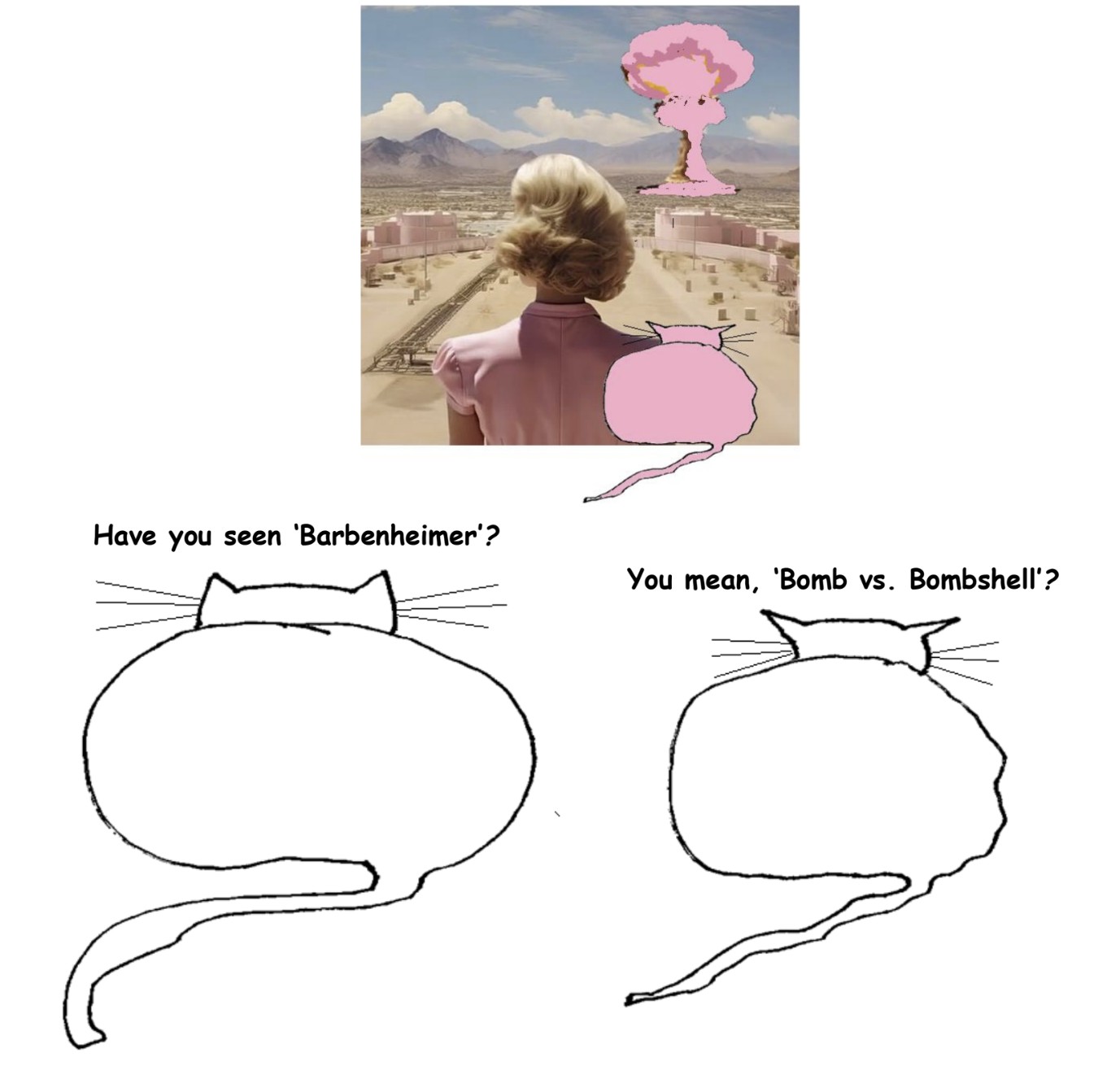
by Ashutosh Jogalekar (Warning: Spoilers ahead)
Reviewing biopics is tricky. On one hand, if you are someone informed about the facts, it’s easy to bring a scalpel and dissect every fact and character in minute detail, an exercise that will almost always lead to a critical and often negative view of a film. On the other hand, knowing that a movie is a medium of expression defined a certain way, one has to allow for creative license and some convenient omissions and embellishments that would be unforgivable in a documentary or historically accurate drama. Thus, the best way to review biopics in my opinion is a middle path, making allowance for artistic interpretations and changes of fact while still holding the movie maker up to high standards in terms of making sure that these changes don’t fundamentally distort the soul of the narrative.
I went into Christopher Nolan’s 3-hour extravaganza keeping this middle ground in mind. Having just written an eight-part series about Oppenheimer and been familiar with his life and work for a fairly long time, I approached the film with fairly high expectations. And I have to say that I was impressed. If one simple metric of a high-quality film is its ability to keep you glued to your seat for 3 hours, “Oppenheimer” delivers in spades. Much of this effect comes from Nolan’s judiciously assembled direction and from outstanding performances by key characters that keep the audience riveted. “Oppenheimer” is an Oliver Stone-like jigsaw puzzle, breathlessly switching between timelines, black and white scenes and pithy character lines interspersed with artistic imagery of crackling jolts of electricity, the shimmer of particles and waves and imagined operatic scenes of stars that signify the deep scientific reality behind our everyday world. Key aspects of the Trinity test like the assembly of the bomb and the details of the fireball are accurately rendered. But first and foremost, it is a drama about J. Robert Oppenheimer. Read more »
by Barry Goldman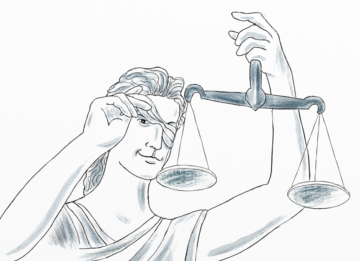
Back in 1987 Jared Diamond wrote a piece for Discover Magazine titled “The Worst Mistake in the History of the Human Race.” In it, Diamond argued “the adoption of agriculture, supposedly our most decisive step toward a better life, was in many ways a catastrophe from which we have never recovered.” Hunter gatherers, Diamond wrote, ate better, worked less, lived longer, and had fewer diseases than farmers. “With agriculture came the gross social and sexual inequality, the disease and despotism, that curse our existence.”
I have come to a similar (and related) conclusion. In this piece and the ones that follow I’m going to argue that the second worst mistake in the history of the human race was the adoption of the rule of law.
The official website of the US court system says:
Rule of law is a principle under which all persons, institutions, and entities are accountable to laws that are:
The idea rests on three assumptions. It assumes we are capable of determining what the rules should be. It assumes we are capable of arranging the rules into a complete and coherent system. And it assumes we are capable of applying the rules of that system fairly and justly. The evidence does not support those assumptions. Read more »
by Barbara Fischkin

Again, I thought about changing my name.
I dreamed about publishing essays under a new byline. I tried out pseudonyms for my next book. I wrote down alternate names, said them out loud. A name change would make introductions easier. Now, when I extend my hand and say “Fischkin,” people look at me funny, as if I might be holding live bait.
I can live with Barbara. As a first name, it is dated. But Barbara will come back in style. First names do. I was almost named Benita. Benita Fischkin. Think of that. My mother loved that name, until a friend said a cute nickname for me could be Mussa—close enough to Mussolini.
That was all my mother Ida Siegel Fischkin had to hear. She was a passionate supporter of the State of Israel, a lifetime Hadassah member and a child survivor of an antisemitic pogrom. Benita went down the drain. As a little girl, bored with Barbara—too easy to spell—I asked my mother if she had ever wanted to name me something else.
“Benita,” she said. My mother hid little from me.
Wow, I thought, wishing she had gone through with it. A name like that dripped with fame, fortune and beauty.
Benita as a baby name for a newborn girl must have been making the rounds of pregnant mothers in our Brooklyn neighborhood, circa 1954. Very odd since this was less than a decade after World War II. My guess: When it came to villains, Hitler was the main event. I bet no one ever said: “For a boy, how about Adolph?” Read more »
by Rebecca Baumgartner

Imagine someone sitting cross-legged on the floor and breathing deeply. Now imagine someone sitting on a couch and playing a video game.
Which of these is mindfulness and which is escapism? What differentiates them? Why does one seem healthier or more virtuous than the other? And what assumptions about human cognition and flourishing does that assignment of virtue rest on?
Mindfulness adherents tell us we can savor the present moment by noticing all our physical sensations in great detail: the textures we feel, the sounds we hear, the sensation of our breathing, and other forms of physical feedback. Our personality and ego take a backseat to simply being present to what’s around us.
My contrarian view is that this hyperfocus on minutiae allows the person sitting on a mat meditating to escape everything in their life that isn’t sitting on a mat meditating. Wanting to escape is not the problematic part; the issue is that we’re deceiving ourselves that it’s not escapism. Meditating and other forms of mindfulness offer a metaphysical escapism that lets you pretend for a while that you are no more than an organism receiving inputs from your immediate surroundings, with no interpretative or meaning-making capabilities. This is why certain types of meditation and other mindful states are described as “no-mind” states.
While meditating, you’re not an adult with responsibilities or a personality or justified reasons to be angry or sad – no, you’re something much simpler and easier to control: a Mars rover or a rat in a Skinner box, simply responding to stimuli and gathering data from your surroundings, making no judgments, having no desires, and keeping emotional reactions in check. If your mind does break the rules and have a thought (and it always will), you are supposed to observe it impersonally, as though it’s a cloud passing high above that has nothing to do with you. Read more »
by Brooks Riley
by Joseph Shieber
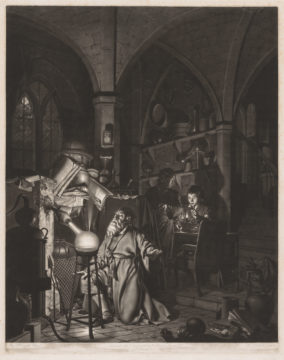
A recent study in Public Understanding of Science found that
… Republicans and evangelical-identifying individuals perceive more social threat from scientists. Viewing scientists as a group posing a social threat was associated with having less accurate science beliefs, support for excluding scientists from policymaking, and support for retributive actions toward scientists …
One of the co-authors of the study, Ariel Hassell, suggested that the study demonstrates that, “When people position science as something we should be for or against, believe or disbelieve, we lose sight of the fact that scientific research is a process.” She continued:
Often new evidence renders previous knowledge incorrect or irrelevant … Distrust, criticism and debate, when done in good faith, are part of this process and should be engaged with rather than demonized or weaponized. Otherwise, as our study shows, people may begin to see science and scientists as a social or political threat, inhibiting society’s ability to address large scale problems like hunger, disease and climate change.
It strikes me as correct to see this study as offering evidence that it is unhelpful to criticize as irrational those communities that reject scientific consensuses. I’m not sure that a further lesson from the study, however, is to suggest that “science isn’t something to be for or against.” Instead, it would be more useful to find a way to reorient those communities so that being informed about — and being in agreement with — elite scientific opinions would contribute to higher social status. That is, it seems to me that we SHOULD be finding ways to encourage more communities to perceive science as something they should be FOR. (Indeed, only then – as the study itself shows – will they appreciate “the fact that scientific research is a process.”)
I take this to be one of the lessons emerging out of my recently published paper, “An Idle and Most False Imposition: Truth-Seeking vs. Status-Seeking and the Failure of Epistemic Vigilance.” (It’s available as open access article here.) Here’s why. Read more »

At the train station in Bozen, South Tyrol.
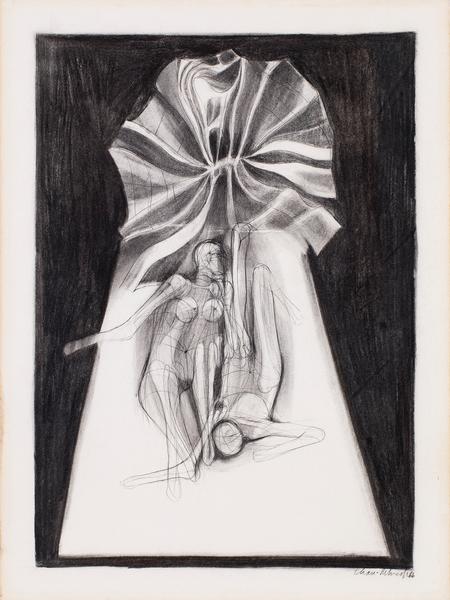 Barbara Chase-Riboud. Untitled (Le Lit), 1966.