by Mike O’Brien
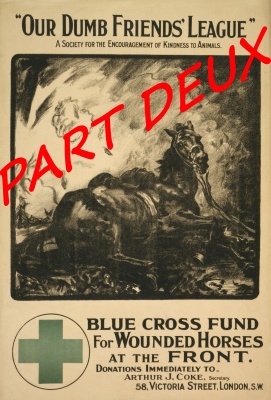
Well, it’s been two months since my last column, and I assume that most of my readers are still alive, so it’s time for a second consideration of the “war analogy” regarding our treatment of non-human animals.
I mentioned in May that Tom Regan, celebrated animal rights philosopher and activist, expressed some misgivings about the aptness and usefulness of this analogy, which compares the killing and maiming of humans in warfare to the killing and maiming (but usually killing) of animals in our economic status quo.
In several essays and interviews, Regan compared the war analogy to two other analogies employed by critics of animal agricultural industries, those of slavery and of the Holocaust. He notes that, unlike the slave owner, it is in the hog farmer’s interests to kill his captives. This is almost correct, but not quite. In both cases, the killing that results from exploitation is incidental to the goal of extracting labour, on the one hand, and meat, on the other. It would be better for the slave owner to work his captives harshly enough to kill them, but somehow have them survive to work another day. Brazilian slave owners, having access to a steady supply of new slaves from Africa, worked their captives to death at a far higher rate than those in the antebellum United States, leading Darwin to curse the country as one of the cruellest on Earth. The economically fine-tuned system of American chattel slavery is not paradigmatic of the practice across history; this is an example of how analogies between practices as widespread and varied as war, slavery and meat-eating require some nuance, specifying which instance of practice X mirrors which instance of practice Y. Read more »

 More than an age of anxiety or anger, of indignation or self-righteousness, we live in an age of the constant high. We need not consume drugs or get inebriated to be met on a daily basis with sights and behaviours to which the only reasonable reaction is an alternation between ‘wow!’ and ‘oh my god…!’ From the still-not-yet-former British prime minister saluting the oldest of the modern parliaments with a deep-felt ‘Hasta la vista

 “
“ In recent years the institution in England I have visited frequently is London School of Economics (LSE), in 1998 as a STICERD Distinguished Visitor, and in 2010-11 as a BP Centennial Professor (this was shortly after the disastrous BP oil spill in the Gulf of Mexico, so I hesitated telling people about my designation), and numerous times as visitor just for a few days. In recent times most of my interactions there have been with the development economists Tim Besley and Maitreesh Ghatak in the Economics Department and with Robert Wade, economist Jean-Paul Faguet and some years earlier, John Harriss (the political sociologist specializing in India) in the International Development Department. In recent years, apart from departmental seminars, I also gave two somewhat formal public lectures in a large LSE auditorium, once on China and India, and the other time on A New Agenda for Global Labor.
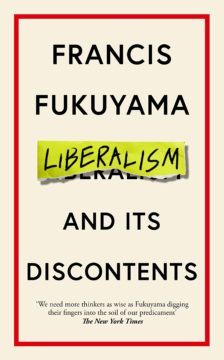 Francis Fukuyama does not mind having to play defense. Recognizing that the problems plaguing liberal societies result in no small part from the flaws and weaknesses of liberalism itself, he argues in Liberalism and its Discontents (Profile Books: 2022) that the response to these problems, all said and done, is liberalism. This requires some courage: three decades ago, Fukuyama may have captured the spirit of the age, but the spirit has grown impatient with liberalism as of late. Fukuyama, however, does not think of it as a worn-out ideal. He has taken note of right-wing assaults, as well as progressive criticisms that suggest a need to go beyond it; and his verdict is that any attempt at improvement will either stay in a liberal orbit or lead to political decay. Liberalism is still the best we have got.
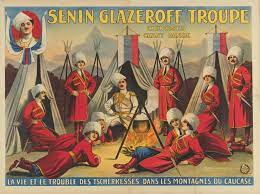 Every now and then, a nation becomes modern. Greeks and Poles and Russians were modern, for a time. Now it’s the Ukrainians’ turn.
 As the January 6th hearings continue and Americans watch
  I knew it was coming, yet I was still surprised when it hit my classroom.
 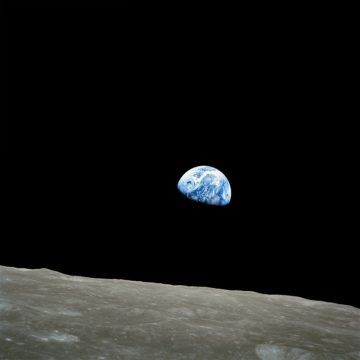 I think a lot about the fate of human civilization these days.
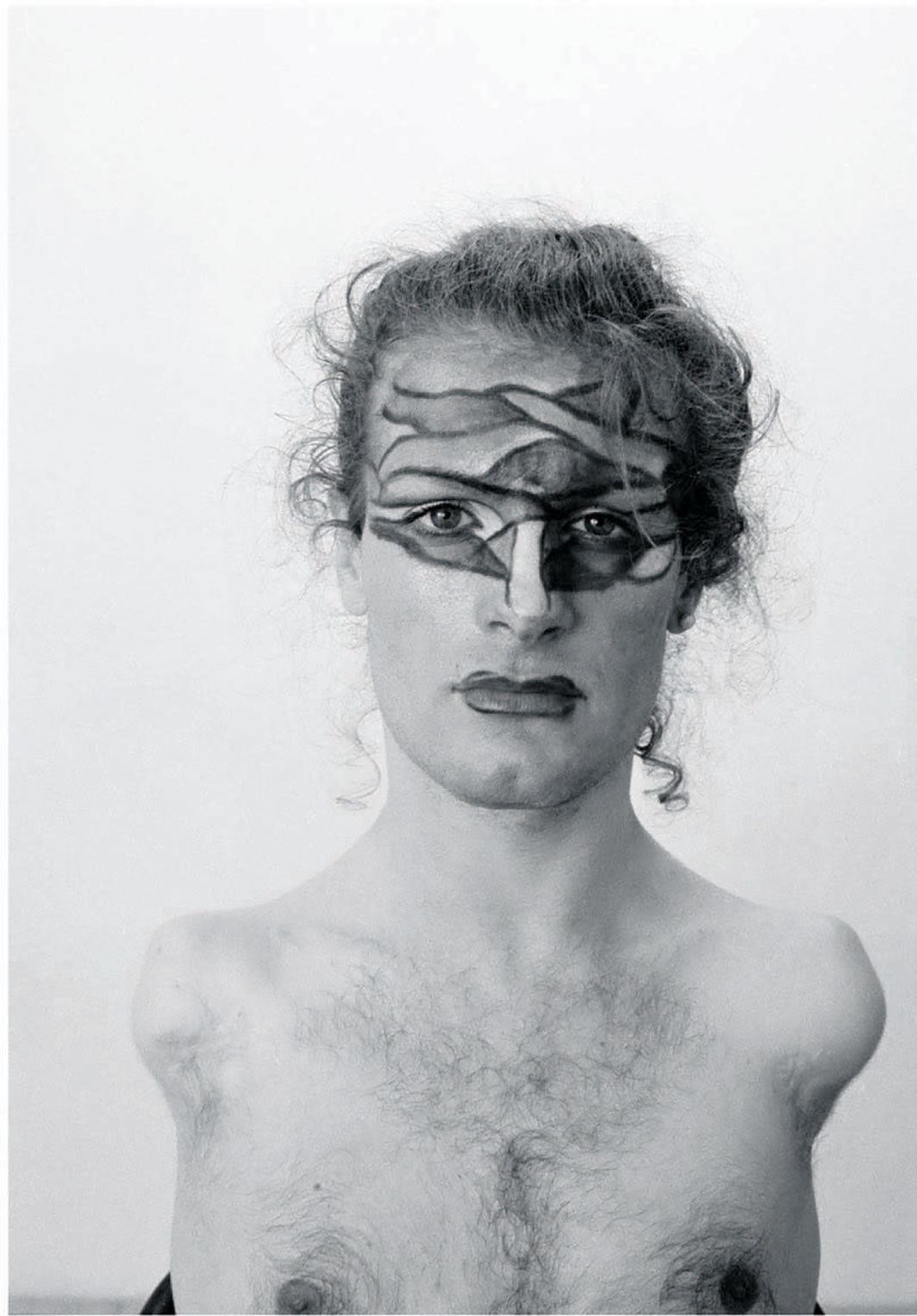 Lorenza Böttner. Face Art, 1983.