The river Eisack flowing through Franzensfeste, South Tyrol, a couple of days ago.

The river Eisack flowing through Franzensfeste, South Tyrol, a couple of days ago.
by Bill Murray
 It’s 6:15 on the Erakor Lagoon in Vanuatu. Women in bright print skirts paddle canoes from villages into town. Yellow-billed birds call from the grass by the water’s edge, roosters crow from somewhere, and the low rumble of the surf hurling itself against the reef is felt as much as heard.
Every morning the sky is grayer than blue. Clouds hang close to the hills and the water is green glass, reflecting jungle. We’re staying on a tiny island near the capital city, Port Vila. Last night the heavens inflicted a pounding rain just as we arrived at the ferry dock.
We rise to gasp at the wages of yesterday’s folly – snorkeling from an outrigger in the midday sun. Good bet we’ll stay out of the sun today; we could plausibly be served up as steak tartare, and anyway there’s the thunder, the no fooling rumble you feel through your bare, pink feet in the grass, through the earth.
Vanuatu’s colonial name was New Hebrides. It’s about 80 islands a thousand miles east of Australia. When colonial hands came off, Port Vila was left more British than French. The two countries governed the New Hebrides in an arrangement they called a condominium from 1906 until independence in 1980. Read more »
by Michael Abraham
It has all gotten too technicolor for Dorothy Gale. The trees and the grass are too green—not to mention the Emerald City (she had to take the glasses off several times to rub her eyes)—and the slippers are much too silver, or were they ruby? There are so many colors she is getting confused. The eyes of her friends, these queer little friends she has made, they are much too luminous for her, glittering, glittering, their eyes—it is driving her crazy. Yes, crazy: Dorothy is going crazy in Oz. She stares at the basket of the Wizard’s balloon, and she prays for wind, prays ardently. See, Dorothy has killed a witch, befriended a witch, killed another witch. Dorothy has done all the work of a messiah. She is tired, but, more than tired, her mind is starting to come a little undone at its edges. She loves these odd friends of hers, and she loves the feeling of being on an adventure, but, all along, she has been yearning for quite the opposite of adventure, for home. Not because home is all that special. Home is sepia and boring and full of responsibility. She’s yearning for home because there is something sinister beneath all the brightness of Oz, something dead sent against her flourishing. Kansas is safer. There are no witches to vanquish in Kansas. See, Dorothy never set out to be any kind of hero. She was just in the wrong cyclone at the wrong time. But she feels herself to be so much herself, so overmuch, when in Oz that it is starting to drive her mad. This grandiosity of being a slayer of witches. Dorothy Gale has become much too much of herself, and she is coming undone. So she stares at the balloon, and she prays for wind. And the wind comes, but it comes too soon. It carries off the Wizard. Read more »
Editor’s Note: Frans de Waal’s new book, Different: Gender Through the Eyes of a Primatologist, has generated some controversy and misunderstanding. He will address these issues in a series of short essays which will be published at 3QD and can all be seen in one place here. More comments on these essays can also be seen at Frans de Waal’s Facebook page.
by Frans de Waal
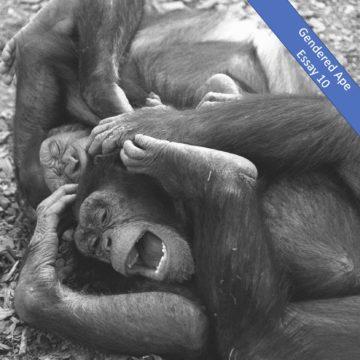
No one can deny the traditional (and ongoing) gender inequality in human society, which disadvantages girls and women. It’s a huge injustice that we need to fight.
But who says that elimination of gender differences is the solution? Or that we need to promote gender-neutrality?
Of the two words in “gender inequality,” only one is a problem, and it isn’t “gender.”
A fully gender-neutral upbringing of children may not even be feasible. Human biology isn’t blind to sex. The breastmilk of mothers, for example, varies dependent on whether she’s nursing a boy or a girl. Milk for male babies has a greater energy content. Milk of monkey mothers shows the same difference.
Young male primates are more energetic and rambunctious than same-aged females. When hundreds of children in different nations were outfitted with accelerometers to measure body movements, boys showed far more bursts of vigorous locomotion than girls. That boys are also three times more likely than girls to be diagnosed with attention-deficit/hyperactivity disorder (ADHD) reflects the same difference. Read more »
by Rafaël Newman
Because I work part time developing a terminology database at a large econometric institute; and because it is important that, in this capacity, I remain abreast not only of raw vocabulary but also of the substance of recent developments in financial technology, known by its Orwellian moniker “FinTech”; and because the owl of Minerva flies at dusk—for all these reasons I recently dusted off my book-bag, packed my reading glasses and a roll of antacid, and registered for a course on blockchain, crypto, and digital currencies.
The three-month program I attended, leading to a so-called Certificate of Advanced Studies (CAS), was offered at the University of Zurich’s Blockchain Center, an interdisciplinary institute ranked fourth for university teaching of distributed ledger technology worldwide. And indeed, my fellow students had come from as far afield as Australia, India, and Brazil, as well as from various corners of Switzerland and Europe, presumably in the hopes of profiting from cutting-edge technical expertise in their work back home as computer programmers, bankers, and jurists.
Instruction was provided by a changing roster of professors in three modules of several full days each, devoted respectively to the IT, economic, and legal dimensions of the new(ish) technology. Each module was punctuated by an assignment, to permit evaluation of the participants: the IT module closed with an online multiple-choice test; the economic component was rounded out with a series of group-work exercises; and the legal section, and thus the course as a whole, concluded with a written essay, on a topic chosen from among suggestions made by the various professors, one of whom, depending on the student’s choice of topic, would then serve as supervisor. Read more »
“Shu” is the single teaching of Confucius and “jen”
it’s counterpart. Shu means reciprocity; jen is love,
kindness and goodness. T’ien is heaven.
–Confucius and the Teaching of Goodness
Goodness came as two hearts and sat beside me.
“My name is Shu,” they said. At that moment
two birds flew through an open window generously wide
and, pointing, Shu said, “Jen.”
The two hearts of Shu, in duet, said,
“What can we do for you?”
The two birds of Jen sang,
“Looks like you need a friend.”
“The world is split in two, and so are you,” said Shu
“See the birds of Jen, she said? They feed each other and
so are free in T’ien.”
“Think of me,” said Shu
and you may be free too.”
Jim Culleny, 6/18/11
by David Kordahl

I’ve been thinking again about the relationship of scientists to the history of science. Lorraine Daston, the historian and philosopher of science, was recently interviewed for Marginalia, where her interviewer asked a strongly worded question. “Scientists are—I don’t want to put it too provocatively—but frankly they’re afraid of the history of their own discipline. What do you think that means?”
Daston was not quite willing to put all the blame at the feet of scientists. Historians of science, she remarked, have become more specialized, making their work less useful to scientists. Likewise, philosophers have failed to “remake of the concept of truth that does justice to the historical dynamism of science.” But then there’s the scientists themselves, who “consider almost anything which is not within their discipline, including other sciences, to be blather. So, there’s quite enough blame to go around in terms of explaining […] this impasse of mutual incomprehension.”
When this interview was released, it prompted some online chatter. Some scientists reading the interview did not see themselves in Daston’s characterization, since scientists do not, in general, consider themselves uninterested in the history of science—quite the opposite. The problem, for such history-interested scientists, was of approach rather than content.
To explore the basic distinction between “science history for scientists” and “science history for historians-and-philosophers-of-science,” I’ll use two complimentary books. Einstein’s Fridge: How the Difference Between Hot and Cold Explains the Universe, out last year from the science writer Paul Sen, exemplifies the former approach, where history provides a narrative scaffold to lead us gently toward our modern scientific theories. Inventing Temperature: Measurement and Scientific Progress, the 2004 work by the historian and philosopher of science Hasok Chang, is a classic example of the latter, where history is used as a proving ground to show that science and its history is more complicated than most scientists care to admit. Read more »
by Leanne Ogasawara

1.
Ten years have passed since I left Japan. And it has been about five years since I stepped away from professional translation. I have made little effort to retain my Japanese, and so it has hardly been surprising to find my language skills falling away. There have been times where I even took a willful enjoyment realizing just how fast all those years of hard work could fade away. Like a colorful mandala made of sand that Tibetan monks labored to create and then destroy, my ability to write in Japanese disappeared overnight.
The more passive pursuits of reading and listening have proven to be less slippery. But I no longer have that feeling of being a different person in thinking and dreaming in Japanese. It’s gone. And my son, who learned Japanese as his native language, lost his skills even faster than I did. People sometimes say to me that a person can’t lose their native language, but it’s simply not true. I have met people who lost their first tongues time and time again. My son, who left Japan at seven years old, might have Japanese in their somewhere, but it is buried deep.
Effortless to learn, it’s also easy to lose languages in childhood.
In contrast, to learn a second language as an adult is a Herculean undertaking. Neither quick nor easy, it took me a decade of serious study to feel confident in Japanese.
Last week, Claire Chambers wrote a marvelous essay in these pages called Beginning Hindi with a Beginner’s Mind. By sheer coincidence, her essay mentioned a memoir that I am currently reading called Dreaming in Hindi. Written by Katherine Russell Rich, it is about the author’s year of language study in the romantic desert city of Udaipur. Read more »
by Akim Reinhardt
 It’s not so much that I’m like my father. Rather, I sometimes feel as I understood him to be.
My mother? Not so much.
Part of it might have to do with sex. My father was a man. I’m a man. But I can’t really feel like a woman. I can feel for a woman. I can empathize. And I can listen when a woman describes her life to me. But I can never fully experience it for myself beyond the vicarious. It’s like being black or gay or someone who doesn’t speak a word of English. There’s a gap I can’t fully cross, a way of being I can’t have short of a plot twist in one of those Freaky Friday body swap comedies .
Is that why the inevitably male patriarchal priests and prophets fashioned a one, true male God? Because aside from the idea that only men should rule, and a hundred other sexist reasons, they could not imagine the soul of a woman?
But that only helps explain why I never feel as I understand my mother to be. Why do I sometimes feel as I understood my father to be?
I’m half of each of them. And if someone asks, I often describe myself as half-Jewish and half-redneck. It’s an incredibly facile and reductionist response. But it’s also an answer the questioner isn’t expecting, and probably isn’t even familiar with. So while seeming to offer little beyond stereotype, it also mildly confuses the questioner without intimidating them. That in turn gets them thinking. It can be good to put someone on their back foot when they ask you that question.
You know the question.
Peeling back that pat answer a bit forces me to remember who he was and wasn’t. A redneck? It was hardly some badge he wore, though he didn’t shy away from the label if it were hung on him. But one had to be careful in ways that New Yorkers might not know how to. I remember him angrily explaining to me once, after I’d made an offhanded comment, that there was a world of a difference between a redneck and white trash. And that he was never the latter. Read more »
by Marie Snyder
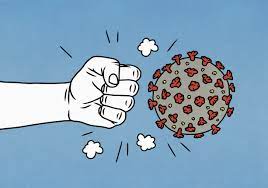 The anger that escalated at a recent Ottawa-Carlton school board meeting when a trustee proposed and lost a motion to mandate masks, in a setting that typically elicits polite discussion, makes it seem like this type of anger is new and shocking in its inappropriateness. But this video of the history of masks, and memories of what many of us lived through when we imposed smoking bans and seatbelts years ago, makes it clear that people have always been fired up by any new restriction. Masks may be even more enraging because they’ve also become symbolic of a danger and harm we’d like to forget.
But more than that, this type of anger that targeted the specific trustee with emails and phone calls, that included vile sexist and racist comments and threats, is more reminiscent of GamerGate, when a few women dared to criticize some games and were brutally harassed online and doxed, provoking at least one to move. This Vox article explains what needs to be done to prevent these occurrences:
It’s crucial to understand how, when, and why an online mob is expressing outrage before you decide how to respond to it. Gamergate should have taught businesses that online mobs can and do look for excuses to be outraged, as a pretext to harass and abuse their targets. There’s a difference between organic outrage that arises because an employee actually does something outrageous, and invented outrage that’s an excuse to harass someone. . . . 2014 should have been the year the cultural conversation began to acknowledge how serious aggression toward women really is. It wasn’t.
This understanding of the situation suggests that an outlet for anger is the point and that gaming was just a catalyst or merely the easiest avenue for the anger to seem remotely reasonable. It’s like when a hungry or tired toddler is upset with a random toy until that inner irritation is resolved. The grade school version finds a scapegoat to unload on and then they discover the glee of having power over another. We need to resolve these inner irritations and the joy of domination before people become adults with a greater capacity to cause lasting harm. Read more »
by Brooks Riley
by R. Passov

There was a big earthquake in the San Fernando Valley in 1971. Overpasses fell in the north end. People died. My junior high school was closed for two weeks.
I was in the 7th grade and had just begun to hang around a boy named Mark. During recess or lunch, we’d walk to the back of a field of grass and smoke cigarettes. Sometimes, if she were in school, we’d stand next to Mark’s older sister, Sharon.
A few days after school was closed, Mark said that I should join him selling candy for Dave Katz. Dave was college-age at the time. He lived in the garage of his parents house and earned his living rounding up boys and taking them all over Los Angeles to sell candy. We were told to say we were trying to earn enough money to go to a boys camp and could you help us out by buying a box of candy. Dave got the candy from a local supermarket.
For most of the two weeks that we were out of school, Dave would pick me up at around 7:00 AM. By the time he got to my apartment, his 1971 Dodge Charger was full. I’d force my way into the back and sit on laps. Our first stop was breakfast. As many as nine would get out of the two door Charger which had bucket seats in front.
We’d eat as if we were just out of juvenile hall. Sometimes, we’d pay the bill by each leaving our share in our water glass. We’d put a place mat over the glass, turn it upside down, rest it on the table, then slide the place mat away. Other times, we’d simply get up in mass and rush the door. Read more »
by Michael Liss
 The word arrived from the furniture store. They have come! After five months of supply-chain suspended animation, our 15 feet of 72-inch-high bookcases are here. Bibliophiles everywhere (well, everywhere in my family) raised their voices in praise.
I’m excited. Seriously excited. My wife, son, and daughter are excited. While we already had a number of bookshelves and built-ins, their capacity was vastly exceeded by the books at hand. Those “loose” books were everywhere; turned flat, double-shelved, stacked on tables and desktops and chairs and nightstands. A shameful number of them were in boxes, embarrassed (you could hear them grumbling at times) that they were less loved. Some, even, had been exiled to a storage facility, enveloped in quiet beyond the whirr of ventilation systems.
Simple humanity cried out for a solution. Now, liberation was close at hand. The day after Thanksgiving (how’s that for a Providential intervention?), two strong men brought our prizes.
I was not there to witness this, needing to go to the office for a few hours, but my wife was, giving me play-by-play and texting me pictures. Wondrous, fantastic, spectacular. My mind wandered from the work-related tasks at hand. I fought it back with the idea that the sooner I got things done, the faster I would see the mighty oaks and start to grapple with the critical decisions of what went where. I escaped as soon as I could, leaving the strategic “out of the office for the holiday” auto-response on email. Read more »

This reflection of trees, yesterday, on the surface of a pond in Brixen, South Tyrol, reminded me of M. C. Escher’s “Three Worlds”. (See that in comments.)
by William Benzon, with the assistance of ChatGPT
It’s that time again. You may have heard about it, you may even have played with it. Another AI engine has dropped! – one of those black boxes that Tim Sommers talked about last week. This one is called ChatGPT and, as its name indicates, it’s a close relative of GPT-3, which set off shockwaves when it dropped in the summer of 2020. It was difficult for ordinary mortals to get access to GPT-3, but anyone can sign up for a free account on ChatGPT, and so I did, on December 1, the day after it dropped.
Since then I’ve having a lot of fun playing with it. I’ve chatted with it about brass instruments, trumpets in particular, though I had to work a bit to get it to cough up information about Bud Herseth, one of the most important orchestral trumpeters of the last half-century. We had a long and engrossing exchange about Godzilla: King of the Monsters, and Gojira, the original Japanese film from 1954. I even coaxed it into writing a parody of “Kubla Khan” that managed to pwn [sic] Donald Trump.
But I want to tell you about our “conversation,” if you will, about Steven Spielberg’s Jaws and the ideas of the late Rene Girard. As you may recall, I published a 3QD article about subject earlier this year, Shark City Sacrifice: A Girardian Reading of Steven Spielberg’s Jaws. So I’m familiar with the topic.
Of course, when I did my work, I started by viewing the film, several times in fact. ChatGPT didn’t do that; as far as I know we don’t have any AI system that could view a feature-length film and create a competent summary of the plot much less offer an interpretation of it. However, Jaws is well known and there is a great deal about it on the web, including several different scripts, though I have no idea whether or not any of those scripts were in ChatGPT’s training corpus.
With that in mind, pour yourself a drink and get comfortable, for this is going to take a while. Read more »
by Andrew Bard Schmookler
[This is the sixth and final entry in the series I’ve offered here.]
Please Permit Me to Talk as if Compelled by Truth Serum
It’s an awkward position to be in. Much of what I’ve spent more than a half century creating would likely die with me if I died now. Which would be no big deal except that I have long strongly believed it could prove valuable to a human future I care deeply about.
That has driven me, in my mid-70s, to throw caution to the wind. Which means doing everything in my power to get this creation of mine out into the world far enough that it would survive my own death.
The awkwardness involves my having come to the judgment that this “everything” includes my making claims that some may dismiss as grandiose. But my conviction of the validity of those claims compels me to take that risk.
What I feel impelled to get out into other people’s minds – so it would not die with me – is what I call an “integrative vision” for understanding the human story: a way of seeing things whole that has important implications for how we see ourselves as a species, how we understand what we see in the pages of human history, and how we perceive the challenges humankind must meet if our civilization is to survive for the long haul.
For a while, I tried to resign myself to the reality that, despite my efforts, most of that “integrative vision” would disappear with me. That would have worked, had I been able to look at it just in terms of my life, and my desires. I’ve had my share of wishes come true.
But that’s never been what it’s mostly about. Since the first big piece of that integrative vision came to me in 1970, I have always been driven by the conviction that there was something here that might help humankind survive for the long haul, rather than end our species’ story in self-destruction. Read more »
by Tim Sommers

My wife Stacey is irritated with the way Netflix’s machine learning algorithm makes recommendations. “I hate it,” she says. “Everything it recommends, I want to watch.”
On the other hand, I am quite happy with Spotify’s AI. Not only does it do pretty well at introducing me to bands I like, but also the longer I stay with it the more obscure the bands that it recommends become. So, for example, recently it took me from Charly Bliss (76k followers), to Lisa Prank (985 followers), to Shari Elf (33 followers). I believe that I have a greater appreciation for bands that are more obscure because I am so cool. Others speculate that I follow more obscure bands because I think it makes me cool while, in fact, it shows I am actually uncool. Whatever it is, Spotify tracks it. The important bit is that it doesn’t just take me to more and more obscure bands. That would be too easy. It takes me more and more obscure bands that I like. Hence, it successfully tracks my coolness/uncoolness.
The proliferation of AI “recommenders” seems relatively innocuous to me – although not to everyone. Some people worry about losing the line between when they just like what the AI recommends to them, and when they adapt to like what the AI says they should like. But that just means the AI is part of their circle of friends now, right? It’s the proliferation of AIs into more fraught kinds of decision-making that I worry about.
AIs are used to decide who gets a job interview, who gets granted parole, who gets most heavily policed, and who gets a new home loan. Yet there’s evidence that these AIs are systematically biased. For example, there is evidence that a widely-used system designed to predict whether offenders are likely to reoffend or commit future acts of violence – and, hence, to set bail, determine sentences, and set parole – exhibits racial bias. So, too several AIs designed to predict crime ahead of time, to guide policing (a pretty Philip K. Dickian idea already). Amazon discovered, for themselves, that their hiring algorithm was sexist. Sexist, racists, anti-LGBTQA+. anti-Semitic, and anti-Muslin language is endemic among large-language models. Read more »
by Ashutosh Jogalekar

It’s Thanksgiving weekend here in the U.S., and there’s an informal tradition on Thanksgiving to give thanks for all kinds of things in our lives. Certainly there’s plenty to be thankful for this year, especially for those of us whose lives and livelihoods haven’t been personally devastated by the coronavirus pandemic. But I thought I would do something different this year. Instead of being thankful for life’s usual blessings, how about being thankful for some specific facts of nature and the universe that are responsible for our very existence and make it wondrous? Being employed and healthy and surrounded by family and friends is excellent, but none of that would be possible without the amazing unity and diversity of life and the universe. So without further ado and in no particular order, I present an entirely personal selection of ten favorites for which I am eternally thankful.
I am thankful for the value of the resonance level energy of the excited state of carbon-12: carbon-12 which is the basis of all organic life on earth is formed in stars through the reaction of beryllium-8 with helium-4. The difference in energies between the starting materials (beryllium + helium) and carbon is only about 4%. If this difference had been even slightly higher, the unstable beryllium-8 would have disappeared long before it had transmuted into carbon-12, making life impossible. Read more »
slogging along he was
partially absent as usual he was
just watching the river flow he was,
but then got a shutter-snap glimpse
of the real of its flow and went
……………… still
he stopped not at inch from its brink looking,
but not just looking, no,
deeper than looking, seeing
seeing the river flow, no, being
being the river’s flow
it was brief, that ecstatic glimpse,
been looking for it since in a welter of words,
held by their dam, sleepy, semi-alert, so
still slogging he is
Jim Culleny
11/26/22