
by Marie Snyder
 I’ve been a complainer since childhood. From the outside, people might suggest it’s a miserable disposition that’s neither useful nor pleasant, but, from the inside, I was just always noticing ways things could be improved and wondering why (and if) things had to be as they were. Why do we have dinner at six, when I’m hungry at four? So much didn’t make sense, and I was on a crusade to let those in power know about it. My parents handled it with a rule: No complaining without proposing a solution. It’s not a bad strategy, except then they were presented with many uninformed solutions as well. Their patience was astounding. I’ve since come to see the utility and delightful potential of the behaviour.
Complaining is what we do when we don’t have power or perceive ourselves to be without power. Even if we do it ourselves, we often hate to hear it from others for a few reasons. First, if we think people have power to try to change things, to actually say something to the boss, but they just lack the courage to use their power, it’s annoying or even enraging. It’s sometimes the irritation of almost — we could almost have this if only this person would actually do something instead of just whining about it! It feels like they could easily fix their bind, but they just won’t, as if we can all magically override those brain signals telling us it’s not safe to speak up. They might have more to lose than we realize. But sometimes the lack of courage is from an illusion that our way is the better way, and we’re not quite ready to test out that premise. It can reveal an annoying inflexibility to try it this way instead.
Secondly, if we think people don’t have power and it’s not possible to change the situation, then complaining is frivolous, a waste of breath, and maybe also a reminder that we’re all stuck with something we don’t like. We’re trying to forget how much this situation sucks and just accept the situation for what it is, head down, muscling through. However, whether we can change things or should have the serenity to accept them is a very complex consideration, often requiring conversations with others along the way. Read more »
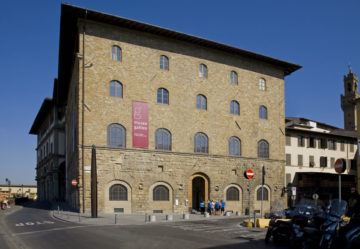 This past spring, I found myself sitting, masked, at a wooden desk among a scattering of scientific researchers at the Museo Galileo in Florence. Next to me was a thick reference book on the history of astronomical instruments and a smaller work on the sundials and other measuring devices built into the churches of Florence to mark the cyclical turning points of cosmic time. The gnomon of Santa Maria del Fiore, for instance, consisted of a bronzina, a small hole set into the lantern ninety meters above that acted as a camera oscura and projected an image of the sun onto the cathedral floor far below. At noon on the day of the solstice, the solar disc superimposed itself perfectly onto a round marble slab, not quite a yard in diameter, situated along the inlaid meridian. I studied the explanations of astronomical quadrants and astrolabes and the armilla equinoziale, the armillary sphere of Santa Maria Novella, made up of two conjoined iron rings mounted on the façade that told the time of day and year based on the position of their elliptical shadow, when all at once it occurred to me that I’d wanted to write about something else altogether, about a person I occasionally encountered, a phantom living somewhere inside me: the young woman who’d decided not to leave, not to move to Berlin after all, to rip up the letter of acceptance to the art academy she received all those years ago and to stay put, in New York. Alive somewhere, in some other iteration of being, was a parallel existence in an alternative universe, one of the infinite spheres of possibility in which I’d decided differently and become a different woman.