We in the West live in societies organized around the idea and practice of work, where work is conceived as activity undertaken for economic gain. While that activity may benefit the worker immediately and directly, as in the production of food or clothing for their own use or to be used by immediate family, more likely the activity is undertaken for money which may then be exchanged to whatever one wishes. The assumption has been that a single adult can earn enough money in 40 hours of work per week to support a family.
Charlie Keil and I argue, in Playing for Peace: Reclaiming our Human Nature, that this assumption is no longer tenable. Too many people work for too long in return for a life that may be materially comfortable, but all too often is precarious, and, in any event, is not very satisfying. We suggest that the activity of music-making has much to teach us about living a satisfying life. This article is adapted from the opening chapter of Playing for Peace.
I stage the problem with a classic essay by the economist, John Maynard Keynes, in which he predicted that by now we would have a 15-hour work week. What happened to that? Then I take up music and dance as the fundamental basis of human nature. Then we take up the concept of a moralnet, which cross-cultural anthropologist Raoul Naroll argued was the fundamental building block of human society. We then conclude where we began, with Keynes. Read more »
 In 1998 when Amartya Sen got the Nobel Prize it was a big event for us development economists. Even though the Prize was announced primarily for his contributions to social choice theory (in particular, his exploration of the conditions that permit aggregation of individual preferences into collective decisions in a way that is consistent with individual rights), the Prize Committee also referred to his work on famines and the welfare of the poorest people in developing countries. Even this fractional recognition of his work on economic development came after a long neglect of development economics in the mainstream of economics. The only other development economist recipients of the Prize had been Arthur Lewis and Ted Schultz simultaneously decades back.
 In June 1945, the American military appointed twenty-nine-year old Pat Lochridge mayor of Berchtesgaden, the tiny fairytale Bavarian town near the Austrian border crowded by Alps, where three thousand feet up, Hitler built his Eagle’s Nest retreat. “It is the intention of the Allies that the German people be given the opportunity to prepare for the eventual reconstruction of their life on a democratic and peaceful basis,” wrote the Allies at Potsdam.
  Physicists writing books for the public have faced a longstanding challenge. Either they can write purely popular accounts that explain physics through metaphors and pop culture analogies but then risk oversimplifying key concepts, or they can get into a great deal of technical detail and risk making the book opaque to most readers without specialized training. All scientists face this challenge, but for physicists it’s particularly acute because of the mathematical nature of their field. Especially if you want to explain the two towering achievements of physics, quantum mechanics and general relativity, you can’t really get away from the math. It seems that physicists are stuck between a rock and a hard place: include math and, as the popular belief goes, every equation risks cutting their readership by half or, exclude math and deprive readers of a deeper understanding. The big question for a physicist who wants to communicate the great ideas of physics to a lay audience without entirely skipping the technical detail thus is, is there a middle ground?
 Sughra Raza. Self-portrait in Reflected Morning Light, August 2, 2022.
 If philosophy is not only an academic, theoretical discipline but a way of life, as many Ancient Greek and Roman philosophers thought, one way of evaluating a philosophy is in terms of the kind of life it entails.
 It’s still such a strange time as regards the Covid-19 pandemic. Most governments have lifted restrictions and lockdowns. However, new variants are still emerging and far too few people have been vaccinated globally to lend confidence for the health crisis’s resolution. With this in mind, I’ve been reading
  The Welcome Center museum isn’t exceptionally well-known. I often hear variations of the same phrase: “Oh, I’ve been coming to Breckenridge for years and never knew there was a museum back here!” It does get a lot of foot traffic, though, because (as its name implies) it is in the back of the Welcome Center building.
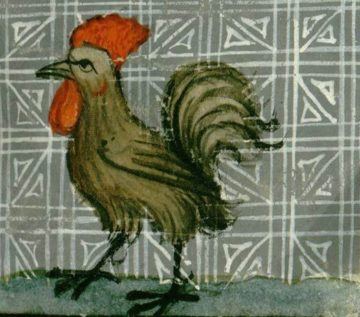
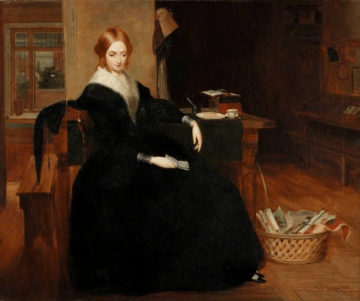 A little while ago my friend Bethany requested that I write an essay on the following topic: “Can/should pedantry be reconstituted as a virtue, maybe particularly for women.” I filed it away on my list of possible future essay ideas, but like a
 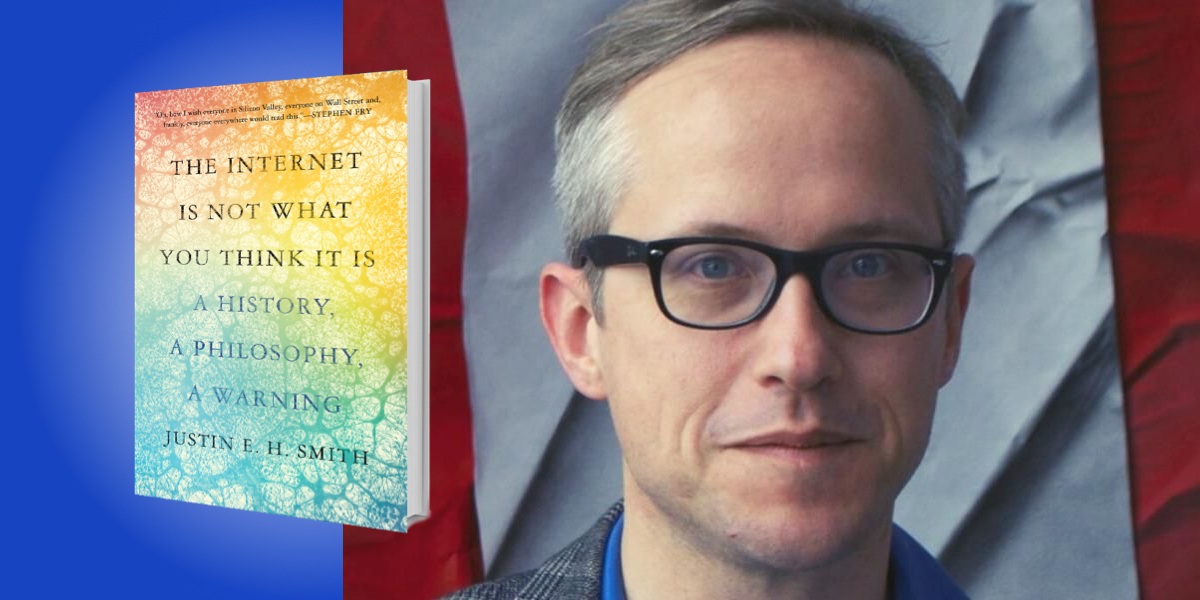 Justin E. H. Smith’s recent book,
  I’m not sure what Americans were like in the 18th and 19th century, but they have to have been a lot tougher, less whining, less self-important and paradoxically more exceptional without thinking they were exceptional than Americans of today.