
by Michael Abraham
She used to roll up to my house late at night, in her green pickup truck, smoking a Parliament out the window and blasting The Strokes. I was seventeen. I would climb in, and we would drive through my neighborhood much too fast, her weak, amber headlights illuminating only the nearest spot of road. We would talk about the day, about our friends at Catholic school, about whatever. It wasn’t so much about the talking. Even then, at that early time in our friendship, it was about the being together, often the being together in silence. We grew up outside of Seattle, and so there were woods aplenty, and we would pull off on some country highway, and she would take out her straight-tube bong, and we would rip it while Julian Casablancas crooned, Some people think they’re always right. Others are quiet and uptight. Others, they seem so very nice-nice-nice, oh! Inside they might feel sad and wrong, oh, no! We liked that song, probably because inside we felt so sad and so wrong, so unfit as subjects in the world we inhabited. Two misfit kids in a green pickup truck in the dead of night. Then, she would start the truck back up, and we would drive listlessly through the dark vigil of the trees on either side of the road, winding this way and that, singing along or lapsing into thought. I would stare out the window and watch the shadows roll by, and I would feel, for a moment, impossible and effervescent. I fell in love with her on these long, circuitous drives through the night. I came to believe very strongly in her, in the vibrancy of her presence, in some curious and ineffable extra that she had to her which other people did not have. She was imposing, even then, as she is now—but gentle inside, just.
For my birthday that year, she gave me a copy of Crush, Richard Siken’s first book of poetry. Years later, I would meet Siken at a signing in New York, and I would ask him to do something a bit odd, which was to sign the book, not on the title page, but under a poem called “Unfinished Duet.” He would ask why, and I would respond, “A dear friend gave me this book when I was seventeen, and I read ‘Unfinished Duet,’ and now I study poetry at NYU,” which was an entirely true genealogy. Siken smiled knowingly, and he wrote, beneath the poem, “I [illegible] like this [illegible] little poem. I couldn’t finish it so I wrote a whole ‘nother book. RS.” This was probably a gentle nudge to get me to buy the book for which the signing was being held, but I was a college student and broke, so I left with my newly signed copy of Crush and did not buy War of the Foxes until a long time after. Read more »

 On the 13th September 2022, Jean-Luc Godard, the Franco-Swiss film-director, film-poet, film-philosopher, died at the age of 91. One of the most imaginative, rebellious, truly courageous artists on this planet whose existence, in more ways than can be enumerated in language, changed the face of our modernity, decided to end his life through assisted suicide, which is a legal practice in Switzerland, the country he had been living in since 1976, and in which he had spent his youth. He was not ill, ‘but exhausted’. In addition to everything else, his last action resonates with a magnitude that is as powerful as a political stand as it is as a last demonstration of a personal ethics which can be summarised as: moral integrity or nothing. A moral integrity, which he brought to bear indefatigably over the course of a lifetime in pursuit of freedom, resolution and independence – at whatever price.
 The only thing worse than a good argument contrary to a conviction you hold is a bad argument in its favor. Overcoming a good argument can strengthen your position, while failing to may prompt you to reevaluate it. In either case, you’ve learned something—if perhaps at the expense of a cherished belief.

 In connection with our research and meetings in the MacArthur network we did a considerable amount of international travel. Let me now turn to a whole series of my travel-related stories, some in connection with this network but mostly outside it and in different periods of my itinerant life.

 As forced migration in the wake of war and climate change continues, and various administrations attempt to additionally restrict the movement of people while further “freeing” the flow of capital, national borders, nativism, and a sense of cultural rootedness have re-emerged as acceptable topics in a globalized order that had until recently believed itself post-national. In the German-speaking world, where refugees have been met with varying degrees of enthusiasm depending on their provenance, national pride, long taboo following the Second World War, at least in Germany, is enjoying a comeback. As the last generation of perpetrators and victims dies and a newly self-confident, unproblematically nationalist generation comes to consciousness, it is again becoming possible to use a romantic, symbolically charged term like Heimat.
 Sughra Raza. Don’t Step On The Jewels, 2014.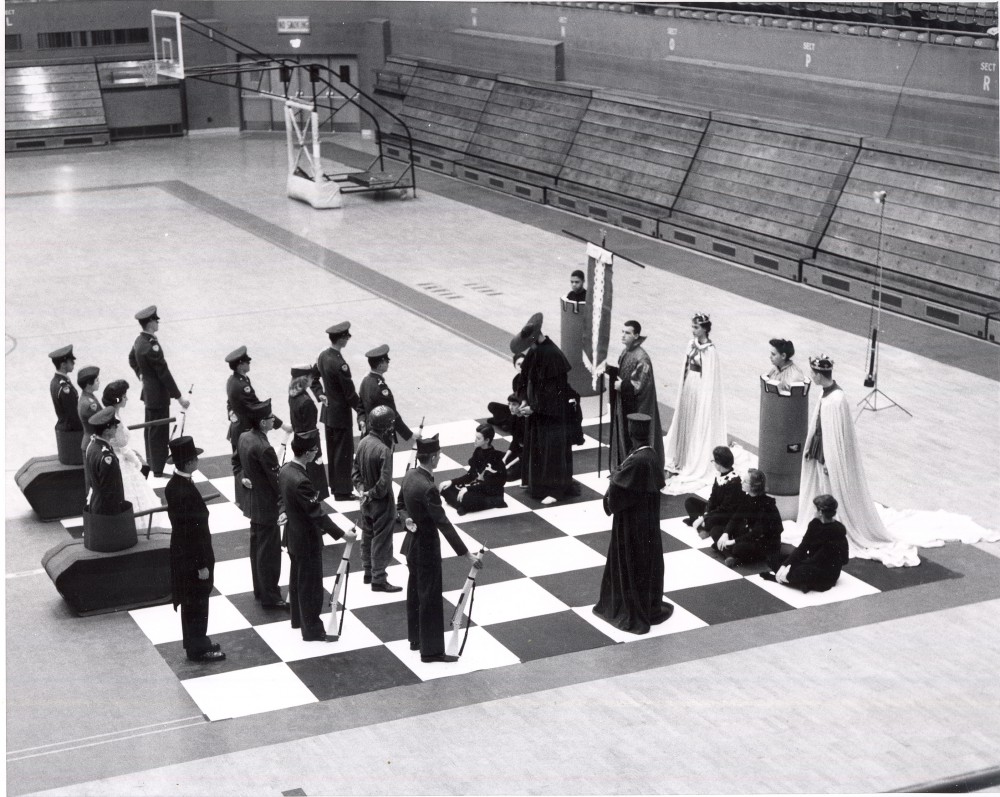
 technology will somehow amplify itself into a superintelligence and proceed to eliminate the human race, either inadvertently – as a side effect of some other project, such as creating paper clips (a standard example), or deliberately.

 About eight years ago, I was in downtown Manhattan and went into a Warby Parker store, an eyewear retailer. I didn’t post anything on social media about it, but I did have location services enabled on Facebook. Later that day, Facebook started showing me ads for eyewear (something it had never done before.) How and why it did that wasn’t a giant leap of understanding, and I immediately turned location services off for Facebook. But of course, this was sticking one thumb in the crumbling dam that is my data privacy. I own an Alexa, and I have an iPhone, an Apple watch, and an iPad. And that’s just for starters. I use Google all day long, subscribe to multiple online publications, use Amazon regularly, have used Instacart in the past, and the list goes on.