
 by Leanne Ogasawara
世中は何にたとへん水鳥のはしふる露にやとる月影(無常)
Mujō (Impermanence)
To what shall I liken this world?
But to moonlight
Reflected in the dewdrops
Shaken from a shorebird’s bill
—Dōgen
1.
Eight hundred years ago, a Buddhist monk, not long into his career, became deeply dissatisfied with the Buddhist teachings available to him in Japan. And so, he traveled across the sea to Song China.
A man on a mission, he wanted to uncover the “true Buddhism.”
This is a story repeated again and again as Buddhism made its way East. Monks and priests, feeling like something had to be “lost in translation,” took to the road in search of the true word. From Japan to China and from China to India—and sometimes as far as to Afghanistan, these early translators were seeking to understand the wisdom that was embedded in the words themselves.
Or maybe what they were really seeking was beyond the words themselves?
The monk Dōgen, after seven or so years in China would return to Japan—his mind filled with all that he had seen and all that he had learned. In time, he would form a new school of Buddhism in Japan: Sōtō Zen.
Interested in notions of time and being, he wrote elaborate philosophical tracts, as well as many marvelous poems.
In the above poem on impermanence, Dōgen compares ultimate reality to that of a reflection: of moonlight reflected in a dewdrop scattering off a waterbird’s bill.
In my first translation attempt, I chose to render mizudori 水鳥 (waterbird) as “shore bird.” It is a valid translation for the Japanese term mizudori, which literally means 水 water 鳥 bird. Maybe I instinctively went with shorebird because I have been taught in creative writing classes to try and be as concrete and specific as possible, so readers can better form mental images. Could this might explain why the translation I found online (made by the great Dōgen-scholar Steven Heine) used the English word “crane” for mizudori.
Dōgen did not choose the Japanese word for crane, which is tsuru 鶴 so why did the translator? Read more »



 trustee. It’s a relatively minor position and non-partisan, so there’s no budget or staff. There’s also no speeches or debates, just lawn signs and fliers. Campaigning is like an expensive two-month long job interview that requires a daily walking and stairs regimen that goes on for hours. Recently, some well-meaning friends who are trying to help me win (by heeding the noise of the loudest voices) cautioned me to limit any writing or posting about Covid. It turns people off and will cost me votes. I agreed, but then had second thoughts the following day, and tweeted this:
 Before leaving Santa Fe I spent (yet another) morning at a coffeehouse. It’s an urban sort of behavior, and a Bachian one too – you might know about Zimmerman’s in Leipzig, the coffeehouse where Bach brought ensembles large and small to perform once a week. It seems to have been a chance to make some non-liturgical music, a relief from Bach’s otherwise very churchy employment.
 At a recent tournament sponsored by the St. Louis Chess Club, 19-year old Hans Niemann rocked the chess world by defeating grandmaster Magnus Carlson, the world’s top player. Their match was not an anticipated showdown between a senior titan and a recognized rising phenom. The upset came out of nowhere.
 They all want it: the ‘digital economy’ runs on it, extracting it, buying and selling our attention. We are solicited to click and scroll in order to satisfy fleeting interests, anticipations of brief pleasures, information to retain or forget. Information: streams of data, images, chat: not knowledge, which is something shaped to a human purpose. They gather it, we lose it, dispersed across platforms and screens through the day and far into the night. The nervous system, bombarded by stimuli, begins to experience the stressful day and night as one long flickering all-consuming series of virtual non events.

 Today “skepticism” has two related meanings. In ordinary language it is a behavioral disposition to withhold assent to a claim until sufficient evidence is available to judge the claim true or false. This skeptical disposition is central to scientific inquiry, although financial incentives and the attractions of prestige render it inconsistently realized. In a world increasingly afflicted with misinformation, disinformation, and outright lies we could use more skepticism of this sort.

 If you look at my profiles online, they are catered to appear normal, if dated. I haven’t posted very much over the past few years, and those that I have posted have been relatively mundane, which mark the relatively mundane moments of my life. They’re honest and small, like a photo of the street as I walk to school, or a picture of my friends at a park. My profile molds itself to match me.
 Before I met Hayat Nur Artiran, I had only had a raw understanding of what female selfhood may look like, a notion I have been attempting to refine in my writings over many years. Here, at the Mevlevi Sufi lodge in Istanbul, I received a lifetime’s worth of illumination about the power of the spirit in the company of Nur Hanim, beloved Sufi Hodja and the President of the Sefik Can International Mevlana Education and Culture Foundation. A researcher, author and spiritual leader on the Sufi path known as the Mevlevi order (based on the teachings of Maulana Jalaluddin Muhammad Balkhi Rumi, known in the West simply as the poet Rumi), Nur Hanim’s accomplishments shine a light on an ethos that has transformed hearts for nearly a millennium. More instrumental than personal achievement in this case, is the Sufi substance and finesse that Nur Hanim has nurtured in the running of this Mevlevi lodge. Spending a day here, on my most recent visit to Istanbul, I came to experience what I had thought possible, based on my Muslim faith, but had never witnessed before: men and women coexisting, learning, working and serving in harmony, a place where one forgets the ceaseless tensions between genders, generations, ethnicity, or those caused by differences in religious beliefs or the self-worshipping individualism that has become the insignia of modernity.
 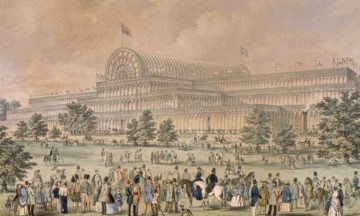 May of 1851, London, the world’s first World’s Fair.
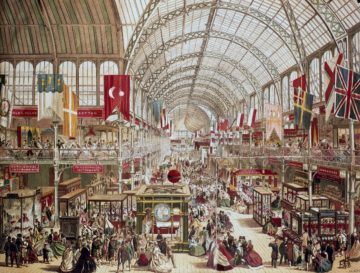 What all went inside? Apart from the full-grown trees and gallant blocks of statuary, a quick glance at a single page of the Exhibition’s
  Another cultural benefit of my travels, particularly in early days, used to be my exploration of international cinema. I have already mentioned how going out of India I became exposed to a riot of European art films. In later years I also saw some superb art films from Argentina, Brazil, Japan, Iran, South Korea, and Taiwan. In the US in many cities some of these art films were not always easily available, and I sometimes saw them in visits to New York or London, though with some lapse of time Pacific Film Archive in the Berkeley campus showed some good international films. Every time I went to Kolkata my friend Samik Banerjee told me about the new Bengali art films that came out in the months I was away and sometimes took me to their special screenings. Through him I came to know some of the major film directors and actors in Kolkata. Meanwhile the quality of American films improved a great deal. But the general commercial film world in the US largely catered to adolescent fantasy worlds or antics of superheroes from comic books or dystopian science fiction, none of which held much attraction for me. Even in more grown-up American films one often missed the sharp, witty, historically informed, and politically engaged conversation of friends and also a kind of cerebral sexuality that I used to associate with French films, for example– a character in Godard’s film Contempt famously said in bed: “I love you totally, tenderly, tragically”.