by Ada Bronowski
 Indifference is an attitude first theorised as a philosophical stance by ancient Greek Stoic philosophers from the 3rd century BC. It was conceived as the right attitude to cultivate in reaction to indifferent things. What was surprising were the things the Stoics considered to be indifferent and hence require us to be indifferent to. Not your usual ‘whether the number of hairs on your head is odd or pair’, or the number of billions of stars in the galaxy, or even what colour underwear your boss wears – though in some circumstances, the latter can start becoming titillating. And titillation is of course what it’s all about. It’s the tickle that spurs the Stoic to resist it. Resisting what exactly? Feeling, uncontrolled gratification, heart-melting, giving in, touching, kiss-&-make-up-ing.
The quintessential titillation is pleasure, sensorial or otherwise. The first Greek Stoics, pioneers of austere indifference, doubted there even really was such a thing: ‘pleasure, if it even exists’ reports of them their most stalwart chronicler, Diogenes Laertius[1]. But the more world-wise Romans, whose genius, after all, was to find pleasure in every aspect of everyday life from grooming to the delivery of justice in an orgy of spectacular blood, could not echo such a flat denial. The Roman Stoics we still know of, happen mostly to be from amongst the most prominent, wealthy and powerful figures of their time who could not but make full fruition of the gamut of pleasures life had on offer. It was the Roman Stoics who transformed the Stoic possibly non-existent pleasure into a tickle. Read more »

 Deborah Roberts. Shankia and Grace. 2021.
 According to the meta-charity


 There are certain words that seem to take on a life of their own, words that spread imperceptibly, like a virus, replicating below the level of consciousness, latent in our environment and culture, until suddenly the word is everywhere, and we are afflicted with it. We may even use these words ourselves: we struggle to find the right phrase, the true word to capture our intention, and these words come to us unbidden, floating into our minds from somewhere out there, and we speak the word without understanding what we really mean, but we see understanding and acknowledgement in the face of our interlocutor, and we know we have hit upon the correct utterance that will mark us as one who belongs.

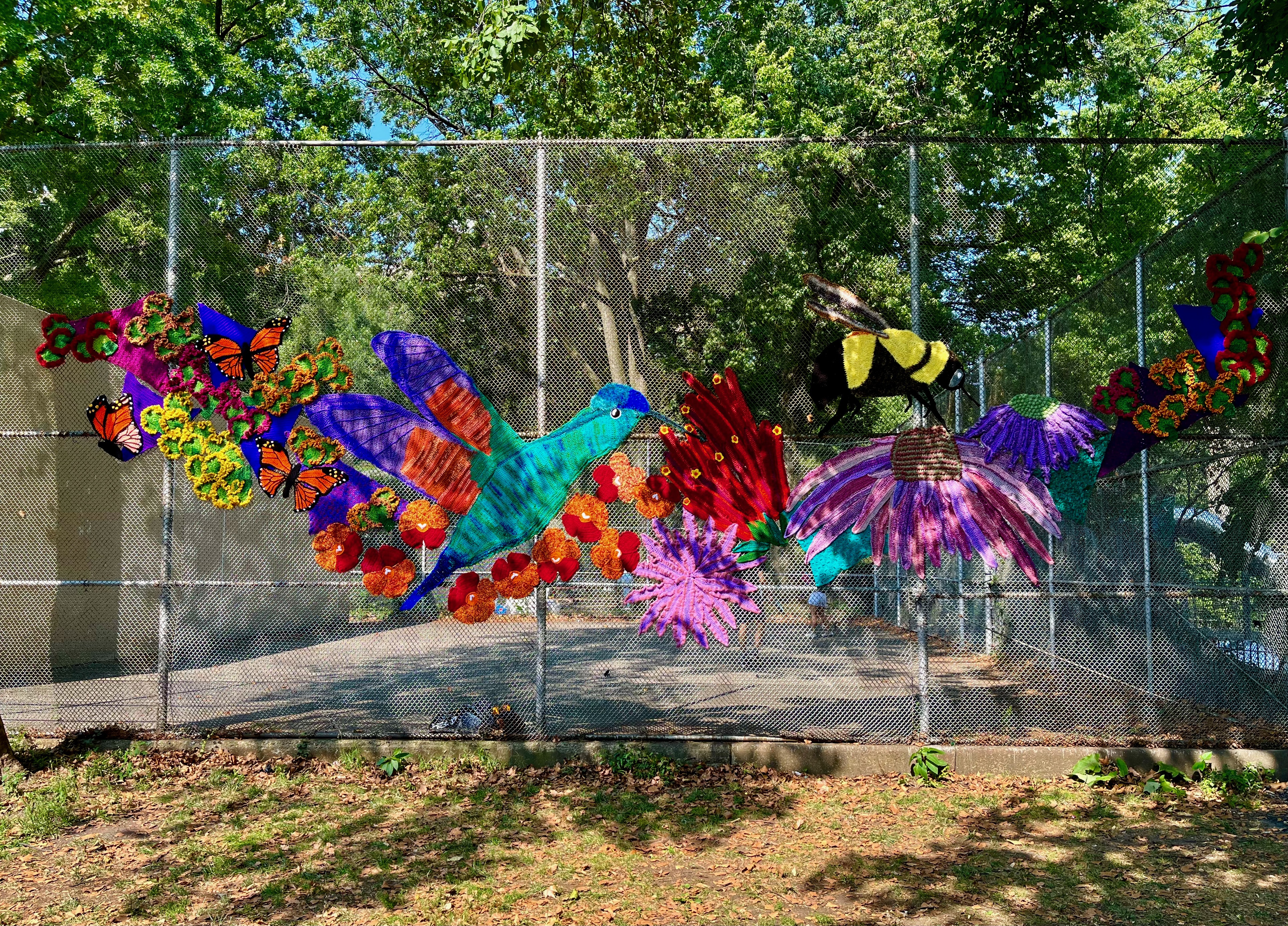 Naomi Lawrence. Tierra Frágil, 2022.
 Come die with me.
 by Leanne Ogasawara