by Jim Britell
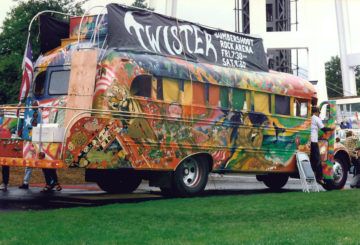
The roots of the epic transfer of wealth from the middle and lower classes to the rich which began with Reagan and peaked with the recent billionaire explosion can be traced to a series of events between March and November 1968.
July 1967 – Thousands converge in San Francisco for the Summer of Love
March 1968 – Robert Kennedy enters the Democratic Primary for President
April 1968 – Martin Luther King assassinated
June 1968 – Robert Kennedy assassinated
August 1968 – 75 million watch 5000 protesters clubbed and beaten on national television at the democratic convention in Chicago
January 1969 – Nixon sworn in as president
August 1969 – Woodstock
These events estranged a whole generation of young people who concluded that working within the political process was definitely not hip. They abandoned the political process. Many radicals, progressives, liberals and populists have avoided “hands on” electoral politics ever since. Read more »


 Now there is a
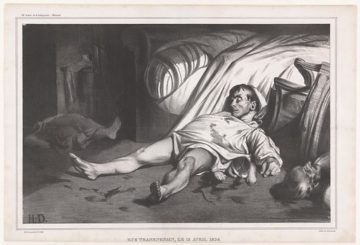 “Mankind was first taught to stammer the proposition of equality” – “Everyone is equal to everyone else” – “In a religious context, and only later was it made into morality,” Nietzsche wrote. Elsewhere, he called “human equality,” or “moral equality,” a specifically “Christian concept, no less crazy [than the soul],” moral equality “has passed even more deeply into the tissue of modernity…[it] furnishes the prototype of all theories of equal rights.”

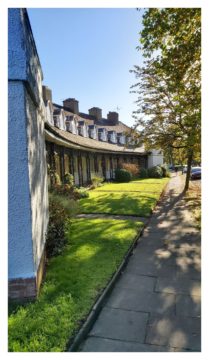 Port Sunlight was a model village constricted in the Wirral, in the Liverpool area, by the Lever brothers, and especially under the inspiration of William Lever, later lord Leverhulme. Their fortune was based on the manufacture of soap, and the village was built next to the factory in the Victorian/Edwardian era, for the employees and their families. It’s certainly a remarkable place, with different houses designed by various architects, parks, allotments, everything an Edwardian working class person might want. An enlightened employer, Lever was still a paternalist: he claimed his village was a an exercise in profit sharing, because “It would not do you much good if you send it down your throats in the form of bottles of whisky, bags of sweets, or fat geese at Christmas. On the other hand, if you leave the money with me, I shall use it to provide for you everything that makes life pleasant – nice houses, comfortable homes, and healthy recreation.” Overseers had the right to visit any house at any time to check for ‘cleanliness’ and that the rules about who could live in which house were observed (men and women could only share accommodation if they were in the same family). Still, by the stands of the day it was quite progressive – schools, art gallery, recreation of all sorts for the employees were important.
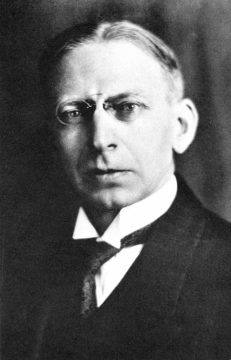 In 1930, the German anthropologist Berthold Laufer published a monograph on the phenomenon of people eating dirt.
 My grandmother’s bird of choice is the rooster. She was raised in rural Kentucky and now lives in rural Wisconsin. She collects all sorts of roosters (and, by extension, some hens): wall art, printed dish towels, ceramic statues as small as a pinky and as large as a lamp, coin bowls and blankets and something nostalgic in each one.
 Sughra Raza. Shadow Self-Portrait in a Reflection of a Window in a Window.
  A couple of years ago I briefly became famous for hating Vancouver. By “famous” I mean that a hundred thousand people or so read