by Bill Murray

Charles Darwin was just shy of 24 years old, his eyes open in wonder as the HMS Beagle slid along the shore of the largest island in the archipelago of Tierra del Fuego. His eyes grew wider as bonfires flared along the water’s edge. “They must have lighted the fires immediately upon observing the vessel, but whether for the purpose of communicating the news or attracting our attention, we do not know,” he wrote.
These shore people called themselves Ona and Yaghan. Canoeists and fishermen adept at navigating the labyrinth of channels in these straits, in wintertime they kept fires constantly stoked for warmth. The Yaghan wore only the scantest clothing despite the cold. To fend off wind and the rain, they smeared seal fat over their bodies.
The Ona lived across the strait, on an island just visible through the spray and mist. History calls them fierce warriors who adorned themselves with necklaces of bone, shell and tendon, and who, wearing heavy furs and leather shoes, intimidated the bare-skinned Yaghan. Darwin gave them their backhanded due, calling them “wretched lords of this wretched land.” An acerbic settler once described life hereabouts as 65 unpleasant days per year complimented by 300 days of rain and storms. Read more »

 “My account omitted many very serious incidents,” writes Bertrand Roehner, the French historiographer whose analysis on statistics about violence in post-war Japan I used in my Graywolf Nonfiction Prize memoir, Black Glasses Like Clark Kent. He began emailing me at this September about a six-volume, two thousand page report concerning Japanese casualties during the Occupation that has just been released in Japanese after sixty years of suppression.
 I like to vote in person on Election Day. I’m sentimental that way. My polling precinct is at the local elementary school. So last Tuesday, I woke up early, dressed and got out the door in a rush, and arrived to find not the expected pastiche of cardboard candidate signs and nagging pamphleteers, but rather a playground full of 2nd graders.
 I’m not sold on longtermism myself, but its proponents sure have my sympathy for the eagerness with which its opponents mine their arguments for repugnant conclusions. The basic idea, that we ought to do more for the benefit of future lives than we are doing now, is often seen as either ridiculous or dangerous.
 Sughra Raza. Valparaiso Expressions. Chile, November 2017.
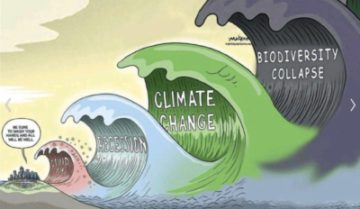 Climate change and covid are revealing an ongoing inability for our society to make wise decisions in the face of calamity, which may be leading us to a collapse of our civilization. Perhaps if we accept (or just believe) that we’re nearing the end, we can shift our priorities enough to usher in a more peaceful and equitable denouement.