by Ashutosh Jogalekar
 ‘Areopagitica‘ was a famous speech delivered by the poet John Milton in the English Parliament in 1644, arguing for the unlicensed printing of books. It is one of the most famous speeches in favor of freedom of expression. Milton was arguing against a parliamentary ordinance requiring authors to get a license for their works before they could be published. Delivered during the height of the English Civil War, Milton was well aware of the power of words to inspire as well as incite. He said,
For books are not absolutely dead things, but do preserve as in a vial the purest efficacy and extraction of that living intellect that bred them. I know they are as lively, and as vigorously productive, as those fabulous Dragon’s teeth; and being sown up and down, may chance to spring up armed men…
What Milton was saying is not that books and words can never incite, but that it would be folly to restrict or ban them before they have been published. This appeal toward withholding restraint before publication found its way into the United States Constitution and has been a pillar of freedom of expression and the press since.
Why was Milton opposed to pre-publication restrictions on books? Not just because he realized that it was a matter of personal liberty, but because he realized that restricting a book’s contents means restricting the very power of the human mind to come up with new ideas. He powerfully reminded Parliament,
Who kills a man kills a reasonable creature, God’s image; but he who destroys a good book, kills reason itself, kills the image of God, as it were, in the eye. Many a man lives a burden to the earth; but a good book is the precious lifeblood of a master spirit, embalmed and treasured up on purpose to a life beyond life.
Milton saw quite clearly that the problem with limiting publication is in significant part a problem with trying to figure out all the places a book can go. The same problem arises with science. Read more »


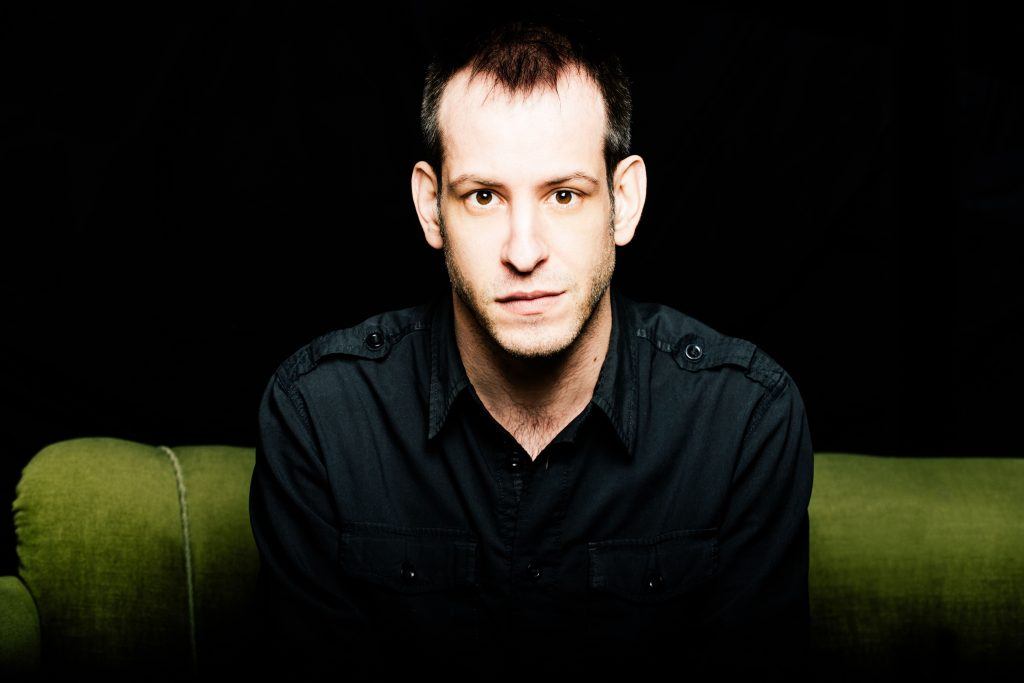 Ryan Ruby is a novelist, translator, critic, and poet who lives, as I do, in Berlin. Back in the summer of 2018, I attended an event at TOP, an art space in Neukölln, where along with journalist Ben Mauk and translator Anne Posten, his colleagues at the Berlin Writers’ Workshop, he was reading from work in progress. Ryan read from a project he called Context Collapse, which, if I remember correctly, he described as a “poem containing the history of poetry.” But to my ears, it sounded more like an academic paper than a poem, with jargon imported from disciplines such as media theory, economics, and literary criticism. It even contained statistics, citations from previous scholarship, and explanatory footnotes, written in blank verse, which were printed out, shuffled up, and distributed to the audience. Throughout the reading, Ryan would hold up a number on a sheet of paper corresponding to the footnote in the text, and a voice from the audience would read it aloud, creating a spatialized, polyvocal sonic environment as well as, to be perfectly honest, a feeling of information overload. Later, I asked him to send me the excerpt, so I could delve deeper into what he had written at a slower pace than readings typically afford—and I’ve been looking forward to seeing the finished project ever since. And now that it is, I am publishing the first suite of excerpts from Context Collapse at Statorec, where I am editor-in-chief.
![Henri Matisse created many paintings titled 'The Conversation'. This, from 2012, is of the artist with his wife, Amélie. [Hermitage Museum, St. Petersburg, Russia].](https://3quarksdaily.com/wp-content/uploads/2019/06/Matisse_Conversation-360x292.jpg)