
by Dave Maier

The other day here at 3QD, philosopher Guy Elgat provided an interesting discussion of the conspiracy theory Q-Anon and some relevant philosophical issues about knowledge and rationality. In particular, he focused on a seemingly perverse response by Q-ers to our challenge to provide proof of their outlandish claims: that we “don’t have any proof there isn’t [a Q].” I had a number of reactions to this column, as well as to some of the comments from readers, but I didn’t want to dump a huge comment on the thread (plus I had to think about it), so I thought I would put my response here instead.
I get the impression that since the QAnon business is sheer madness, and thus not philosophically interesting, what interests Elgat about it is instead the apparent parallel, epistemically speaking, with the historically much more substantial question of whether God exists. (For instance, he notes that religious believers pull this same epistemic-leveling move, in discussion with atheists, as do Q-ers with us.) I find this a bit misleading, or at least confusing, and I think that in the Q case we should be a bit more choosy about what exactly the content of their controversial belief is, even if we sacrifice that potentially interesting parallel. (In fact I think religious faith is a much more complex phenomenon than simply “belief in God,” to which proofs of this or that are pretty completely irrelevant; but let’s leave God out of it entirely for now.)
Elgat’s argumentative strategy, in any case, is to assimilate the Q-er to the Cartesian skeptic, both of whom issue seemingly impossible challenges to prove them wrong: in the one case, that Q exists; in the other, that we are brains in vats and are thus massively deceived about “the external world” outside our senses. In each case, in Elgat’s telling, the challenger’s conclusion, should our proof fail, is that we thus are “in an epistemological stand-off” and must acknowledge that “since I cannot show you I am right and you cannot prove me wrong, I am perfectly within my rights, so to speak, to continue to believe in whatever I choose to believe.”
Elgat has two responses to this. Read more »
 My dad was a pharmacist. He had an old-fashioned store (including an actual soda fountain and stools) and some of the old-fashioned tools of the trade: scales and eye-droppers, spatulas and ointment bases, graded flasks and beakers, amphorae, and his mortar and pestle.

 I have been a practicing Stoic for a few years now, with lulls here and there. Stoicism provides a compelling framework for living in a purposeful and ethical way. The question in my mind is, is it perhaps a little too compelling? In other words, not much fun?




 Roxane Gay’s Hunger is very, very good—the rare memoir that doubles as page-turner. I’m writing this on a flight (Gay’s passages on airplane issues are some of her best: the seatbelt extenders, having to buy two tickets) and the woman across the aisle is reading Difficult Women. “Book Twins!” she just said happily. This never happens. That Gay has reached so many is testament to her skill with empathetic connection. She writes early in Hunger that her “life is split in two, cleaved not so neatly. There is the before and after. Before I gained weight. After I gained weight. Before I was raped. After I was raped.”
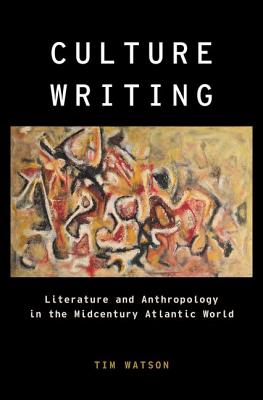 Tim Watson’s Culture Writing surveys the border between anthropology and literature in the years following World War II. Watson provides illuminating readings of British social anthropology in relation to novels by Barbara Pym, and of North American cultural anthropology in relation to novels by Ursula Le Guin and Saul Bellow. There are also chapters on Édouard Glissant and Michel Leiris, working in the French tradition (in which the border between literary and ethnographic writing was configured differently than it was in the Anglo-American tradition). While anthropologists will find much of value in Watson’s individual readings, they may find his broader sketch of their disciplinary history to be seriously askew, as I shall suggest in what follows.
 What happens when a scientific journal publishes information that turns out to be false? A fracas over a recent
  What will a Corbyn government actually do? Brexit aside, British politics has no bigger known unknown. The prospect fills the rich with fear and the left with hope. Both sides assume that Prime Minister
  THERE HAS ALWAYS BEEN a lot of hand-wringing around erotica, especially erotica that centers on female submission. Feminists worry that it perpetuates harmful gender dynamics, while conservatives shudder at the frank depictions of female sexuality. Intellectuals usually dismiss it as smut. In the meantime, millions of people — mostly women — gobble it up. The box office success of Fifty Shades Freed, the third installment in the Hollywood trilogy based on E. L. James’s best-selling BDSM romance series, is only the latest example. How is it, wondered pundits, that this particular movie is a hit at the height of the #MeToo movement? Why are women flocking to see a film about a rich, white man dominating a much younger, much less powerful woman?
 In a squalid, lawless “fugee” camp (the letters R and e have fallen off the entrance gate) that looks and smells like a giant Portaloo, one of the characters in Mohammed Hanif’s ambitious third novel considers running away to the desert. “What’s the worst that can happen,” he thinks. “I’ll starve to death. I’ll roast under the sun. God left this place a long time ago… He had had enough. I have had a bit more than that.” This philosophical passage is spoken by a dog called Mutt, and Hanif’s book is undoubtedly a high-wire act. Red Birds constantly threatens to fall apart, its characters and locations both achingly realistic and elusively metaphysical. But that’s part of its charm: you never know where Hanif’s farce will go next. He starts with an American pilot crashing in the desert near a downgraded refugee camp “full of human scum” he was supposed to bomb. When Major Ellie finally reaches the outskirts of the camp, Mutt introduces him to a teenage refugee named Momo, who is using an old copy of Fortune as his guide to becoming a hotshot businessman.
 Behaviorism, which flourished in the first half of the 20th century, is a school of thought in psychology that rejects the study of conscious experience in favor of objectively measurable events (such as responses to stimuli). Due to behaviorism’s influence, researchers interested in emotion in animals have tended to take one of two approaches. Some have treated emotion as a brain state that connects external stimuli with responses.7 These researchers, for the most part, viewed such brain states as operating without the necessity of conscious awareness (and therefore as separate from feelings), thus avoiding questions about consciousness in animals.8 Others argued, in the tradition of Darwin, that humans inherited emotional states of mind from animals, and that behavioral responses give evidence that these states of mind exist in animal brains.9 The first approach has practical advantages, since it focuses research on objective responses of the body and brain, but suffers from the fact that it ignores what most people would say is the essence of an emotion: the conscious feeling. The second approach puts feelings front and center, but is based on assumptions about mental states in animals that cannot easily be verified scientifically.