Romer and Nordhaus: Worthy Nobel Winners

Marian L. Tupy in Human Progress:

On Monday, William Nordhaus and Paul Romer were awarded the Nobel Prize in Economics. Nordhaus, the Sterling Professor of Economics at Yale University, is best known for his work in economic modelling and climate change. Romer, who teaches at New York University, is a pioneer of endogenous growth theory, which holds that investment in human capital, innovation, and knowledge are significant contributors to economic growth.

The two American economists’ research is vital in showing the way people underestimate the progress humanity has already made and the likelihood that it will continue well into the future.

In his 1996 paper, Do Real-Output and Real-Wage Measures Capture Reality? The History of Lighting Suggests Not, Nordhaus looked at the economics of light. Open fire, he noted, produced a mere 0.00235 lumens per watt (a lumen is a measure of how much visible light is emitted by a source.) Lumens per watt refers to the energy efficiency of lighting. A traditional 60 watt incandescent bulb, for example, produces 860 lumens.

A sesame lamp could produce 0.0597 lumens per watt; a sperm tallow candle 0.1009 lumens; whale oil 0.1346 lumens and an early town gaslamp 0.2464 lumens. An electric filament lamp, which was launched in 1883, achieved an unbelievable 2.6 lumens per watt and, due to subsequent technological improvements, managed to deliver an astonishing 14.1667 lumens by 1990. Yet that’s small beer compared to the compact fluorescent lightbulb, which delivered 68.2778 lumens per watt when it was launched in 1992.

More here.
The Game-Changing Technique Behind an Amazing New Archaeological Discovery

Ed Yong in The Atlantic:

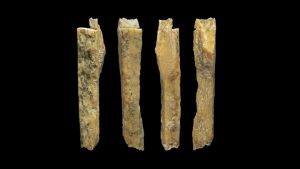
In 2014, two archaeologists, Katerina Douka and Tom Higham, paid a visit to Denisova Cave—a site high up in Siberia’s Altai Mountains that has become something of a magnet for scientists interested in humanity’s past. A decade ago, researchers found a pinky bone in the cave. After analyzing its DNA, they realized it represented a previously unknown group of ancient humans, distinct from either Neanderthals or Homo sapiens. That group became known as the Denisovans.

Three Denisovan teeth have been found in the same place since, along with the toe of a Neanderthal. But such recognizable bones are a rarity. When Douka and Higham visited the cave, they realized that the vast majority of bones recovered from it are tiny, unidentifiable slivers. It’s impossible to tell which body part they came from, let alone which species. Roughly 5 percent of them can be narrowed down to a specific class of animals—a mammal, perhaps, but nothing more precise. “They’re dug up, washed, and put in a bag, never to be seen again,” Douka says.

If analyzed, the DNA within these fragments could easily reveal the identity of their owner. But the fragments are manifold, and sequencing DNA is still laborious and expensive. It would be too costly to inspect every single sliver. So instead, Douka and Higham turned to a new technique that’s much faster and cheaper.

More here.

Internet Hacking Is About to Get Much Worse

Bruce Schneier in the New York Times:

It’s no secret that computers are insecure. Stories like the recent Facebook hack, the Equifax hack and the hacking of government agenciesare remarkable for how unremarkable they really are. They might make headlines for a few days, but they’re just the newsworthy tip of a very large iceberg.

The risks are about to get worse, because computers are being embedded into physical devices and will affect lives, not just our data. Security is not a problem the market will solve. The government needs to step in and regulate this increasingly dangerous space.

The primary reason computers are insecure is that most buyers aren’t willing to pay — in money, features, or time to market — for security to be built into the products and services they want. As a result, we are stuck with hackable internet protocols, computers that are riddled with vulnerabilities and networks that are easily penetrated.

We have accepted this tenuous situation because, for a very long time, computer security has mostly been about data. Banking data stored by financial institutions might be important, but nobody dies when it’s stolen. Facebook account data might be important, but again, nobody dies when it’s stolen. Regardless of how bad these hacks are, it has historically been cheaper to accept the results than to fix the problems. But the nature of how we use computers is changing, and that comes with greater security risks.

More here.

The long, long history of long, long CVS receipts

Rachel Sugar in Vox:

CVS is a drugstore much like other drugstores, with one important difference: The receipts are very long.
How long are the receipts? For at least a decade, concerned shoppers have dedicated themselves to this question, producing a robust body of phone-picture literature on the subject. You could not major in CVS receipt studies, probably, but you could minor.

Not all CVS receipts are created equal. If you, a non-loyal shopper, mosey into CVS and buy some Tylenol and a package of seasonal candy, you will get a receipt that is unspectacular (read: a normal length). To get one of the iconically long CVS receipts, you need to use your ExtraCare card, which means you need to be an ExtraCare member. (You can join as long as you are willing to turn over your name and phone number in exchange for better deals.)

More here.

Misunderstanding Lihaaf

Zoovia Hamiduddin in Dawn:

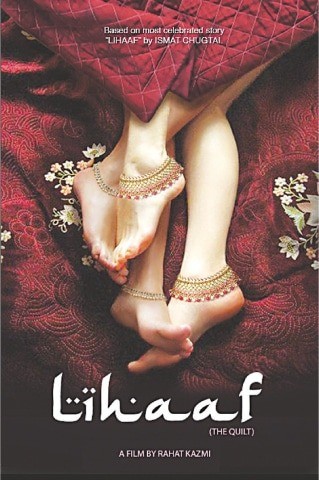
A picture is worth a thousand words. In the case of Indian filmmaker (not to be confused with the Pakistani actor) Rahat Kazmi’s 2018 film Lihaaf: The Quilt, based on Ismat Chughtai’s controversial short story of the same name, the production’s publicity poster says perhaps more than a thousand words.
Kazmi’s Lihaaf has little bearing to Chughtai’s story. The intensely sexualised poster shows two sets of fair and lovely feet, adorned with paazeb [anklets], languidly intertwined. A very titillating, sensual, consensual and egalitarian image — you can’t tell which feet belong to the whiter-than-white mistress and which to the very dark maid. The poster brims with confidence and choice; a loud, proud statement about LGBTQ’s arrival on the Indian cinema screen. The plush, ruby red quilt on which the feet are presented may be Kazmi’s Lihaaf, but it is certainly not ‘Lady Changez’s’ quilt.

Chughtai, a card-carrying communist and proud early member of the Progressive Writers’ Association, would have been horrified at such a bourgeoisie representation of her writing. When she wrote Lihaaf, Chughtai was an unmarried, 20-something influenced by the likes of John Paul Sartre, Simone de Beauvoir, George Bernard Shaw, D.H. Lawrence and his inflammatory Lady Chatterley’s Lover and, most importantly, Rashid Jehan, who “fuelled my rebelliousness. She explained to me that what is considered impolitic and rude in society is often the truth; she became my inspiration.”

More here.

Saturday Poem

Deep Time

In the nuclear twilight
the animals, the plants
and the minerals of the earth
have acquired unparalleled powers
many times greater than those of humans.

Eras elapse:

Cactaceacene
Birguscene
Limulidacene.

The colors bleed out of things
and glob together in the sand
which radiates with increasing intensity
and soaring saturation

and all the markets
that have piled up
haphazardly over the centuries

collapse one by one

until the whole
ramshackle structure
comes down

and forms a hard, geometric puddle
of dead currency
teeming with animals.

New organisms spring up everywhere
in an explosion of life
of Cambrian proportions.

On an ancient island
of plastic
polystyrene mosses multiply
in the shadow
of venerable, old polystyrene trees.

Here live the spirits of mankind.

by  Dominique De Groen
from Poetry International, 2018
© Translation: 2018, Jonathan William Beaton

Life on Earth – how has science changed in 40 years?

Adam Rutherford in The Guardian:

Somewhere in my parents’ photo albums there is a picture of me, aged seven or eight, lying in my bed, reading. On the wall, there are postcards from holidays, a poster of space pirate Han Solo crouching above a fictional snow lizard called a Tauntaun, and a picture of an equally alien but very real cephalopod, a nautilus, a mollusc with a pin-hole eye and tentacular cirri projecting from its tiger-striped shell. It was cut out from the second copy of Life on Earth that my father had acquired, the book that accompanied the BBC series by David Attenborough. The first was for reading, the second, bought cheap without a dust cover, was for the photos.

It’s difficult for me to appraise the work of Attenborough critically. I do what I do, to a large degree because of what he has done. Like so many people of my vintage, seeing the wonder of nature with him as our guide was inestimably influential in steering us towards science. That first book was published on Charles Darwin’s 170th birthday, a fitting tribute to the greatest idea anyone has ever had. I approached the 40th anniversary edition with a cautious awe. It does not disappoint. The new Life on Earth is as glorious as the first, if not more so for the sole reason that it has been considerably updated. Science never rests, and while the overarching Darwinian ideas in the 1979 edition are correct, many of the details have moved onwards significantly. It’s not simply that we have observed more of nature with ever increasingly sophisticated technology. Ideas about biodiversity and mass extinctions are now prominently included, and the revelation – now textbook – that birds are dinosaurs is front and centre, having been dismissed the first time round.

More here.

Friday, October 12, 2018

Denying Women’s Ability to Know

Elizabeth Winkler in The New Republic:

Last week Donna Strickland, an associate professor at the University of Waterloo, won the Nobel Prize in Physics. She is the third woman to be awarded the prize in its history—Marie Curie received it in 1903 and Maria Goeppert Mayer in 1963—but as recently as last May, Wikipedia rejected a draft page about Strickland on the grounds that she did not meet “notability guidelines.” The work for which she received the Nobel—generating the “shortest and most intense laser pulses ever created by mankind,” according to the prize committee—is over 30 years old. She published the groundbreaking paper, with co-authors and now co–Nobel winners Gerard Mourou and Arthur Ashkin, in 1985. Between then and now she has won many prizes, but it took a Nobel for her to become Wikipedia-worthy.

On the same day that Strickland became a Nobel laureate and Wikipedia’s editors quickly threw together a page about her, President Donald Trump used a rally in Mississippi to ridicule Christine Blasey Ford, the psychologist who testified of her assault at the hands of Brett Kavanaugh, who has since been sworn in as a Supreme Court justice. Trump’s words were cruel. He elicited laughter at Ford’s expense, making her trauma—and that of all sexual assault survivors—into the stuff of jokes.

More here.

The pragmatist philosopher William James had a crisp and consistent response when asked if life was worth living: maybe

John Kaag in Aeon:

A year ago, on a late afternoon in November, I decided to walk the seven miles from my hotel in Manhattan to Brooklyn’s Community Bookstore. It was a cool day, on the cusp of evening, at a moment when things, even grimy New York-type of things, seem to glow, and I was so busy looking around that I almost didn’t notice the small white sign that someone had placed at the bottom of Brooklyn Bridge. The green lettering was newly painted and read: ‘LIFE IS WORTH LIVING.’
For many people, life’s worth is never in question. It never becomes a topic of conversation or debate. Life is simply lived until it is not. But something bothered me: if life’s worth is so obvious, why was the sign put up in the first place? It is because there are those of us who occasionally find themselves on the top of the bridge, contemplating a quick and fatal trip to the bottom. Decades after battling depression in 1870, the American philosopher William James wrote to the philosopher and poet Benjamin Paul Blood that ‘no man is educated who has never dallied with the thought of suicide’.

In the 1770s, David Hume, one of James’s intellectual heroes, had argued that self-murder should not be regarded as illegal or immoral since it hurt no one other than the perpetrator, and in many cases might alleviate great suffering. Romanticism, which arose in the subsequent generation of thinkers, only deepened the sense that life – and death – should be determined freely, by passionate individuals.

More here.

The Catholic Sex-Abuse Scandal: What Happens Next?

Emma Green at The Atlantic:

It’s likely, however, that problems facing the American clerics are only going to get worse. As Jack Jenkins of Religion News Service reported in September, law-enforcement officials in a half dozen states or more are planning to undertake their own versions of the Pennsylvania grand-jury report. And a number of bishops—including the current president of the United States Conference of Catholic Bishops, Cardinal Daniel DiNardo, who oversees the Archdiocese of Galveston-Houston—are also facing allegations of covering up or mishandling abuse in their dioceses.

These developments are a stark reminder that the Catholic sex-abuse crisis is far from over. Perhaps for the first time, the bishops are attempting to take responsibility for the deep wound they have created in the Church: The USCCB has initiated a series of discussions around possible reform measures and has already announced a first wave of those reforms.

more here.

The Vengeance of Artemisia Gentileschi

Jenni Murray at Literary Hub:

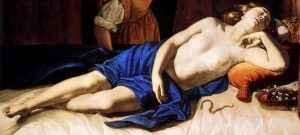
Artemisia was well known as an artist of the Italian Baroque in her day and was considered one of the most accomplished painters in the generation that followed Caravaggio. In an era when it was tough for a woman to become anything other than a wife or a nun, she was the first woman admitted to the prestigious Accademia delle Arte del Disegno in Florence, and she counted dukes, princes, cardinals and kings among her clients. She wrote of her success to her friend, the astronomer Galileo, in 1635. “I have seen myself honoured by all the kings and rulers of Europe to whom I have sent my works, not only with great gifts, but also with most favoured letters, which I keep with me.”

But, as has happened to so many great women of the past, she disappeared from public consciousness, from museums, catalogues and exhibitions for some four hundred years. Ripe for rediscovery, she was put back in her rightful place by the women’s movement in the twentieth century.

more here.

How Big Tech Poisoned Politics

Steven Poole at The New Statesman:

Last month, Apple unveiled the latest version of its watch, featuring new health-monitoring features such as alerts for unusually low or high heart rates, and a way to sense when the wearer has fallen over and, if so, call the emergency services. In itself, that sounds pretty cool, and might even help save lives. But it’s also another nail in the coffin of social solidarity.
Why? Because shortly after the Apple announcement, one of America’s biggest insurance companies, John Hancock, announced it would stop selling traditional life insurance, and would now offer only “interactive” policies that required customers to wear a health-monitoring device – such as an Apple Watch or Fitbit. But such personalised insurance plans undermine the social spreading of risk that makes insurance a public good. Knowing every little dirty secret about our lifestyles, such an insurer will be heavily incentivised to make the riskier customers pay more in premiums than the healthy-livers.

more here.

The Red Baron

Kwame Anthony Appiah in the New York Review of Books:

Michael Young, London, 1997

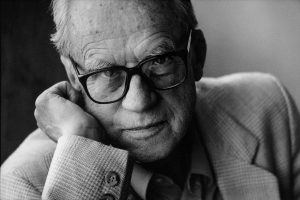
Michael Young was an inconvenient child. His father, an Australian, was a musician and music critic, and his mother, who grew up in Ireland, was a painter of a bohemian bent. They were hard-up, distractible, and frequently on the outs with each other; Michael, born in 1915 in Manchester, soon found that neither had much time for him. Once when his parents had seemingly forgotten his birthday, he imagined that he was in for a big end-of-day surprise. But no, they really had forgotten his birthday, which was no surprise at all. He overheard his parents talk about putting him up for adoption and, by his own account, never fully shed his fear of abandonment.

Everything changed for him when, at the age of fourteen, he was sent to an experimental boarding school at Dartington Hall in Devon. It was the creation of the great progressive philanthropists Leonard and Dorothy Elmhirst, and it sought to change society by changing souls. There it was as if he had been put up for adoption, because the Elmhirsts treated him as a son, encouraging and supporting him for the rest of their lives. Suddenly he was a member of the transnational elite: dining with President Roosevelt, listening in on a conversation between Leonard and Henry Ford.

Young, who has been called the greatest practical sociologist of the past century, pioneered the modern scientific exploration of the social lives of the English working class. He didn’t just aim to study class, though; he aimed to ameliorate the damage he believed it could do.

More here.

Hegelian Themes: Robert Pippin interviewed by Richard Marshall

Richard Marshall in 3:AM Magazine:

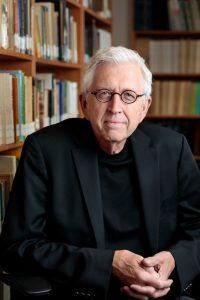
Robert Pippin is an expert on Kant, Hegel, Idealism, Nietzsche, modernism and philosophy of film. Here he discusses Hegel and Kant, links between logic as metaphysics and modern developments in the philosophy of logic, self-consciousness, Hegel’s view about the social characteristic of subjectivity and normativity, John McDowell and Robert Brandom, the dynamism of reason in Kant and Hegel, life as a logical category, the unity of the idea of the true and the idea of the good in the ‘Absolute Idea’, Hitchcock’s Virtigo and Zizek, aspects of the Dreyfus – McDowell debate, and Nietzsche’s idea of philosophy as psychology.

3:AM: What made you become a philosopher?

Robert Pippin: I was a literature major in college and became especially interested in European literature that seemed to me suffused with philosophical ambition; work by Rilke, Beckett, Proust, Musil, Mann, and in philosophers whose work had a literary dimension, like Plato, Hegel, and Nietzsche. .Since that was what interested me, I decided, after having taken as many philosophy as literature courses, and really at the last possible minute, to go to graduate school in philosophy.

More here.

Orwell’s World

Robert Butler in MIL:

IF THERE WERE to be a statue outside the BBC’s new offices in central London that captured the spirit of its modish interior of “workstation clusters”, “back-to-back booths” and “touchdown areas”, and the daily struggle of the 5,500 employees to produce content across multiple platforms for an audience of 240m, it might be that of the anxious, well-fed, middle-aged, middle-class white male, with a lanyard dangling over his hi-vis jacket, who is running late for his meeting and struggling to fold his Brompton bicycle. That would be Ian Fletcher, the over-stretched head of values (played by Hugh Bonneville) and central character in “W1A”, the BBC’s sprightly satire about itself. But Fletcher is not the one who will be on the plinth outside Broadcasting House. In 2016 a statue of George Orwell—paid for by Michael Frayn, Tom Stoppard, David Hare and Rowan Atkinson among others—will be unveiled, a few yards beyond the outdoor ping-pong table.

Orwell spent a mere two years (1941-43) at the BBC, which he joined as a talks assistant in the Indian section of the Eastern Service. No recording survives of him giving a talk, which is perhaps fitting; for what is most striking about his essays and journalism is the tart, compelling timbre of his voice. The critic Cyril Connolly, an exact contemporary, thought that only D.H. Lawrence rivalled Orwell in the degree to which his personality “shines out in everything he said or wrote”. Any reader of Orwell’s non-fiction will pick up on the brisk, buttonholing manner (“two things are immediately obvious”), the ear-catching assertions (“the Great War…could never have happened if tinned food had not been invented”) and the squashing epithets: “miry”, “odious”, “squalid”, “hideous”, “mealy-mouthed”, “beastly”, “boneless”, “fetid” and—a term he could have applied to himself—“frowsy”.

Orwell might well have damned this new honour too. In his studio on the edge of the Blenheim estate in Oxfordshire, Martin Jennings, the sculptor working on the eight-foot likeness, told me that Orwell had made some disobliging remarks about public statues, thinking that they got in the way of perfectly good views. The bronze Orwell will look down on the comings and goings of BBC staff who, returning his gaze, can read some chiselled wisdom from his works on the wall behind him. The Financial Times recently called Orwell “the true patron saint of our profession”, another tribute he would probably resist. “Saints”, he warned, “should always be judged guilty until they are proved innocent.”

More here.

This Golden Canopy Could Power 500 Homes

Emily Matchar in Smithsonian:

In the rendering, the structure looks like an enormous golden wave, spilling from the Upper Esplanade of Melbourne’s St Kilda Beach, crossing a busy road and crashing onto the sand. In reality, it would be a canopy of nearly 9,000 flexible photovoltaic panels designed to connect a shopping and entertainment district with the beach while generating renewable energy.  Called “Light Up,” the proposal is the winner of a contest sponsored by the Land Art Generator Initiative (LAGI), an organization whose goal is to “accelerate the transition to post-carbon economies by providing models of renewable energy infrastructure that add value to public space, inspire, and educate.” They’ve been hosting biannual competitions for green energy-generating public art since 2010. Each contest has been centered on a different location—a Copenhagen shipyard, a Dubai desert road, a Santa Monica waterfront—that presents an urban design challenge. The challenge for the Melbourne competition involved creating a sense of cohesion for the “St Kilda Triangle,” an area bounded by a hilltop market area, busy Jacka Boulevard and an entertainment district containing a historic theater and the city’s iconic Luna Park amusement park, all adjacent to the popular beach. The area, which is pedestrian-unfriendly, harshly sunny and blighted with an ugly sprawling parking lot, has been a topic of redevelopment debate for years.
…The proposal would have the solar panel canopy cover a large stretch of street, creating shade below and a bridge to the beach above. In addition to the solar panels, the proposal includes wind power generated by the swaying bridge and microbial fuel cells. Combined, it could produce enough energy to power 500 Australian homes in addition to the site’s theater and amusement park. Lithium-ion cells from used electric car batteries embedded in the handrails of the bridge can store excess energy generated by the panels. This extra energy can then be fed back into the grid. The plan includes designs for a hotel and cultural center as well, with the intention of making the area a new urban landmark.

More here.

Thursday, October 11, 2018

Reflections on the legacy of critical theory

Seyla Benhabib in the Boston Review:

May 1968 marked the political awakening of my generation. I was a junior at the American College for Girls in Istanbul at the time, feeling the revolutionary winds as a young Jewish woman in a predominantly Muslim society and because of the anti-Americanism precipitated by the Vietnam War. Pictures of napalm attacks on Vietnamese children and adults circulated among us during lunch hours. And when the U.S. Navy’s Sixth Fleet scheduled a visit to Istanbul, and many boyfriends, relatives, and others were clubbed by the police, our sense of political disappointment with and opposition to U.S. policies increased.
Living in Istanbul, we knew that the wider political world was on fire. Soviet tanks crushed the Prague reform movement under Alexander Dubček and the “socialism with a human face” experiment. Students built barricades in Paris and confronted the police. And the countercultural movement in the United States challenged the pieties of bourgeois decorum. The continuing Israeli-Palestinian conflict was personally devastating: I feared for the continuing existence of Israel after the 1967 war, while feeling moral outrage and pain at the oppression and occupation of Palestinian Arabs.

May 1968 saw our revolt against the oppressive conformism of the postwar Pax Americana. We hoped for liberation from the spirit of consumerism, the shackles of the patriarchy, bourgeois family, nationalism, militarism, and much else. No theoretical tradition captured the aspirations I shared with many contemporaries as well as the critical theory of the Frankfurt School. My intellectual journey from Istanbul to Frankfurt began with Herbert Marcuse’s One-Dimensional Man (1964), which I read that fateful spring.

More here.

Major Climate Report Describes a Strong Risk of Crisis as Early as 2040

Coral Davenport in the New York Times:

A landmark report from the United Nations’ scientific panel on climate change paints a far more dire picture of the immediate consequences of climate change than previously thought and says that avoiding the damage requires transforming the world economy at a speed and scale that has “no documented historic precedent.”

The report, issued on Monday by the Intergovernmental Panel on Climate Change, a group of scientists convened by the United Nations to guide world leaders, describes a world of worsening food shortages and wildfires, and a mass die-off of coral reefs as soon as 2040 — a period well within the lifetime of much of the global population.

The report “is quite a shock, and quite concerning,” said Bill Hare, an author of previous I.P.C.C. reports and a physicist with Climate Analytics, a nonprofit organization. “We were not aware of this just a few years ago.” The report was the first to be commissioned by world leaders under the Paris agreement, the 2015 pact by nations to fight global warming.

More here.