
Lisa Bortolotti in IAI News:
 Who am I? It is difficult for me to recognise myself in a photo taken when I was 5 and to identify with the thoughts I had when I was 16. But I can do that because I have a ‘sense of self’ which includes beliefs about myself that address two basic questions: which person I am and what type of person I am. The first question can be answered by reference to my life history (e.g., when I was born, who my parents are, what my job is) and the second question concerns my personality and dispositions (e.g., whether I am loyal, whether I am good at playing volleyball, whether I like Russian literature). How do I keep all the relevant information about myself together to attain a sense of self? Well, I do what humans do best, tell stories. Self-narratives are the means by which I establish continuity between my past, present, and future experiences and impose some coherence on my disparate traits and features. I am not alone in doing this: we all create stories that make sense of the experiences we remember and connect our life events in some meaningful way using the literary devices stories have, plots helping us see how some events follow from other events and twists acknowledging surprising developments that have a big effect on the course of our lives.
Self-narratives, as all narratives, are to some extent fictional. In order to be able to tell a meaningful and exciting story about ourselves, we need to take some creative licences with the facts. We may consciously embellish some chapters of our stories by adding or omitting some detail. But other distortions of reality are just part and parcel of the way we tend to think about ourselves and are the outcome of biases that we are not fully aware of. For instance, we neglect evidence of failure, concentrating on evidence of good performance and emphasising our contribution to successful enterprises, so as to make ourselves into the heroes our stories deserve.
More here.
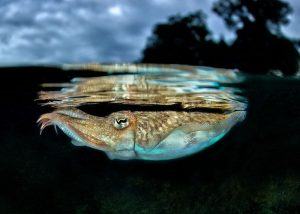 Cuttlefish are masters at altering their appearance to blend into their surroundings. But the cephalopods can no longer hide their inner thoughts, thanks to a technique that infers a cuttlefish’s brain activity by tracking the ever-changing patterns on its skin. The findings, published in Nature on 17 October
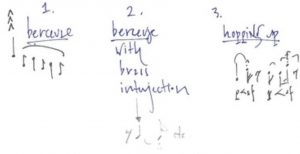 I avoid reading accounts of other composers’ ways of working. I’ve only ever been disappointed by stories of their abusive and antagonistic relationships with the people they’re close to, or, in the case of historical figures, wild speculation about their mental states or marital problems or excessive drinking. When I talk to my colleagues, I am of course happy to hear about their sex dramas and squabbles with the landlord, but what I really want is shop talk: what kinds of pencil are you using? How are you finding this particular piece of software? Do you watch the news while you work? I find these details telling.
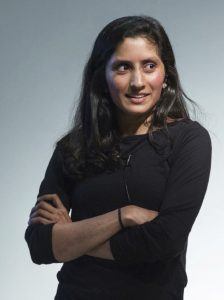 In the spring of 2017, Urmila Mahadev found herself in what most graduate students would consider a pretty sweet position. She had just solved a major problem in quantum computation, the study of computers that derive their power from the strange laws of quantum physics. Combined with her earlier papers, Mahadev’s new result, on what is called blind computation, made it “clear she was a rising star,” said
  In more than twenty years of running diversity-training and cultural-competency workshops for American companies, the academic and educator Robin DiAngelo has noticed that white people are sensationally, histrionically bad at discussing racism. Like waves on sand, their reactions form predictable patterns: they will insist that they “were taught to treat everyone the same,” that they are “color-blind,” that they “don’t care if you are pink, purple, or polka-dotted.” They will point to friends and family members of color, a history of civil-rights activism, or a more “salient” issue, such as class or gender. They will shout and bluster. They will cry. In 2011, DiAngelo coined the term “white fragility” to describe the disbelieving defensiveness that white people exhibit when their ideas about race and racism are challenged—and particularly when they feel implicated in white supremacy. Why, she wondered, did her feedback prompt such resistance, as if the mention of racism were more offensive than the fact or practice of it?
 History does not record whether there was any contact during the first world war between the men of the Indian army who were being treated in hospitals in
 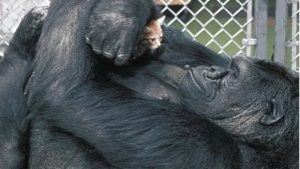 Not many animals are lucky enough to attain celebrity status outside their own homes, but Koko the western lowland gorilla absolutely did. Everyone knew her name (although it’s formally Hanabiko, from the Japanese for “fireworks child”), and everyone knew her as the gorilla that learned to communicate with humans through sign language. That’s an impressive skill for anyone to learn, and it was even more impressive considering she not only broke through the interspecies communication barrier, but let those who knew her best get a peek into her innermost thoughts and feelings. Because gorillas — and all animals — do think and feel, and Koko proved as much. When she passed away in June 2018 at age 46, the world didn’t just lose a gorilla, it lost an ambassador for an entire species. Koko was at the heart of The Gorilla Foundation, a nonprofit organization founded to research interspecies communication in hopes of fostering a worldwide attitude of conservation. Koko learned a lot in 46 years, and she taught the world a lot, too. What don’t you know about her? A lot.
 With the value of bitcoin having fallen by about 70% since its peak late last year, the
  Just two years ago, amid global fanfare, the Paris climate accords were signed — initiating what seemed, for a brief moment, like the beginning of a planet-saving movement. But almost immediately, the international goal it established of limiting global warming to two degrees Celsius began to seem, to many of the world’s most vulnerable,
 D
D In other words, whether last week’s stampede proves to be the overture to worse market reckonings to come, or what our thought leadership class is now fond of calling
 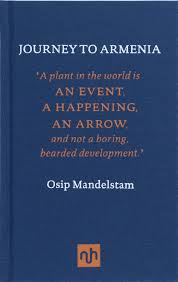 In 1930, exactly halfway between the end and the beginning of the end, Mandelstam traveled to Armenia, at the time a semi-autonomous arm of the Soviet Union. The Stalin regime was then in the process of sending writers to freshly annexed parts of the country; it was Mandelstam’s job to “discover” the triumphs of Socialism out west, proving that the territory’s belonged under Moscow’s thumb.
 The act of reading—office memos, newspaper articles on trade and monetary policy, and bureaucratic bumpf apart—should if possible never be separable from pleasure. Twenty or so years ago there was a vogue for speed-reading. (“I took a speed-reading course and read War and Peace in twenty minutes,” Woody Allen quipped. “It involves Russia.”) But why, one wonders, would you wish to speed up an activity that gives pleasure? Speed-reading? I’d as soon take a course in speed-eating or speed-lovemaking. Yet the notion of speed generally hovers over the act of reading. “A real page-turner,” people say of certain novels or biographies. I prefer to read books that are page-stoppers, that cause me to stop and contemplate a striking idea, an elegant phrase, an admirably constructed sentence. A serious reader reads with a pencil in hand, to sideline, underline, make a note.
 As a college professor, I have the privilege of advising young women and men as they make decisions about course selections, major areas of study, and life directions. Like other college students around the country, many of my advisees are searching for content they find interesting and meaningful, for work that is fulfilling and purposeful. Many are eager to “find their passion.” On the surface, these goals seem laudable. Instead of seeking power, status or personal wealth, some students are motivated to discover their interests and uncover the path that excites and drives them. They want a career that lights their fire. Presumably they are adhering to the adage, “Do what you love and you’ll never work a day in your life.”