
by Angela Starita
When I moved into my new neighborhood, I was anxious to the point of nausea. Even today, the soap my husband and I used to clean the kitchen when we first arrived induces a nervous sadness, the feeling of a no-turning-back crisis. But this was one I’d brought upon myself. We’d moved from a wonderful 2-bedroom apartment overlooking the campus of an art school in the now idealized landscape of Brownstone Brooklyn, and that treasure in the currency of New York City real estate, just two blocks from the subway. But I wanted more space and a chance to garden. I got that in a house in Kensington, about five miles south of my old place, but culturally at a complete remove. Kensington is a world of immigrants and Hasidic Jews, row houses and dozens of brick apartment buildings along a road that runs straight to Coney Island. That last, Ocean Parkway, was the idea of the great Olmsted and Vaux of Central Park fame, and it had been an esteemed address at one time. (While I suspected this from the architecture of some of the older buildings, my hunch was confirmed when I heard an interview with David Geffen describing his childhood ambition to one day have an apartment on Ocean Parkway. It should be noted, that Geffen said this to demonstrate what a parochial world view he’d had as a young man.) The neighborhood’s eastern boundary, Coney Island Avenue, is overrun with car repair shops almost as desolate as F. Scott Fitzgerald’s Valley of the Ashes. Read more »
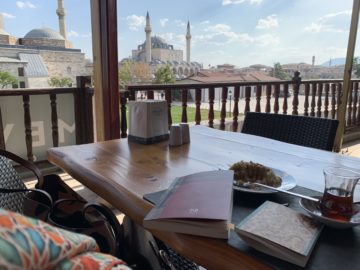 At dusk, the shaft of light striking Rumi’s tomb is emollient as pale jade. It has been a long, hot day in Konya, I’ve been writing in a café-terrace overlooking the famed white and turquoise structure of the tomb-museum complex. I sip my tea slowly, facing the spare, elegant geometry of the building that appears as a simple, intimate inscription on the vast blue. For once I am studying Rumi’s verses in Persian, not repeating English translations or paraphrasing in Urdu. “Bash cho Shatranj rawan, khamush o khud jumla zaban,” “Walk like a chess piece, silently, become eloquence itself!” I’m reciting to myself in the din, in awe of the kind of magnetism that would pull one as a chess piece. Only the heart understands this logic, not any heart, but the one that has been broken open, the one that is led to the mystery in cogent silence.


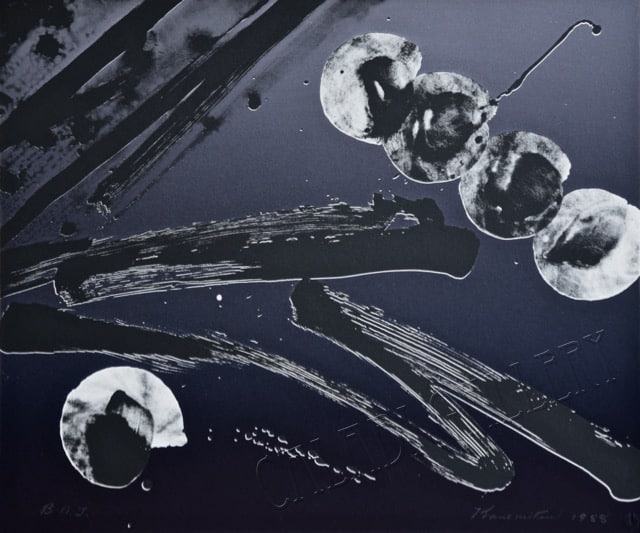 Matsumi Kanemitsu. For The Dream, 1988.
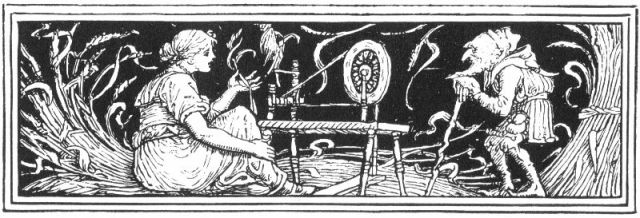 “This is the story of a man. Not rich and powerful, not a big man like your father, Sweetheart. Just a funny little man. I didn’t know him long, only three nights. But there was something about him, something magical.” If “Rumpelstiltskin” started with this framing, we would have a different picture of the story’s meaning, a truer picture, for this framing suggests what is hidden below the surface.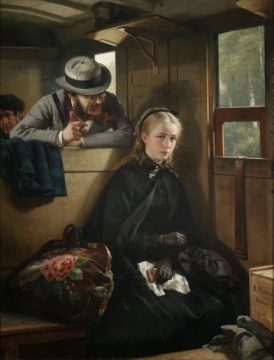

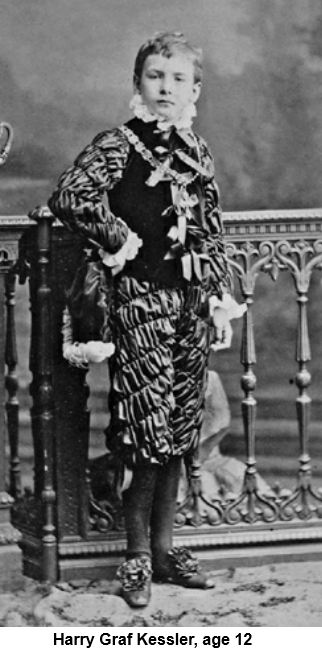 Count Harry Kessler was born to write it all down. In this excerpt from his second ever diary entry, written at the German spa town of Bad Ems where Kaiser Wilhelm also summered, the 12-year-old French-born German boy has a high old time stretching the limits of the English language, in preparation for matriculation at a prestigious British boys’ school. An incipient snob and precociously intelligent, Kessler offers us a nutshell preview of the diabolical pleasure with which he will mash words, sounds and images for the next 57 years—savaging inanity wherever he sees it—but more importantly, promoting and nurturing great artists and thinkers along the way, including Rilke, Beckmann, Seurat, Grosz, Maillol, van der Velde, Max Reinhardt, Gordon Craig, von Hofmannsthal, Stravinsky, Rodin, Kurt Weill, Strauss, Nijinsky, Munch, Walther Rathenau and many others.

 Over the years I’ve been teaching, many people have asked me about the content of an elementary course I teach. I’m interested in the syllabi and exams of courses in other fields, so this I hope may be of interest to others as well. The survey course on which this exam is based is a smorgasbord of probability, voting theory, scaling, and other variable material. Since the class is very large, I often reluctantly make the final exam multiple choice as is the example below. Try it if you like. Two hours is all the time you have. Writing useful prompts for ChatGPT will take too long to be of much help.
 In
In