
by Joseph Shieber
In “The Bizarre Bad Criticisms of Our Merit Paper,” a recent blog post in defense of the “Defense of Merit in Science” paper, the Rutgers psychology professor Lee Jussim doubles down on the conflation of “merit” with “objective truth.”
For example, in highlighting what he takes to be an underlying logical incoherence of criticisms of the “Merit” paper, Jussim writes this:
Anyone who believes the critics [sic] claims have merit (including the critics themselves) implicitly accepts our central argument that science has to be judge [sic] on its merits, even if they pose as critiques of our paper.
And this:
It is impossible for there to be no scientific merit and for the claim that there is no scientific merit to … have merit.
The problem is that there is a difference between saying that scientific CLAIMS should stand and fall on their merits and that scientists’ success should be determined by their merits. The former statement has to do with standards of evidence and objective truth. The latter statement, in contrast, has to do with qualities of scientific researchers correlated with advancing science, as well as with our confidence in our abilities accurately to assess those qualities.
It shouldn’t need stressing, but perhaps it does. What makes a statement or claim meritorious – its originality, interest, truth-likelihood, etc. – is different than what makes a PERSON meritorious. One obvious difference, of particular importance given Jussim’s own focus on objective truth, is that PERSONS aren’t truth-evaluable. Read more »

 Nanni Moretti has always been a melancholic in denial. Perhaps more than any other film-director raised on the French New Wave – born in 1953, shooting his first short in 1973 – Moretti has been turning around the question that François Truffaut posed as a key to the seventh art: is cinema more important than life? But where for Truffaut, or Rossellini, as for many amongst their long and glorious lineage (from Spielberg to Tran Anh Hung) the dilemma has been between a painful reality full of obstacles on one side and a ‘harmonious’ path where ‘there are no traffic jams’ (to speak like Truffaut in his 1973 Day for Night), on the other – in other words, where cinema is the path of escape towards a world where dreams (or nightmares) come true – for Moretti, it is the dilemma itself which is the essence of cinema.

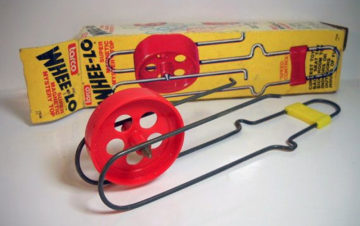 I never heard Henry Bull, my father-in-law, claim he invented the Whee-Lo, but his proud sons have on occasion. He manufactured and distributed the toy, and made it into a nationwide sensation in 1953, just before the hula hoop and Frisbee. A curved double metal track that held a spinning plastic wheel, the gyroscopic magnetic Whee-Lo is still available for purchase, most frequently at airport gift shops. By flicking your wrist, you propel the wheel and its spinning progress down the track and back. Mesmerizing, it’s a sort of fifties’ analog Game Boy. First called the Magnetic Walking Wheel, it came packaged with six colorful cardboard discs known as “Whee-lets” that created optical illusions as the wheel spun. According to Fortune, Henry’s company, Maggie Magnetics, sold two million units its first year.

 The second half of Frankl’s
 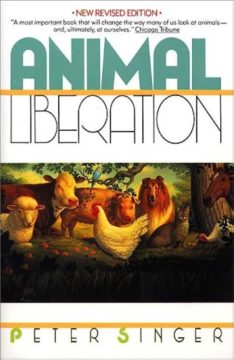 Human treatment of animals is a moral calamity at an outrageous scale, that I can get from zero to really quite worked up about in a matter of seconds. For fear of hurting the cause, I allow myself to take part in polite conversation about the dead bodies on the dinner table only if there is a more soft-spoken ally nearby. Two minutes into the conversation, when I find myself suppressing the urge to yell at a meat apologist how that kind of excuse might equally well be used to justify eating human babies, I am often grateful that there is somebody who can steer the conversation instead towards the socially acceptable topic of plant-based recipes.
 We’re here early this year. June has just gotten started, and after a day or two of intermittent rain with a blustery sky and a stiff wind off Lake Saimaa, fifty degrees Fahrenheit feels a lot colder than the same back in Atlanta. I’ve just learned that it hasn’t been this cold in June since 1968. It snowed today right down the road. The paper took the laconic approach and