by Mark Harvey
Don’t join the book burners. Don’t think you are going to conceal faults by concealing evidence that they ever existed. Don’t be afraid to go in your library and read every book… —President Dwight Eisenhower, 1953
The other day I stopped in at one of those coworking spaces to see if it would be worth joining in an effort to increase my productivity. Productivity, in my case, is a fancy word to describe getting my taxes done on time, answering a few emails, staying atop some small businesses, and doing a little writing. I’m not exactly a threat to mainland China.
Unfortunately the place I visited had all the charm of a gulag in far east Russia, with poor lighting, and about four pale characters staring at their computer screens as if they could see the eternal void in the universe and had a longing to visit. No thanks.
It did get me thinking about “third places,” and libraries in particular. I believe the term, third place, was coined by the writer Ray Oldenburg in his book The Great Good Place. First places are our homes, second places are where we work, and third places are where we go to get relief from the first and second places. They include churches, libraries, pubs, cafes, parks, gyms, and clubs.
My second place is a beautiful ranch in Colorado, so I have little to complain about, but when it comes to the close work of being on a computer, I really value third places. Scholars have described Oldenburg’s third place as having eight features including neutrality, leveling qualities, accommodation, a low profile, and a sense of home. In short, it’s a place that is welcoming, not fancy, free of social hierarchies, free of dues, and imparts no obligation to be there. That perfectly describes American libraries, one of our greatest institutions. Read more »
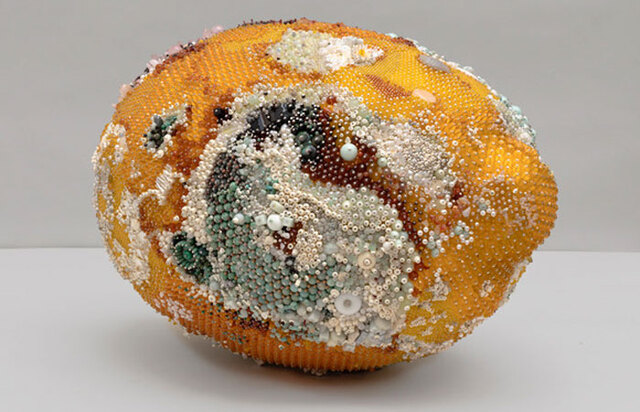 Kathleen Ryan. Bad Lemon (Creep), 2019.




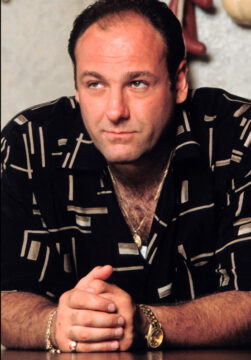 In an attempt to understand my relationship to the Italian-American identity, I recently began watching episodes of The Sopranos, which I avoided when it first aired twenty-five years ago. I was on a nine-month stay in New York at the time, living in a loft on the Brooklyn waterfront, and I remember the ads in the subways—the actors’ grim demeanors; the letter r in the name “Sopranos” drawn as a downwards-pointing gun. I’ve always been bored by the mobster clichés, by the romanticization of organized crime: as an entertainment genre, it’s relentlessly repetitive, relies on a repertoire of predictable tropes, and it has cemented the image of Italian Americans we all, to one degree or another, carry around with us. But the charisma of Tony Soprano, played by James Gandolfini, exerts an irresistible pull: I jettison my critical abilities and find myself binge-watching several seasons, regressing for weeks at a time, losing touch with what I was hoping to find.

 I was listening to “
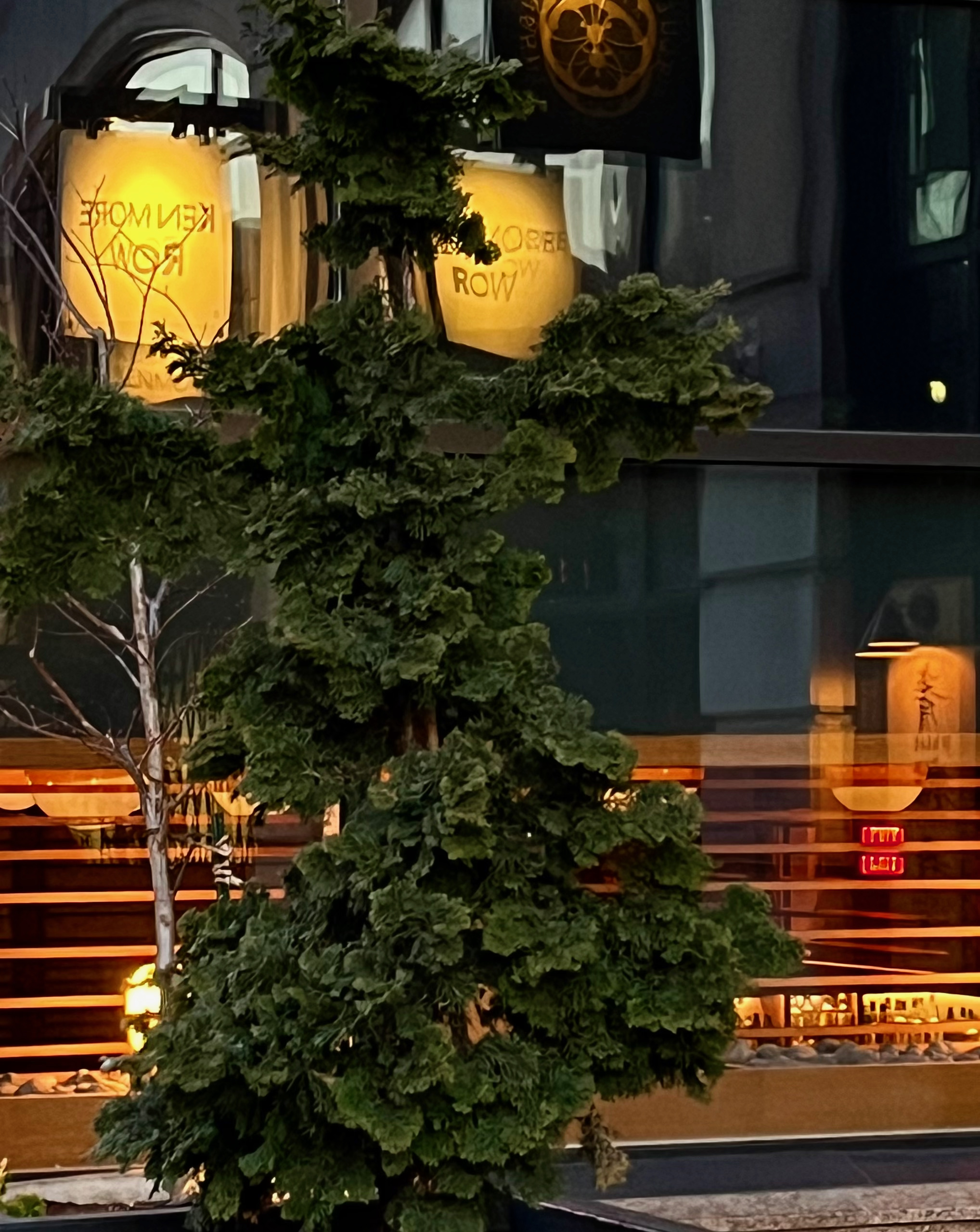 Sughra Raza. Random Street Composition While Walking Home, March 2, 2024.