by Maniza Naqvi 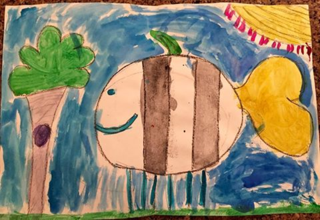
At the end of Manhattan, across the Atlantic breakwaters, or at the beginning, swim fish from Lake Tanganyika and Lake Malawi. Those bodies which, appeared, of water, almost touched each other, on account of Plates moving, shifting, rocking; Rift Valley you know. But there they are, these fish, here. Go figure. At the end of Manhattan or at its beginning. To and fro, to and fro—Wearing expressions of ‘Who cares bro' or of worry, the more you stare, some anxious. Some not so much. Like it's hard to find your feet here. You know? Some look like they're happy. Yes. Like fish in water. Like this is exactly where they want to be. Aye? Others, eh it's not a bad place to end up, as places go. Some not so much…Blue with bulging foreheads. Yellow too. Colors for which I don't know names yet. Even. Wide eyed, aware, not a muscle twitching—just the fins or are they wings—swishing, wishing, shimmering. It's easy to see how fish out of water, might be us. Me. In a glass aquarium in the Staten Island Ferry Terminal. Now as I wrap my arm around the pole on a swaying speeding 2 train wondering if I should switch to the R or stay on this one—or maybe take the Shuttle to the 6 or move to the M and the E train. I'm on my way to City Hall, Not used to going to work here. To talk to folks, about how they care for those who haven't been born yet, for those on their way to growing up. For those done growing, for those in between all this, the work and the emotions, the business of living. In between good and bad days and limbs. In need of a helping hand, a fair shake, I'm on my way to exchange with the good folks there, cross pollinate. We are birds of a feather, same kettle of fish, they'll tell me and I'll tell them what in the World we are up to elsewhere. In this city they spend 9.7 billion—that's dollars, on such care. On 3 million—good people here. Elsewhere, whole countries, on billions not so much is spent….I wonder how the Cichlids got here. Fully formed and born already? Brought across the salty oceans in jars sloshing fresh water or what? Or, did they arrive as eggs here? I look around me at the morning commuters. This car is quiet, heads mostly down, dangling ear plugs, some sleeping, some reading novels or staring at IPhones. I glance at possible subjects; that face there, should be painted with gold leaf or silver. Maybe. Suddenly a man, beyond my vision on the other side of this thicket of passengers screams out ‘Aargh, Death squad, Stop!'—Some bite; Glance over— No one flinches, Some shrug. I nonplussed, smile and exchange glances with a fellow straphanger–a strapper I guess–who says reassuringly, unimpressed—‘He's just trying to get attention. That's all'. In silence the car hurtles on. Three stops later, with each periodic outburst, the car load leans towards the scream, glances become compassionate. The load here on this car understands. All these faces, from other places, on their way to fixing life, understand. Hurtling through the city, this life blood of the city in this vein—the artery—flowing, flying, moving fast from one end to the other, now leaning, now bumping, now brushing, jostling, jolting— now rocking against each other. Towards, a better life. This car load, understands. Train stops, doors open, a fresh pack loads on. And I resolve to return to the Ferry Terminal, take a photograph—wondering, still, about those colors, what shape they arrived in here, hatched or waiting to be. To spend their life—to live it watching commuters go by.
Painting by: Esma Djutovic