by Shadab Zeest Hashmi


by Shadab Zeest Hashmi
by Dwight Furrow
“The aesthetic regime asserts the absolute singularity of art and, at the same time, destroying any pragmatic criterion for isolating this singularity. It simultaneously establishes the autonomy of art and the identity of its forms with the forms that life uses to shape itself.”*
Rancière argues that with the proliferation of objects that now count as art, contemporary art is neither autonomous from nor fully absorbed into everyday life but occupies a borderland between the everyday and the extraordinary that is art's function to continually negotiate. Art is about having a certain kind of aesthetic experience; it is no longer about a particular kind of object.
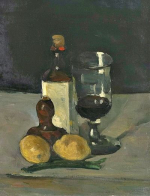
Wine is among the most prevalent of everyday objects that have no function except to provide an aesthetic experience. And so the question naturally arises: Can wine be a work of art?
by Maniza Naqvi

Why you? Why You? Why you? I had asked myself earlier, marveling at my good fortune gleefully. I kept repeating the direction I was headed towards the land of a thousand stories: Aracataca, Aracataca, Aracataca. Each syllable slung against the roof of my mouth, crashing against each other on my tongue, creating a rhythm like a tin drum. I wanted to jump and dance. Oh sure. I was going just to a conference—but it was on the shores of Colombia very near Aracataca. And so I went pulled by the magnetic allure of it and the lore of the Sierra Nevada.
But, ah the regret. Nearly there, not really there, close, nearby. I did but glimpse it in that chance brief encounter with its beauty and its possibilities, a moment so very brief it nevertheless left me breathless. And when I left, it left me imagining it, wishing that I would return to travel it by river perhaps at a great age, and in love. Finally. And then, then, without a care in the world, I would dance.
by Claire Chambers

I have a confession to make: as well as being a lecturer in global literature, for the last five years I have also moonlighted as a
Zumba instructor.
Zumba, if you're unfamiliar with this high art form, is a dance fitness programme. Like all self-respecting cults, it has its own creation myth. Godhead and co-founder, Colombian Alberto 'Beto' Perez, began his career as an aerobics teacher in Florida. One day, the story goes, he arrived at his class only to realize he had forgotten his aerobics cassettes (yes, it was the 1990s…). He improvised a class based on the Latin music tapes he had in the car, and the punters loved it. He then teamed up with two more pragmatic and business-minded Albertos — Alberto Perlman and Alberto Aghion — and Zumba Fitness was born.
A typical Zumba class is built around four main dance styles. Most people are familiar with Cuba's elegant, sexy Salsa. (Less well-known is its offshoot Salsa Choke, which originates in Beto's native Colombia and intermixes Cuban panache with the rhythms of Zumba's next core dance, Reggaeton.)
Perhaps best described as Latin hip-hop, Reggaeton hails from Puerto Rico. Its edgy, urban lyrics and beats have made their way across South America. Some of Reggaeton's most famous musicians, such as Daddy Yankee, Don Omar, and Pitbull, have an even wider following across the globe.
Merengue is the third style, which most people have heard of but may not be aware that this is a fast march from the Dominican Republic and other parts of the Caribbean. It has an even beat but can become very frenetic, with moves that have names like double hesitations, pretzels, and cradles.
Kismet
“This can’t be me,” Mother says,
leaning forward in a wheelchair,
“Must be some shriveled woman,”
“with parched skin, frayed hair,”
she adds, “Not me. I’m only 30.”
Mother gives me my Smartphone
with which I clicked her photo
during a commercial break,
watching “Kismet,”
Hollywood film
made in 1955
when Mother was in fact 30
with six children in Kashmir.
Her skin then was pure,
hibiscus bloomed in her hair.
Now, in The Bronx
Hebrew Home at Riverdale,
63 years later
in Mother’s sparse room,
a harem girl on TV, decked
in baubles, bangles, & beads,
starts revolving
in the courtyard of a Caliph
in Old Baghdad,
her pantaloons blooming
her turban glittering:
I’m gritting my teeth, glaring
at a fantasy Orient, thinking
of the grim reality today
in Iraq. Mother is transfixed
as the harem girl twirls
to stage front where her
flawless face fills the full screen.
Suddenly, Mother starts to sigh.
“What happened,” I ask gently
massaging her stiff fingers
with Aspercreme. Mother
nods at the TV, whispers,
“I want my skin like hers.”
by Rafiq Kathwari / @brownpundit / rafiqkathwari.com
by Humera Afridi
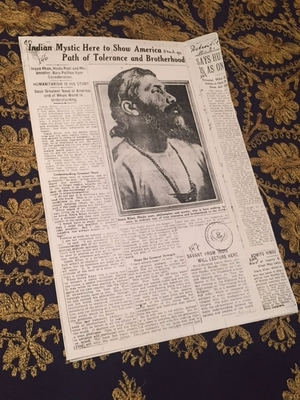
“Mommy it's Christmas, you have to put away your work!” urged my nine-year old. And so I began clearing the dining table which had turned into an expansive workspace over the early winter weeks. As I gathered up my books, a sheet of paper slid out from a binder. I stared at it absently. A photocopy of an archival newspaper cutting from 1923, with publication title missing. The headline announced: “Indian Mystic Here to Show America Path of Tolerance and Brotherhood.”
I marveled at the headline. Kinship and the “Path of Tolerance”—what better salve for our fraught present? I sensed a confluence of eras and histories, of time collapsing. A ‘Father Christmas' message, if ever there was one, I mused, sitting back down at the table to study the article from 1923. And, indeed, as if conspiring to corroborate my thesis, a striking Christ-like image of Hazrat Inayat Khan floated off the page—commanding features and a magnetic expression; tapering beard; mystical gaze piercing the distance. A strand of beads with a heart-and-wings pendant adorned his neck. The article's sub-headings revealed the contours of the story— “Inaya (sic) Khan, Hindu Poet and Philosopher, Bars Politics from Consideration”; “Humanitarianism is His Study”; “Says Greatest Need of America and of Whole World is Understanding”— a gift-giving message to be sure, emanating a spirt apropos of Christmas; an antidote to the climate of war and divisiveness in which we find ourselves.
I squinted my eyes to decipher the tiny newsprint, faded in parts, and stopped dead after the first half of the sentence. “Inaya Khan, Hindu poet, philosopher and mystic, has entered America after a few days detention at Ellis Island…” A few days detention? I started over and reread the sentence. Yes, a few days' detention at Ellis Island. I'd read it correctly. More alarming than the shock of this initial piece of information is that the article carries on without the slightest reflection on the egregious incident and, undoubtedly, racist attitude that Hazrat Inayat Khan had endured at the hands of immigration at Ellis Island.
by Elise Hempel

And surrounding this is an even larger uncertainty of where home is now, with the election of Donald Trump as president. In the first few days after arriving here in Minnesota, I wasn't sure where I was when I woke up in the morning – in Illinois or Minnesota, what house, which bed, whose pillow. It took several moments to figure it out. I had almost the same feeling when I woke the morning after election day, and now, after knowing for sure that Trump will indeed be our next president, that feeling is here again – that feeling of waking to a country I don't recognize. Except that it's not dissipating, not fading as I sit up and wipe my eyes and look around, not giving way to the thought Oh, yeah – I know where I am.
by Max Sirak

The only reason I ask is Steve Martin.
He has a list. In fact, he shared it with the whole world on Saturday Night Live. In case you missed it, you can watch it here. It's a short sketch. It's worth your time. It starts with a wish for all children of the world to join hands and sing together in the spirit of harmony and peace. But don't worry – it quickly devolves from there.
Christmas was yesterday. This means I missed my chance to sit by a tree and deliver my own list. And, while it is the third crazy night of Chanukah, I wanted a broader appeal. So, this month, for my last column of the year, I'm stealing Martin's schtick.
We're about six days away from wrapping up 2016. For a lot of us, maybe even all of us, this means a chance at a fresh start. A round of clean slates for all, barkeep! Stepping into '17, many of us will be looking toward change. We will re-solve old problems and test our re-solutions. It is in this spirit, with tremendous honor, tons of gratitude, and the teensiest bit of humility, I give you…
My 2017 Wish List: Three Thoughts I'd Like For Everyone To Carry With Them Into The New Year.
Ready?
by Brooks Riley
by Christopher Bacas
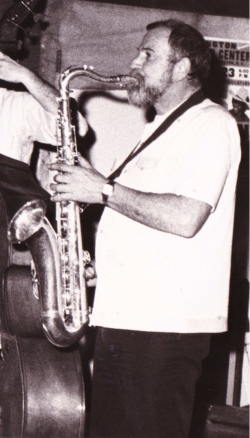
In the 70's, a minor, flush with inheritance, bought the building. Unable to manage it legally, he asked a former teacher to act as surrogate.The two tough guys ran a drinking establishment on a stagnant waterfront in blue-collar Baltimore. It attracted men who didn't fear a closing time stagger to their vehicle through dim streets.
The younger guy, once he could actively manage his establishment, encouraged members of a local motorcycle club to hangout. They policed the space and kept order, until a back-room stomping brought the enterprise to the brink. The new liquor license expressly forbade the club's colors. Not chastened, the junior partner grew into his responsibilities and made alliances with the IRA. Their agents used the building as safe house. His barkeeps kept secrets under the kegs.
H, a New Orleans Jew, Navy medic in Vietnam. Possibly the most fearless man I have ever seen. A bit over five feet and pudgy, he stood up to drunken, belligerent giants. Waiting for their swing, then dropping them with a single upward jolt of his thick hand. We'd help him drag the bums outside afterwards.
T, a scrawny jabberwocky, nose powdered to oblivion, blithely ignored new customers while he gabbed inanely at regulars. In deep to dealers and bookies, he took cash advances from the register until the boss banished him, keeping cops out of it while expecting timely repayments.
J, an erudite lush, who, when he heard patrons discuss philosophy, profanely offered free drinks as long as they agreed to eschew weighty topics. After hours, he held mobile Bacchanals; his battle cry: “Vodka tonic, no fruit!” After an early demise, neighbors inaugurated a festival in his name and wore shirts with VTNF printed on the back.
by Holly A. Case
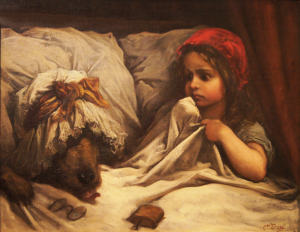
But only Little Red Riding Hood has learned it. Although the wolf in the story dies, wolves in general remain at large, and so the tale has to be retold. There will be other young girls who will face other wolves. This fact is not meant to drive us to despair, but to avert a danger. The problem cannot be solved once and for all time, but it can—by means of wisdom imparted before the threat appears—be flagged, so that when some little girl stares a wolf in the face, she won't fall into his trap. Even without concrete experience the girl can learn a lesson.
The fairy tale belies that there can be any progress beyond the personal, but the fact that the story exists and is meant to be handed down as wisdom means that, although wolves have not been abolished, every generation need not perpetually succumb to their tricks. There is another problem, however: since Little Red Riding Hood is saved—variously by a huntsman and a woodcutter—the tale also gives the impression that the danger may not be so great after all. No matter which version you read, the tale promises justice: Little Red Riding Hood lives and the wolf dies. So when the story is told and the little girl gets eaten by the wolf in spite of being warned, and furthermore, no woodcutter or huntsman comes to cut her out of the stomach of the wolf, the scenario is fertile ground for despair.
The tale even primes us for this despair, because for Little Red Riding Hood, there is no better imaginable scenario than one in which nothing bad happens. It's not as though the tale promises little girls transcendence or socio-economic mobility. It only aspires to help them to fend off an almost inevitable danger. If it is successful, that particular harm will have been averted. The tale aspires, at most, to zero, or to the maintenance of the status quo.
by Hari Balasubramanian

One example of this I experienced dates back to my graduate school days. I worked as a research assistant for six years (2000-2006) on the fifth floor of the engineering building at Arizona State University. I noticed I could easily strike up a conversation with professors and fellow graduate students, who were from very different backgrounds and countries. But I somehow found myself shy in the afternoon and evenings in talking to the janitor who cleaned and maintained the two dozen rooms on our floor. I wanted to connect with him but found it difficult to step out of my comfort zone. I wondered what the reason was. Was it because our work was so different? Because we were from different countries? Would I have managed to strike up a conversation more easily if he too was from India? Was it his personality?
Mark was a constant presence in the hallways and restrooms every weekday from four in the afternoon. Most times you just heard his presence: the clink of his thick bunch of keys; the rumble of the large trash-can-on-wheels; a pause; a knock on an office or lab door; the emptying of trash; and then clink and rumble again before the next pause. And at times you heard an insistent squeak in the hallway – that was Mark using his sneakers to erase a smear off the linoleum floor.
The past is inevitable.
…………—Delmore Schwartz, Poet
Hadn’t Thought of it Like That

Though likely, tomorrow is
not set
This day’s loose ends twist in the wind
like kite tails jerked in blue at the end of present’s string
becoming codas no one can sing—
the future’s not something on which you should bet
Only Now sings real arias
If you stand on the bridge in the middle of town
where the river parts at abutments in bow waves
—splits as the bridge’s foot in the stream
becomes a ship’s prow plowing north to nowhere
and gives the early crimson sky
an oscillating rendition of itself in its otherwise slick mirror
you catch a glimpse of your bobbing head
in flames of pleated clouds
You are its aria
As you turn and walk off you get
that the past is inevitable
and set
.
Jim Culleny
12/17/15
.
Photo: The Bridge of Flowers
by Martin Yaffee
by Muhammad Aurangzeb Ahmad
Much has already been written about the failure of data science in predicting the outcome of the 2016 US election but it is always good to revisit cautionary tales. The overwhelming majority of the folks who work in election prediction including big names like New York Times' Upshot, Nate Silver's FiveThirtyEight and Princeton Election Consortium predicted Clinton's chance of winning being more than 70 percent. This is of course not what happened and Donald Trump is the president elect. And so on the night of November 9th people started asking if there was something wrong with Data Science itself. The Republican strategist Mike Murphy went as far as to state, “Tonight, data died.” My brush with election analytics came in in late 2015 when I was looking for a new job and talked to folks in both the Republican and the Democratic Data Science teams about prospective roles but decided to pursue a different career path. However this experience forced me to think about the role of data driven decision in campaigning and politics. While data is certainly not dead, Mike Murphy observation does lay bare the fact that those interpreting the data are all too human. The overwhelming majority of the modelers and pollsters had implicit biases regarding the likelihood of a Trump victory. One does not even have to torture the data to make it confess, one can ask the data the wrong questions to make it answer what you want to hear.
We should look towards the outcome and modeling approaches for the 2016 US presidential elections as learning experiences for data science as well as acknowledging it as a very human enterprise. In addition understand what led to selectively choosing the data and to understand why the models did not as well as they should have, it would help us to unpack some of the assumptions that go in creating these models in the first place. The first thing that comes to mind is systematic errors and sampling bias which was one of the factors that results in incorrect predictions, a lesson that pollsters should have learned after the Dewey vs. Truman fiasco. That said, there were indeed some discussions about the unreliability of the pollster data run up to the election. Although the dissenting voice rarely made it to the mainstream data. Obtaining representative samples of the population can be extremely hard.
by Emrys Westacott
Last week I drove from the small college town in upstate New York where I live to New York City. 
I understand that a country mouse like myself is likely to be both not very savvy about and easily unsettled by the ways of the big bad city. Even so, the congestion, the jungle-law etiquette, the impatient honking, the anxiety induced by reckless cyclists passing on left and right, the lanes blocked by delivery vehicles, the need for so many police officers to direct traffic and pedestrians at snarled intersections, the difficulty of finding street parking–all this had me shaking my head. I know that thousands do it every day. Many do it for a living. And a few no doubt enjoy it. But regularly spending hours in congested traffic, even in a taxi on a bus, is no part of the good life in my book. At best, it's a fairly hefty sacrifice for the sake of other benefits the city has to offer.
Strolling around midtown Manhattan, I was struck by how many of the cars on the street were yellow taxis. Apparently there is no official figure for the percentage of New York traffic constituted by taxis, but my impression was that it must be more than fifty percent, especially if one includes cars that provide ride-hailing services like Uber and Lyft. According to New York's Taxi and Limousine Commission, about 20,000 of the city's 65,000 vehicles for hire are Ubers.
by Mara Naselli
The literary debate over the role of fact and invention in essay now appears to have foreshadowed our own post-fact moment. Suddenly this is not an idle matter. When writers knowingly take liberties with the facts in the name of art, they demote the reader from fellow traveler to spectator. Trust me, they say, it will be fantastic. For those who feel tricked, the betrayal is more than just bad feeling. An essayist who flagrantly manipulates fact fails to appreciate the essay’s greatest strength—the convergence of intimacy and shared inquiry.
The most recent review to enter the fray is William Deresiewicz’s “In Defense of Facts,” just published in The Atlantic. Deresiewicz attacks John D’Agata’s three essay anthologies for many things, notably a disregard for history. Deresiewicz rightly situates the historical origin of both fact and essay in tandem. For they are cousins, born out of the same revolutionizing changes that moved the Western intellectual tradition from the medieval world to the Renaissance. These changes laid the path for empirical science in the process. Montaigne’s “scrupulous investigation,” Deresiewicz writes, was the essay’s distinguishing feature in the sixteenth century.
If we pause to consider Montaigne and his time, we may make an even bolder claim that could renew our own contemporary relationship to the essay as an instrument of inquiry. Montaigne’s inward turn was not simply introspective. His scrupulous investigation was in service to a more ambitious endeavor: the relocation of the authority of judgment from the external authorities of the Church and ancient texts to the inward authority of the self. It was the act of investigation and inquiry toward understanding that made Montaigne’s work so remarkable.
by Mathangi Krishnamurthy

Since then, I have been better at allaying my expert suspicions. I have made friends. And I have grown further fascinated with the set of relationships we so summarily explain away with the term, “friendship”. Movie stars in India, when interrogated as to possible amorous connections between them, often respond in the coded phrase, “just friends”. But how could there be mere-ness in the relationship of being friends?
by Carl Pierer
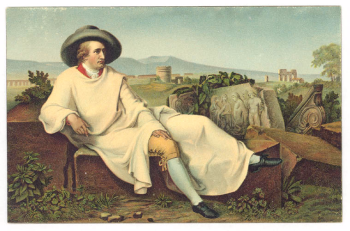
In 1786, Goethe began his famous journey to Italy, of which he kept a diary to be published as The Italian Journey in 1816. Even though his main interest lies elsewhere, he finds time to write about Italians. Early on his journey, he writes, for example (Goether, 1982):
So far I have seen only two Italian cities and only spoken to a few persons, but already I know my Italians well. They are like courtiers and consider themselves the finest people in the world, an opinion which, thanks to certain excellent qualities which they undeniably possess, they can hold with impunity.
22. September 1786
The generalisation at hand is striking. Whilst admitting a very limited experience, Goethe feels in a position to talk about Italians, as a whole. Or does he?
Who are the Italians Goethe is talking about? It seems unlikely that he is talking about all of them, at all times. Yet even restricted to his contemporaries, it would be bold to assert that this is a necessary feature of being Italian. Such a reading most surely would miss the point. It seems more appropriate to suggest that he is talking about some sort of Mentalität, a commonality or stereotypical property of Italians. Even if this were so, it would be a confusion to suggest, anachronistically, that Goethe means by “Italians” the citizens of Italy. The “Italians”, it seems, have a rather different, curious status.
by Brooks Riley
by Richard King
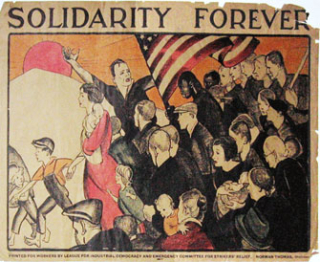
In a dry valley in the Italian countryside, the remaining members of Spartacus' slave army sit in chains, surrounded by their Roman captors. At the front of the group sits Spartacus himself (Kirk Douglas) and next to him Antoninus (Tony Curtis), a slave entertainer and Spartacus' favourite. The victorious Roman general, Marcus Licinius Crassus (Laurence Olivier) sends a disdainful eye over the survivors. His herald speaks:
“By command of His Most Merciful Excellency, your lives are to be spared. Slaves you were and slaves you remain. But the terrible penalty of crucifixion has been set aside on the single condition that you identify the body or the living person of the slave called Spartacus.”
Cut to Spartacus, looking steely: he knows the jig is up and rises to his feet. But Antoninus rises with him and speaks first. “I'm Spartacus!” he shouts, as another slave stands: “I'm Spartacus!” And another: “I'm Spartacus!” And so on and so on, until the valley is alive with voices. “I'm Spartacus! I'm Spartacus! I'm Spartacus!”
Cheesy, yes; but stirring all the same. And Douglas's flinty visog is a picture: mud-streaked and tear-stained, like an Easter Island moai after a downpour. We know the scene was personal – an allegory of the solidarity shown amongst writers and performers in the face of intimidation from the HUAC – and it would be nice to think that Douglas had certain US Senators in mind when he aimed those piercing eyes at Olivier. At any rate, it was a great day's work.