
by Thomas R. Wells

At the heart of liberalism is the idea of personal sovereignty. There is some domain of thought and feeling that is essentially private, for which we are not answerable to others because it is no one else’s proper business.
Privacy is the metaright that guarantees this right to think our way to our own decisions in our life, whether that be how to follow our god, or what to make of our sexual inclinations, or how to grieve for someone we have lost. It prevents others demanding justifications for our every thought and feeling by veiling them from their view. It is the right to be mysterious to others.
More specifically, privacy is the right to choose how we are known and by whom. For example, we may confide the details of an embarrassing problem with a particular friend – but not just any friend and certainly not a stranger. We do so because of the mutually trusting, caring relationship we have with that person. They may still criticize us for our faults, but not like a stranger would, whose knowledge of us lacks that special relational context. A friend’s criticism could actually help us do better. And if it doesn’t, they will respect our confidence. They won’t turn around and ‘share’ it with all the people who might find it interesting.
Of course, the right to control how you are known is not unlimited. You can’t control exactly what people know about you and you certainly can’t control what they make of it. And like other rights, such as speech or property, it may be curtailed in particular cases to protect other rights held by other people. For example, a convicted fraudster should not have the right to hide that fact from prospective business partners. On the other hand, his neighbours don’t have such a need to know. And even his business partners don’t need to know his sexuality or religion. The fact that people are curious enough about such things that they will ask google, and that google can sell more advertising by telling them, is not enough to justify disrespecting people’s privacy.
These days lots of people are talking about the value of privacy and its limits in the internet age. But few note its political significance. Read more »

 What follows is part of a collaborative project between a historian and a student of medicine called “The Temperature of Our Time.” In forming diagnoses, historians and doctors gather what Carlo Ginzburg has called “small insights”—clues drawn from “concrete experience”—to expose the invisible: a forensic assessment of condition, the origins of an idiopathic illness, the trajectory of an idea through time. Taking the temperature of our time means reading vital signs and symptoms around a fixed theme or metaphor—in this case, the circus.
 Beauty has long been understood as the highest form of aesthetic praise sharing space with goodness, truth, and justice as a source of ultimate value. But in recent decades, despite calls for its revival, beauty has been treated as the ugly stepchild banished by an art world seeking forms of expression that capture the seedier side of human existence. It is a sad state of affairs when the highest form of aesthetic praise is dragged through the mud. Might the problem be that beauty from the beginning has been misunderstood?
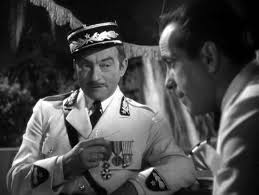 There is a famous exchange in Casablanca between Rick (Humphrey Bogart) and Captain Renault (Claude Rains):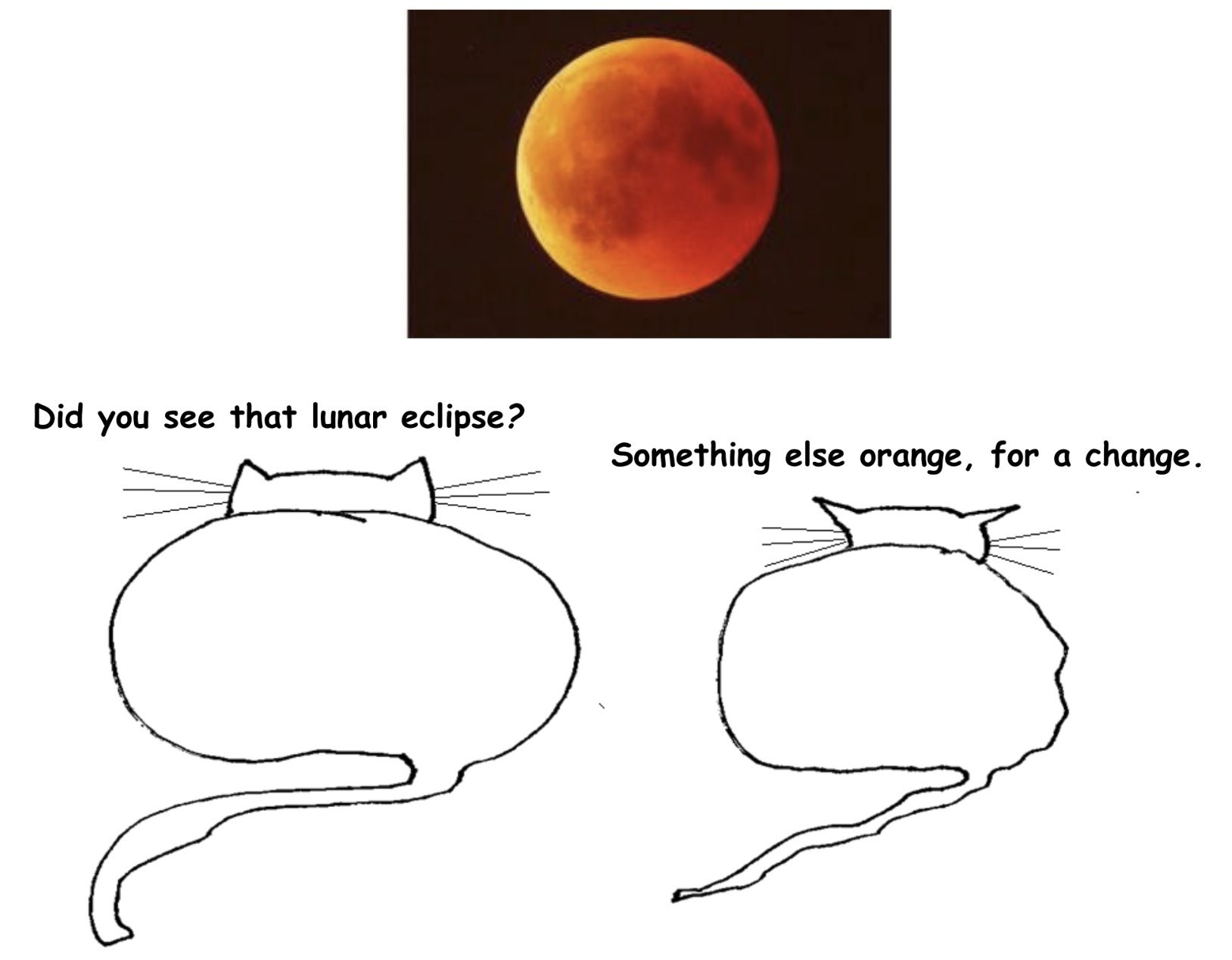



 Spectator sports can reflect a society’s worst inclinations by promoting pure partisanship.

 I have a friend who is a travel agent. The days when we all talked on the phone to travel agents in order to book any travel are long gone. These days, for the most part, travel agents, the actual human ones, deal with business travel and high end travel for elites. My friend was telling me about being contacted by a client who was the high end elite type, at 3am, saying her email wasn’t working and could my friend text her their itinerary. Now putting aside the obnoxious behavior in expecting a reply from anyone at 3am, my first response was “doesn’t she use Tripit?” Or Google Trips, or even the airline mobile apps? At any given time, I can find all my travel details in all of those ways and sometimes others (business trips get automatically put in my Google calendar). Travel is so automated and online now, it’s amazing to me that anyone wouldn’t take advantage of these tools.

 Although some may be heralding the end of free speech, 2018 has been a year of far-reaching debate and discussion. In the coming months, we can anticipate attending or streaming discussions ranging from such topics as the role of race in American politics to the nature of truth, from existential threats posed by artificial intelligence to the value of religion.