
by Dwight Furrow
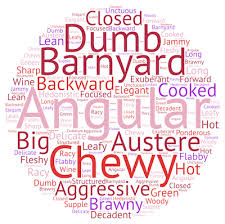 Research by linguists into wine metaphors have identified several source domains that help wine writers describe the faint and ephemeral features of poetry in a glass. “Wine is a building”, “wine is piece of cloth”, and especially “wine is a person” are a few of the rich diversity of potential likenesses that might uncover facets of a wine. There are after all many ways of being a body or a person with new variants continuously on offer. But how do writers identify, within these source domains, which likenesses will be compelling and how do readers come to understand what a metaphor means? Identifying source domains for wine metaphors must be supplemented by an account of how interpretation works.
Given the importance of variation and distinctiveness in wine appreciation and the need for linguistic innovation to capture these dimensions, theories of metaphor that explicitly link metaphor to the exercise of imagination will be most useful. The use of metaphor in wine language looks backward to conventional, entrenched descriptions while looking forward in order to capture the emergence of innovative taste profiles that require linguistic imagination.
To add more complexity to the mix, the use of metaphor in wine language serves two broad purposes that are sometimes opposed. On the one hand writers use metaphor to communicate an accurate description of the wine they’re tasting, especially by conveying the holistic properties such as elegance, intensity, or balance. On the other hand, metaphor expresses the remarkable experiences of a wine that wine importer Terry Theise calls “sublime”. “Some wines” he writes, “…are so haunting and stirring that they bypass our entire analytical faculty and fill us with image and feeling”. Read more »
 There was this one moment. A sunny June day in Nebraska. No one was around. I dribbled the basketball over the warm blacktop, moving towards a modest hoop erected at the end of a Lutheran church parking lot. I picked up my dribble, took two steps, sprung lightly from my left foot, up and forward, my right arm extending as my hand gracefully served the ball to the white backboard. Its upward angle peaked, bounced softly, and descended back through the netless hoop.

 What is commonsense to most people who received a K-12 public education in the United States is that every formal system of state schooling throughout the modern world is designed to educate its students to develop, what Charles Lemert calls “sociologically competencies” within whatever ideological system is dominating at the time of their schooling. People correctly assume that children going to school during the Weimar Republic, for example, were educated to function competently within that ideological system. Children who were in school during the reign of Chairman Mao in the People’s Republic of China were educated to function competently within that system. Children in China today are educated to be sociologically competent in China’s current government and economic system. Children in France, Spain, Portugal, Israel, Mexico, Argentina, Brazil, and Iran likewise are educated to function competently in those systems. In the Soviet Union, children were educated to function within its version of communism. After the collapse of the Soviet Union, children were required to learn different civic knowledge and skills in order to be competent within the newly emerging political ideologies of reformed nation states.

 Notwithstanding the spread of English as a global lingua franca, translation continues to be a vital component of international relations, whether political, commercial, or cultural. In certain cases, translation is also necessary nationally, for instance in countries comprising more than one significant linguistic group. This is so in Switzerland, which voted by an overwhelming majority in 1938 to add a fourth national tongue to thwart the irredentist aspirations of its Italian neighbor, and which in certain contexts is obliged to use a Latin version of its own name (Confoederatio Helvetica) to avoid favoring one language group over another.
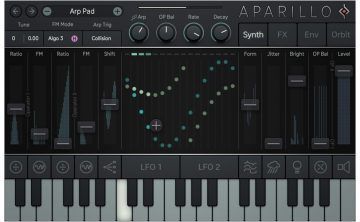 If you listen to that track as featured in the mix, my judgment may seem a little harsh. The track is on the static side, but that’s hardly a fault in the context: the textures are lovely, and there’s plenty of movement; and at under four minutes it can’t really be said to overstay its welcome. A minor work, perhaps, but as a brief linking interlude it works perfectly well. So what’s the problem?

 front of some her UC Berkeley colleagues, Doudna shared, “a story … about some research … that led in an unexpected direction … ” producing “ … some science that has profound implications going forward…but also makes us really think about what it means to be human and what it means to have the power to manipulate the very code of life …”
 He is an enigma. He sits up there in his marble chair, set in a Greek temple, literally larger than life, and he defies us to understand him.


 There should be more.
 So, here’s a game. Try to imagine: “What unbelievable moral achievements might humanity witness a century from now?” Now, discuss.
 The translated versions from Tamil into English of Perumal Murugan’s two books, One Part Woman and the The Story of A Goat, weave stories of the complex life of the rural people of South India in an engaging and highly readable form.
 Jack Youngerman. Long March II, 1965.