by Jeroen Bouterse
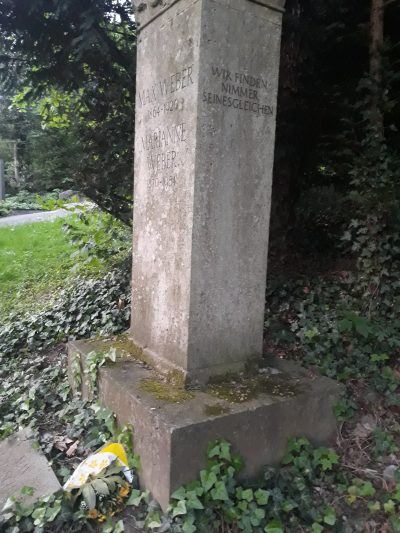
In the school vacation, I finally decided to go on what is probably my only-ever academic pilgrimage: I visited Max Weber’s tombstone in the Bergfriedhof cemetery in Heidelberg.
I had intended to go for some time. In my original plans, I’d go on foot (from the Netherlands) like a proper pilgrim, but after years of failing to go through I had come to realize that was not going to happen anytime soon. So I went by train. Which was too easy; I stood next to the monument before I knew it. I’m still coming to grips with the fact that only on the first time can you do a thing like this properly – that is, with enough ascetic self-denial to mark the purposefulness of your actions – and that I messed up that one chance.
Oh well. Isn’t it fitting to feel the charismatic potential of this particular relic being sapped by the very efficiency of modernity – the stahlhartes Gehäuse of the InterCity Express, working unfailingly to disenchant this tiny part of the world, too. Except for one detail, which I’ll get to later.
I fell in love with Weber as a history undergraduate. We read a fragment of the Protestant Ethic and the Spirit of Capitalism. The combination of a big and, not unimportantly, Western-centered thesis with detailed, painstaking social and historical explanations seemed a best of two worlds. More than that, Weber’s explanations, rather than reducing the ideas and deepest convictions of the people and movements he studied to some other variable, gave center stage to those convictions. He demonstrated that historical explanation involved understanding the beliefs and values laid down in historical texts, thereby at least partly justifying what I felt most comfortable doing. Read more »


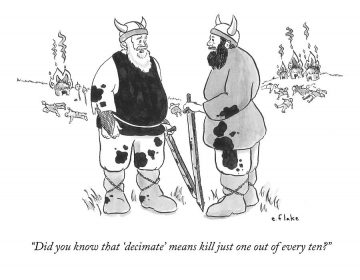 If you took Latin, then you probably have a larger vocabulary than the average bear, and you are more likely to have strong opinions on some words you vaguely remember based on Latin roots (cognates). For example, folks are more commonly using “decimate” to mean destroy or devastate, and it annoys the living materia feculis out of me. Decimate originally meant to kill every 10th person, based on the Latin word for 10 (decem), which is so oddly and satisfyingly specific. “Devastate” and “destroy” are already well known and used, so why do they need another alliterative ally in little weirdo “decimate”?

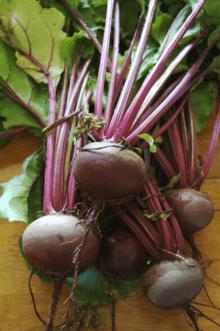 Soon after President Obama moved into the White House, Mrs. Obama set up her vegetable garden. She planted tubers like carrots and turnips, leafy veggies such as spinach and kale, and herbs—thyme, sage, mint, and whatnot. But she did not plant beets. Why? I was quite perplexed and tried to find out the reason. I called the White House but did not get a satisfactory answer. “What the hell are you talking about?” said someone who picked up the phone. Maybe her children do not like them, said my child who was not overly fond of the vegetable. Not like beets? How is that possible? Of all the tuberous veggies available to man, the beet in my view is one of the best and the most poetic.


 Recently, I was waiting to board an American Airlines flight from Boston to Rochester, when, along with ten of my fellow passengers, I was summoned to the desk in front of the boarding gate. There we learned, by listening intently to what the AA gate agent told the first passenger in line, that we were being bumped from the flight, that AA would try to find alternative flights for us, and that we would each receive a voucher worth $250, redeemable on AA bookings, valid for one year.
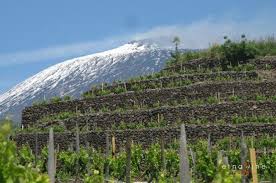 Wine writers often observe that wine lovers today live in a world of unprecedented quality. What they usually mean by such claims is that advances in wine science and technology have made it possible to mass produce clean, consistent, flavorful wines at reasonable prices without the shoddy production practices and sharp bottle or vintage variations of the past.