Nature and Norms: A review of Lorraine Daston’s ‘Against Nature’

by Emrys Westacott

The relation between what is natural and what is morally good is a topic that has concerned philosophers from ancient times to the present. Those who view the part of a human being that belongs to the material world as sordid, unclean, and irrational have understood morality to require the suppression or the taming of nature; the angel in us must control the beast. This outlook is endorsed by Plato and is commonly found in Christian theology. Hobbes’ social contract theory, which presents moral life and political order as the way we escape the miseries of the state of nature, also takes morality and nature to be in certain respects opposed. Many others, though, have looked to nature for some sort of moral guidance. The Stoics viewed the implacable order observed in the heavens as a model for a serene human life. Defenders of rigid social hierarchies pointed to the successful arrangements in a bee hive. Critics of homosexuality argue that it is “unnatural,” while advocates of gay rights deny this. Appeals to what one finds in nature have bolstered social Darwinism, the subordination of women, arguments for and against slavery, egalitarianism, and the idea of universal human rights.
In Against Nature, Lorraine Daston (Director of Berlin’s Max Planck Institute for the History of Science), poses the following question: “Why do human beings, in many different cultures and epochs, pervasively and persistently, look to nature as a source of norms for human conduct?”[1]The book belongs to the Untimely Meditation series published by MIT Press. At seventy pages, nine of which are taken up by illustrations, and four of which are blank, the book is essentially an 18,000 word essay on this topic.

The modern view of nature that emerged and took hold during the scientific revolution is that it contains no values. In the thought of intellectual pioneers like Descartes and Boyle, the material world is best understood as a vast machine operating predictably according to universal laws of nature. The implications of this outlook for ethics were first noticed by Hume when he observed that there is a logical difference between “is” statements that describe facts, and “ought” statements that express values; moreover, because of this logical difference, it is impossible to fully justify the latter by appealing to the former. Descriptions, by themselves, never logically entail prescriptions. Since then, the “fact-value gap” has haunted much moral philosophy. But even though John Stuart Mill and others have warned against using nature as a moral guide–think preying mantis and sexual relations–according to Daston, “the temptation to extract norms from nature seems to be enduring and irresistible.”[2] Read more »
Let The Anti-Vaxxers Have Their Way

by Thomas R. Wells

The authority of scientific experts is in decline. This is unfortunate since experts – by definition – are those with the best understanding of how the world works, what is likely to happen next, and how we can change that for the best. Human civilisation depends upon an intellectual division of labour for our continued prosperity, and also to head off existential problems like epidemics and climate change. The fewer people believe scientists’ pronouncements, the more danger we are all in.
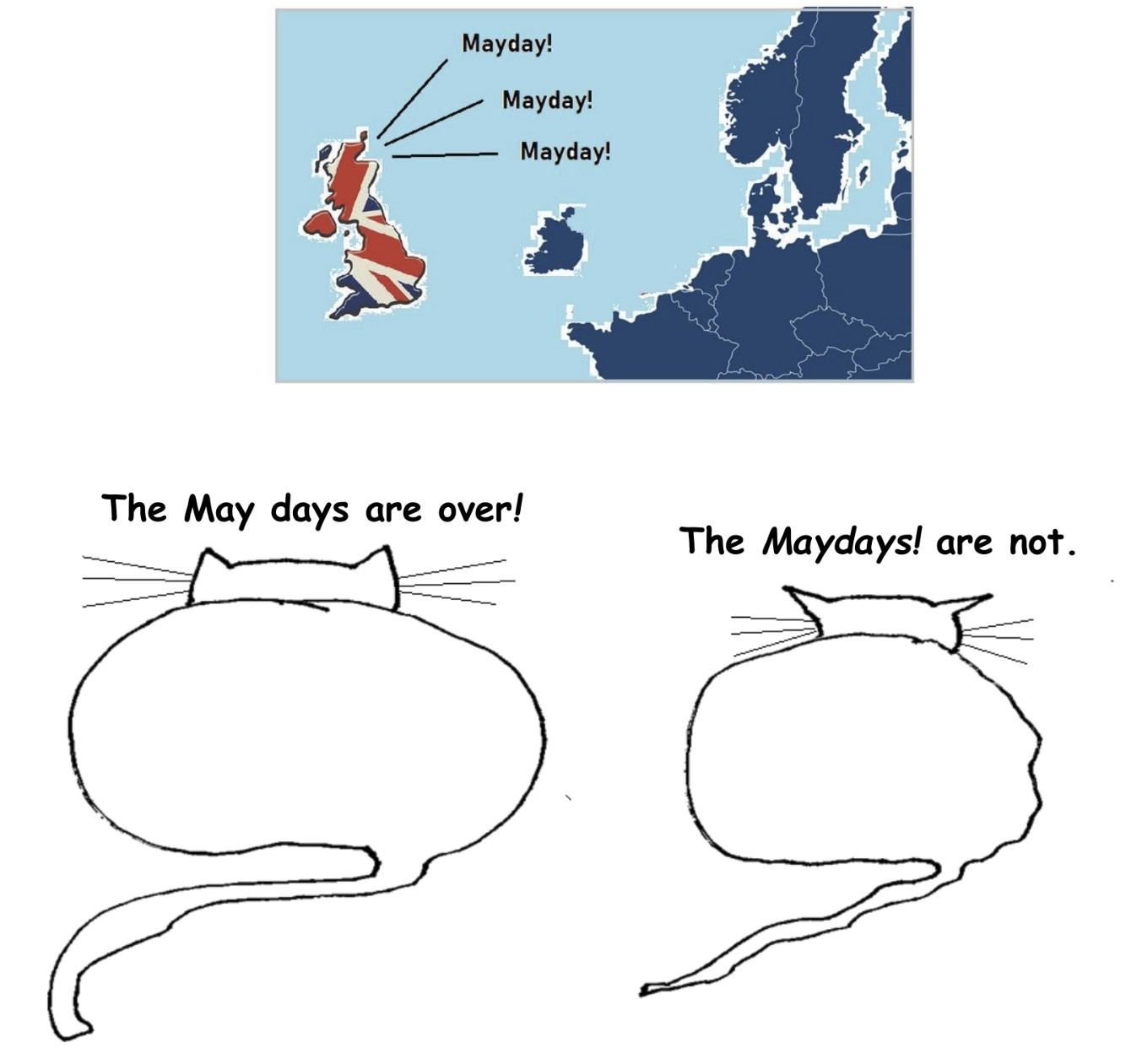

Fortunately I think there is a solution for this problem. Unfortunately, it looks like some people are going to have to die. Read more »

The Inaugural Dress

by Samia Altaf

Last night I dreamed I was on my way to the tailor’s in the H-Block market to pick up the outfit that Mrs. Obama was to wear at President Obama’s second inauguration. The State Department official who was to transport it in the diplomatic pouch was on the tarmac waiting in the military plane with its engines revving. Everything was set.

But real life is unpredictable and the best laid plans of mice and men, and women too, can get derailed. As I skirted the roundabout to go north, traffic stalled in the circle of Lalikjan Chowk. A crowd of bearded and turbaned men, their trouser-ends hoisted above the ankles, was milling around, waving their arms and shouting, their teeth gleaming white through their black beards. Some energetic ones, skinny and intense, also with black floating beards, were rerouting the traffic advising the cars to turn back. That I could not afford to do. This was a mission-critical errand—the first lady was to wear the outfit in the morning and it was already night in Washington, D.C. All I had was the ten-hour time difference in Lahore.

I figured it was a religious demonstration, one faction of Muslims upset at another’s manner of dressing or eating or laughing or standing. Then I saw saw women and children holding placards protesting power failures and the increased cost of the whatever little electric supply that came their way for couple of hours in the day. Keep your focus I told myself, circling around, zigzagging through the utility shops on the left of the roundabout, past the back wall of the S-Block graveyard, navigating the Z-Block bylanes across from the padlocked library, lurching over the empty lot behind the big mosque to finally arrive at the complex housing the tailoring shop. Read more »

Fire it Up

by Shawn Crawford

Growing up, a lighter branded you as suspect to any Baptist worth his King James Version. Because really, other than smoking and setting houses on fire to incinerate the family within just for kicks, what did you need a lighter for anyway?  If you wanted to light something righteous like a candle or the water heater, you reached for the box of safety matches next to the paprika in the spice cabinet.  They had SAFETY written on the box in case you felt tempted to go astray. Lighters should have had Iniquity Equipment inscribed on them as far as we were concerned.

Naturally I pined for one.  Especially a Zippo.  Oh that beautiful sound they made opening and closing.  The glamour of a seasoned pro twirling one absentmindedly while he drank some exotic cocktail whose name you were forbidden to speak.  I once suggested Bloody Marys for everyone after church one evening and was interrogated the rest of the night to learn in what seedy environment I had acquired such knowledge. I was eight.

But the absolute, most breathtaking moment of the Zippo Lifestyle occurred in any movie when the dashing hero brandished his gleaming beauty to light the femme fatale’s cigarette.  Zippo informs us the lighter has appeared in over 2000 films. Read more »

Sex Scenes, Stage Kisses, Post-MeToo Intimacy: From Catherine Breillat to Sarah Ruhl and Back

by Abigail Akavia

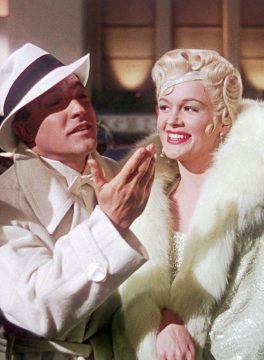
Gene Kelly and Jean Hagen in “Singin’ in the Rain”, as Hollywood stars selling their fans the fantasy of onscreen-turned-real love

When I was in my early twenties I watched Catherine Breillat’s 2002 film Sex Is Comedy. It tells the story of a female director struggling to shoot a sex scene between her two young leading actors, who clearly can’t stand each other. The film follows the director through a series of off-camera shenanigans, including fitting the male actor with a ridiculously large prosthetic penis. Ultimately, the scene is successfully shot; this success is presented as a triumph of the only two women on set, the director and the actress (played by Anne Parillaud and Roxane Mesquida respectively). It is a radically feminist feat, whose value may today be marred for reasons both universal and personal: first, the general changes to the film and television industries brought on especially by the MeToo movement have affected also how simulated sex scenes are produced; second, Breillat’s remarks against MeToo specifically may prompt us to reevaluate her avowedly feminist work. 

My initial impression of the film was not directly affected by its feminist import. I remember being absolutely stunned and deeply touched by the film’s ending, which zeroes in on the teenager’s naked body and face, depicting the simultaneous shame and pleasure she feels as she has sex for the first time. The embodied struggle, this bittersweetness of young sex, is also the struggle and bittersweetness of acting, of a surging yet somehow controlled creativity that stems from pain and demands a dangerous level of exposure. If up until that point the female protagonist is the film-within-a-film’s director, it now becomes the actress. Her courageous vulnerability positions her as a great artist, precisely through the act of “submissively” becoming a woman. The men around her, co-star and cameramen in particular, are awed by the trueness she revealed, by how unlike “acting” and entirely not-fake was what they witnessed. As the shooting ends, the sounds of the actress’s sobs make way for an awkward silence, one that hovers between uncomfortable and reverent, as if all those present have transgressed something entirely too personal. A few seconds afterwards, the director tenderly holds the actress in her arms. They share the frame, and we see the relief and pride they both feel at their joint acting-directing accomplishment. The tears of pain and delight of the simulated sexual act turn into an ecstatic release of the artistic energy needed to conjure that simulation. Read more »

Learning from John Hope Franklin at the Cosmos Club: Do the Moral implications of a Belief Affect Our Justification for that Belief?

by Joseph Shieber

In the most recent case of a white person’s discomfort resulting in the ejection of African Americans from public spaces, a young, black couple who were picnicking with their dog at a KOA campground in Mississippi were threatened at gunpoint by a white campground manager and forced to leave.

This sort of case calls to mind one of the hottest topics in the the theory of knowledge at present (and one of the topics of the 22nd lecture of my “Theories of Knowledge”). It’s what philosophers call “moral encroachment” and involves the claim that the amount of evidence you need in order to have sufficient support for believing something depends in part on the moral implications of that belief.

All of this can seem really abstract. However, if you take it step-by-step, you can see that the ideas behind the notion of moral encroachment are pretty easy to grasp.

First, if we’re going to recognize the idea of moral encroachment, then that means recognizing that beliefs can have moral implications at all. And that can seem difficult to accept.

What it would mean to say that a belief has moral implications is this. It’s the idea that, over and above being able to weigh a belief as being supported or unsupported by the evidence, we can also evaluate at least certain beliefs based on their moral qualities.

This explanation helps to demonstrate where the term “moral encroachment” comes from. The idea is that moral considerations — the considerations arising from a belief’s moral qualities — can encroach on what we might call “epistemic” considerations — those having to do with whether a belief is supported or unsupported by the evidence.

Before we assess the evidence for the thesis of moral encroachment, though, it will help to see if it even makes sense to suggest that any beliefs can have moral implications at all. Read more »

Monday, May 27, 2019

In Your Hands, My Dissatisfied Countrymen: The Jaquess-Gilmore Mission

by Michael Liss

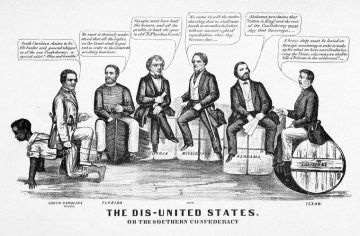
“I worked night and day for twelve years to prevent the war, but I could not. The North was mad and blind, would not let us govern ourselves, and so the war came.” —Jefferson Davis, July 1864

By the time Sherman’s armies had scorched and bow-tied their way to the sea, by the time Halleck had followed Grant’s orders to “eat out Virginia clean and clear as far as they go, so that crows flying over it for the balance of the season will have to carry their own provender with them,” and by the time Winfield Scott’s Anaconda Plan was finished squeezing every drop of life out of the Confederacy, there had to be those who wondered what possible logic would lead intelligent men like Jefferson Davis to make such a catastrophic choice.

Yet, the South almost won the gamble. With secession, they had challenged the core of the American Experiment, the democratic principle of equal rights, general (male) suffrage, government by a majority, and a peaceful transition of power when that majority so indicated. They also posed an existential question for the North: Was adherence to a principle, even a cherished one like the Union, worth lives and property?

The Civil War is fascinating on so many levels, but what made it fundamentally different than any other conflict that preceded it was that, for the first time, two peoples with the ability to exercise electoral oversight engaged in a protracted armed conflict. This implied something new. The simplest mechanisms of civic beliefs: the right to disagree publicly, to organize, to place elected leadership on notice that their jobs could be at risk, would all play an unexpectedly crucial role in the manner in which the war began and was ultimately prosecuted. Read more »

Monday Poem

almost without metaphor

clouds this morning cross two
adjacent mountains tinged with
bluegrey and pink, they move deliberately
in a swift west wind not like anything
but migrating water vapor
held by hydrogen bonds,
the cooler the better, they glide
over pine, hemlock, oak, and spruce
being networks of misted h-2-o.
the pine, hemlock, spruce, and oak
will drink to satiation if graced by clouds
meeting more frigid air and rain falls
not like anything but clear liquid
that has found itself in a bowl
of gravity

Jim Culleny
© 5/21/19

What an artistic masterpiece is not

by Dave Maier

Philosophers have spilled a great deal of ink attempting to nail down once and for all the necessary and sufficient conditions for a thing’s being a work of art. Many theories have been proposed, which can seem in retrospect to have been motivated by particular works or movements in the history of art: if you’re into Cézanne, you might think art is “significant form,” but if you’re impressed by Andy Warhol, you might that arthood is not inherent in a work’s perceptible attributes, but is instead something conferred upon it by members of the artworld.
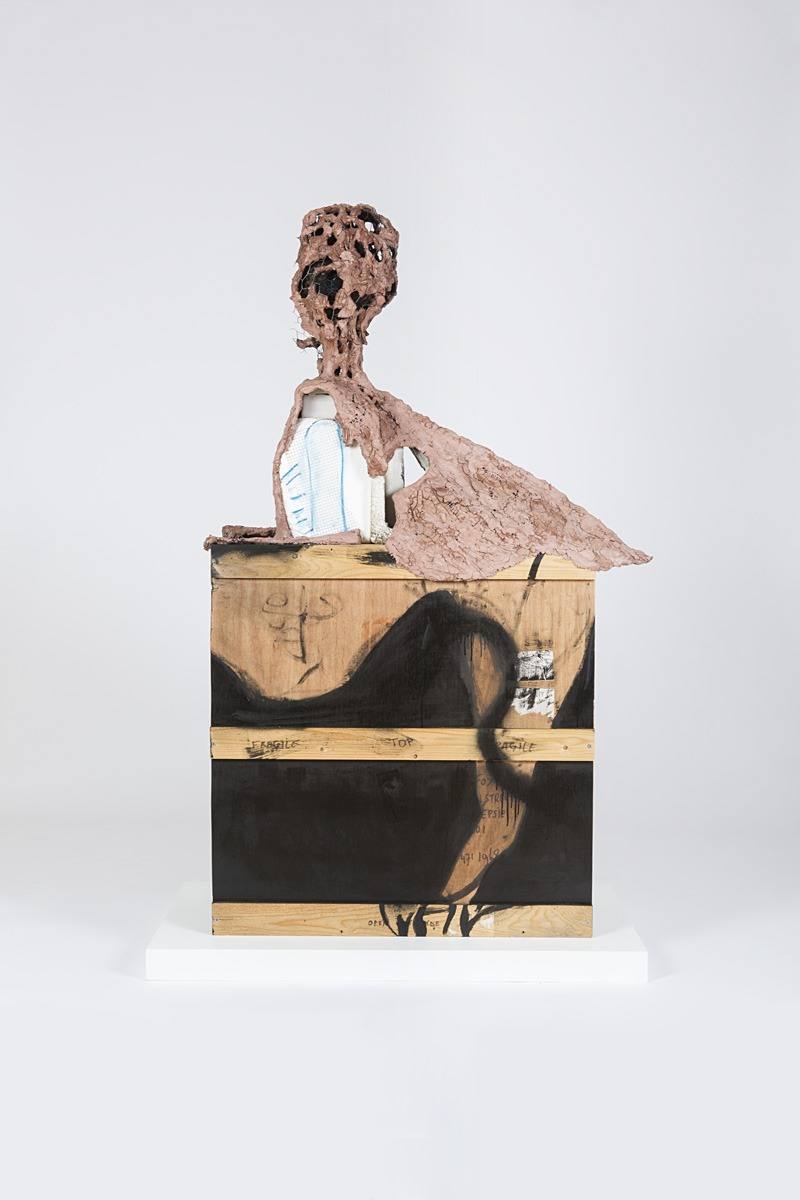
Nothing has really seemed to fit everything, and for whatever reason, essentialism in the philosophy of art, or at least arguing about it in public anyway, has drifted in and out of fashion. Yet that question, or something like it, won’t simply go away. Unless everything is art, some things are art and some are not. What’s the difference?

When you get stuck like this, one way to get back on track is to ask a different question. There are plenty of worthwhile candidates, but one which keeps coming up for me is: what’s the difference between something that’s not art because it’s not good enough, and something that’s not art because it’s the wrong sort of thing? Let’s start there. Read more »

When Russia Quit God

by Robert Fay

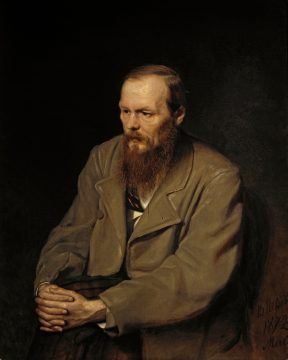
The Russian master Dostoevsky.

The great critic George Steiner in his book Tolstoy or Dostoevsky? (1959) believed the achievements of Russian literature in the 19th century stand as one of “three principal moments of triumph in the history of western literature, the other two being the Athenian dramatists and Plato and the age of Shakespeare.” Not particularly bad for a largely peasant-filled country whose entire literary tradition to that point was arguably in the form of just one man’s oeuvre: Alexander Pushkin. “His works,” Steiner notes, “constituted in themselves a body of tradition.”

But if the Russians didn’t have the bedrock cultural traditions of the their European neighbors—ancient Greek and Roman Civilizations, along with the unifying force of the Roman Catholic Church—they certainly had God, and God in Russia meant one thing: the Russian Orthodox Church.

In the 19th Century, the European intellectual and artistic environment was animated by the Enlightenment, whose denouement was surely the decapitation of France’s ancien régime in 1789, and with it, much of the legitimacy of “state, church and people” being understood as a unified, divinely-sanctioned manner of organizing human society and culture.

But by not being definitively western, either in geography or in the totality of its cultural inheritance, Russia had much in common with that one-time bastard of Europe, the United States of America, which in the 19th Century was still very much grappling with God as is evidenced by the works of Nathaniel Hawthorne and Herman Melville, among others. Read more »

Searching for Perfection

by R. Passov

As the clouds of WWII darkened Austria, Kurt Gödel, the greatest logician of modern times, at Einstein’s urging, brought his two magnificent proofs to Princeton. There he would remain for almost forty years, never mentoring a graduate student, rarely lecturing, adding only one substantial but incomplete proof to the cannon of math.
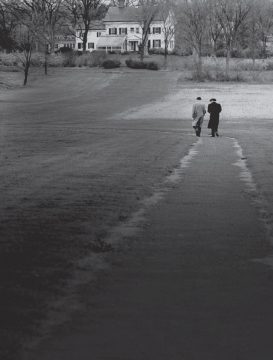
Mildly underwhelmed by the impact of his discoveries, at Princeton he would gradually set aside math in favor of philosophy. Little of this work was published in his lifetime.  But it was enjoyed by Einstein who for the last decade of his life, walked alongside as Gödel discussed a field Einstein once likened to ‘writings in honey.’

________________________________________

Gödel was born in 1906, into a German speaking family living in Brunn (Brno) Moravia, then part of the Austria-Hungary Empire, soon to be annexed by Germany, now part of the Czeck Republic. His father before passing unexpectedly in 1929, had built a successful textile business that would secure his family’s finances.

An early childhood struggle with Rheumatic fever left Gödel forever suspicious of the state of his health. He took his primary education at the local Realgymnasium. Modeled after the enlightened German system, the gymnasium offered “mental gymnastics, developing both mind and body.” Following his older brother, in 1921 he entered the University of Vienna.

Easily establishing his gifts, he studied theoretical physics, enjoyed the life of a student and earned a reputation for sleeping late. Read more »

Travels with the Pasha (On Memorial Day in America)

by Leanne Ogasawara

1.

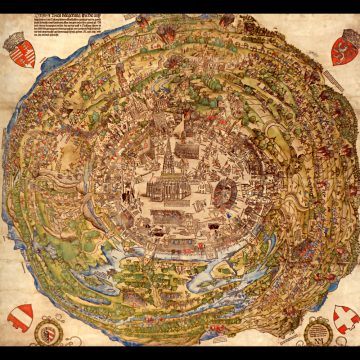
The year was 1683. And the Grand Vizier of the Ottoman Empire, Kara Mustafa Pasha, was leading one of the most organized war machines the world had ever seen, westward– toward Vienna. We know that his campaign would end in failure. The Pasha himself held ultimately responsible, he would be made to suffer the punishment of death by strangulation. The skin of his head peeled off and stuffed with straw, this gruesome “head” was then delivered to the Sultan back in Constantinople in a velvet bag.

Make sure you tie the knot right, he reportedly said with great bravado to his executioners as they prepared to tie the silken cord around his neck.

Only imagine how optimistic he must have been months earlier as he led his powerful army toward the city known to the Ottomans as the “Golden Apple.” Before the battle, Kara Mustafa had sent an official demand for surrender of the city. It was pure formality– as both sides knew this was to be a fight to the finish.

The Ottomans, for their part, had already set up camp and began digging.

Digging?

The walls of Vienna were famous back then. Built during the 13th century using ransom money from the high-profile kidnapping of King Richard the Lionhearted (who had made the mistake of getting captured near Vienna whilst traveling home from the Holy Land), these walls had proved an impossible challenge the last time the Ottomans had come to town, in 1529. That was under Suleiman the Magnificent. And it wasn’t just the walls that challenged the invading army; for surrounding the walls were massive fortifications –including projecting bastions, ravelins, and ramparts. The entire city was then further fortified by wide artificial slopes (the glacis). That is why the best chance the Ottomans had was to dig under the bastions and detonate explosives to bring the fortifications down. Read more »

Memorial Day: Forever War

by Akim Reinhardt

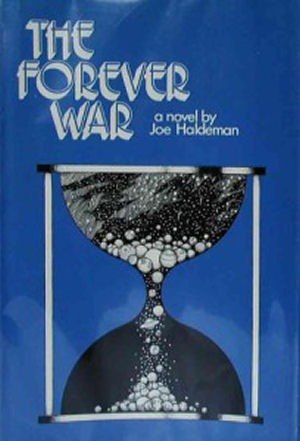
In 1974, noted science fiction author Joe Haldeman published a novel called The Forever War, which won several awards and spawned sequels, a comic version, and even a board game. The Forever War tells the story of William Mandella, a young physics student drafted into a war that humans are waging against an alien race called the Taurans. The Taurans are thousands of light years away, and traveling there and back at light speed leads Mandella and other soldiers to experience time differently. During two years of battle, decades pass by on Earth. Consequently, the world Mandella returns to each time is increasingly different and foreign to him. He eventually finds his home planet’s culture unrecognizable; even English has changed to the point that he can no longer understand it.


Born in 1943, Joe Haldeman is a Vietnam War veteran. He was drafted in 1967, served two years as a combat engineer, and earned a Purple Heart. Many have speculated that the disaffection William Mandella experiences upon returning home from war reflects Haldeman’s own alienation after Vietnam. But there is another element of The Forever War that has recently proven timely 45 years after its initial publication: its title.

The Donald Trump administration appears to be ramping up for a possible war with Iran even as the ongoing wars in Iraq and Afghanistan enter their sixteenth year, and the United States maintains a more indirect but important role in wars in Somalia, Syria, Yemen, and Lybia. Indeed, just yesterday, Vice President Mike Pence informed members of the West Point Military Academy graduating class that “it is a virtual certainty that you will fight on a battlefield for America at some point in your life.” Read more »

On the Road: Mekong Postcard

by Bill Murray

OUTBOUND

We’re off to meet a small live-aboard motorboat about three hours drive south of Ho Chi Minh City to cruise the Mekong Delta for a few days. The older gentleman driving has a deep, rich voice we don’t understand, speaks no English and we no Vietnamese besides pleasantries, the names of some food and a particular local beer, 333, not very challengingly pronounced baa baa baa, like the black sheep.

He’s a pro driver, no doubt about that, all turned out in a nice golf shirt and slacks, and he works our little sedan to the Saigon River then south out of town, and holds a steady course until the city falls away. He appropriates the left lane and proceeds with zealous caution, a campaign strategy he follows every bloody deliberate inch of the way.

Steady ahead. If he hurtles inadvertently to 60 kph, even on long, empty stretches, his face flushes and he brakes abruptly. Could he be working by the hour? If they say this trip should take three and a half hours, no way will he make it three hours and a quarter.

We first came to Saigon twenty-five years ago. Since then women have largely dispensed with the demure way they rode the back of cycles, both legs to one side. Back then many more women wore the traditional Ao Dai, the thin, body length robe. Perhaps that made it hard to sit any other way.

The river yields to a web of canals. Smart electronic overhead signs show the way through less kempt industrial outskirts. Now we roll along a divided six-lane highway, with extra outside lanes for every variety of two-wheeler, and this goes on for miles and undifferentiated miles. Read more »