
by Liam Heneghan
When I was a child growing up in Dublin, a friend dropped her pet hamster on the kitchen floor. The animal survived but thereafter he could only walk in circles. As the hamster got older, the circles got wider but like a ship permanently anchored to shore it never got particularly far.
Like most children, I had taken a fall or two and because I was a worrier I felt concerned that like that hamster I would never travel very far. Though I did, indeed, travel and I am now thousands of miles from home, I still think of my life as occurring in a series of ever widening circles.
At first, I was confined to our back garden. We lived in the Templeogue Village an inglorious suburb on what at the time was a trailing edge of Dublin. Over the garden wall were farm fields and farther off were the Dublin Mountains.
Sure enough over the years, I explored the fields and when I got a little older, I would cycle into the foothills of those mountains.
Now there was one hill in particular that I was drawn to: officially called Montpelier Hill it is also called The Hell Fire Club. The story was that a structure built there in the early 1700s as a hunting lodge for delinquent aristocratic youth had also been used by them for somewhat darker practices. One night the devil himself showed up there at a card game. In the hubbub that followed, a candle was knocked over and the lodge burned to the ground. By the time I started to cycle there, The Hellfire Club was an innocuous forestry plantation. The burned lodge remains. Read more »
 They’re quite a miracle, aren’t they, these phone calls, especially in these terrible times when one does not know what is going to happen to us, and to this country, this world. When we were in college in the U.S. in the late seventies, to talk to parents in Pakistan you had to book a call three weeks in advance. When your name came to the top of that line, you had to sit around the phone (there were no cell phones then) for ten hours. The call was expected to get through at any time during that window, for it had to be bounced over a satellite or some such complicated technological thing. What I recall most vividly about those moments is the excitement in the operator’s voice when the connection eventually happened. “Go ahead, ma’am/dear/hon,” they’d say, a triumphant edge to their tone, “your party is on the line.” I imagined the operator standing astride the Atlantic, a colossus holding the phone line up above her head out of the water just for the three minutes of my booked time so I could talk to my mother.
 After several weeks of sheltering in place, being holed up in quarantine, or just experiencing a dramatically restricted mode of living due to the ongoing Covid 19 pandemic, it is quite natural to start feeling a little sorry for oneself. A wholesome remedy for such feelings is to think about other people who are also shut up, sometimes extremely isolated, and suffering much more serious kinds of deprivation. They do not have at their fingertips, thanks to the internet, an abundance of literature, music, film, drama, science, social science, news, sport, or funny cat videos. Nor are they casualties of fortune, shipwrecked and marooned by bad luck or the vicissitudes of market economies. Rather, they are the victims of deliberate and unjust oppression by authoritarian governments.

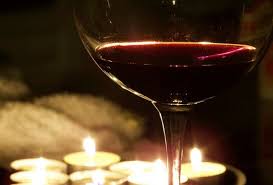 In discourse about wine, we do not have a term that both denotes the highest quality level and indicates what that quality is that such wines possess. We often call wines “great”. But “great” refers to impact, not to the intrinsic qualities of the wine. Great wines are great because they are prestigious or highly successful—Screaming Eagle, Sassicaia, Chateau Margaux, Penfolds Grange, etc. They are made great by their celebrity, but the term doesn’t tell us what quality or qualities the wine exhibits in virtue of which they deserve their greatness. Sometimes the word “great” is just one among many generic terms—delicious, extraordinary, gorgeous, superb—we use to designate a wine that is really, really good. But these are vacuous, interchangeable and largely uninformative.
 Dedication

 Violence : War :: Lies : Mythology
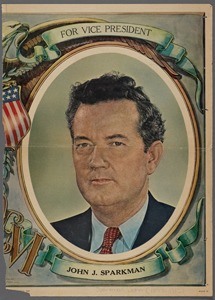 That Fifties-looking gent to your right is John J. Sparkman (D-Alabama) who was Adlai Stevenson’s running mate in 1952. Sparkman served in Congress for more than 40 years, the last 32 of them in the Senate. While not a star, he was associated with several pieces of important legislation and became Chair of the Senate Banking Committee and, late in his career, the Senate Foreign Relations Committee. He was also a committed segregationist and, in 1956, signed the Southern Manifesto, in emphatic opposition to Brown vs. Board of Education.
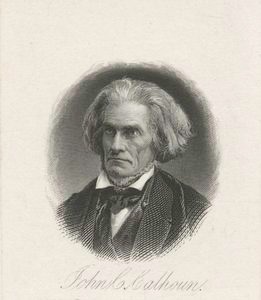 This scary-looking guy to your left is John C. Calhoun of South Carolina, who, during a truly extraordinary career that included being a Congressman, Senator, Secretary of State, and Secretary of War, also managed to sneak in two terms as Vice President under two very different Presidents, John Quincy Adams and Andrew Jackson. You are going to hear a lot over the next few weeks about “chemistry” between Joe Biden and his running mate. Suffice it to say that John C. Calhoun never had chemistry with anyone, except perhaps of the combustible kind. Mr. Jackson and Mr. Calhoun disagreed constantly, particularly on the enforcement of federal laws that South Carolina found not to its liking (including the juicily named “Tariff of Abominations”), which led Mr. Calhoun to resign the Vice Presidency during the Nullification Crisis in 1832.
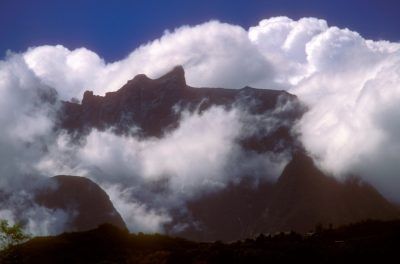 They hauled us all in bas minis from the ranger station to the trailhead. From there, a six-kilometer trail led up to our destination, the Laban Ratah guest house, at 11,000 feet. At 13,432 feet, Mt. Kinabalu’s summit, in Malaysian Borneo, is the highest point in Southeast Asia.
 The word “interpretivism” suggests to most people a particularly crazy sort of postmodern relativism cum skepticism. If our relations to reality are merely interpretive and perspectival (I will use these terms interchangeably as needed, the idea being that each