
by Charlie Huenemann
The living few, and frequent funerals then,
Proclaim’d thy wrath on this forsaken place;
And now those few who are return’d again,
Thy searching judgments to their dwellings trace.
– John Dryden, Annus Mirabilis: The Year of Wonders, 1666
This isn’t the first time universities have shut down from fear of pestilence. In 1665, “it pleased the Almighty God in his just severity to visit this towne of Cambridge with the plague of pestilence”, and Cambridge University was closed. Students were sent home, and all public gatherings were canceled. Some students arranged to meet with tutors over that time, but we can suspect that a good number of students simply went home, forgot about their studies entirely, prayed fervently, and followed whatever strategies they could to lessen the chance of death.
One student caught up in this nightmare was Isaac Newton. At the time, he had narrowly won a scholarship at Cambridge, which meant that he could continue his attendance; he could not otherwise afford it. It is a bit of a mystery just why Newton was afforded a scholarship, has he had pretty much left behind everything that his college valued and taught, and had embarked upon his own course of self-study. His focus was on developing a new mathematics that was more adequate to understanding motion, and in doing this he had few teachers who could help him (or even keep up with him). Over 1665, he lived, ate, breathed, and dreamed mathematics, and did little else in terms of our ordinary conceptions of living, eating, and sleeping. Read more »

 Being a horrible person is all the rage these days. This is, after all, the Age of Trump. But blaming him for it is kinda like blaming raccoons for getting into your garbage after you left the lid off your can. You had to spend a week accumulating all that waste, put it into one huge pile, and then leave it outside over night, unguarded and vulnerable. A lot of time and energy went into creating these delectable circumstances, and now raccoons just bein’ raccoons.
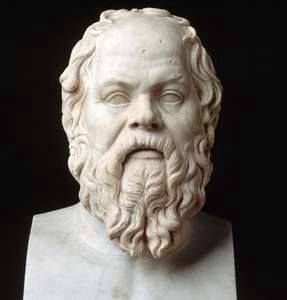 Socrates, snub-nosed, wall-eyed, paunchy, squat,


 Over the past week, Pakistan has been consumed by the Aurat (Women’s) March, which was held today, March 8, International Women’s Day, in all the major cities of the country. The march’s aim is to highlight the continued discrimination, inequality, and harassment suffered by women. There are some people against it who argue that the march should not be allowed, but the Islamabad High Court has rejected the petition that asked for its cancellation. So the march happened.
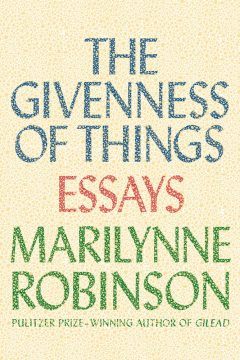 During a recent visit to Paris, I squeezed through the crowded bookshelves of the famous Shakespeare and Company bookstore, a stone’s throw from Notre Dame, whose charred heights sat masked in scaffolding just across the Seine. It has become something of a Parisian tourist hotspot, mostly because of its association with our favorite Modernist expat writers, immortalized and gilded in a cosmopolitan, angsty, and glamorous mystique through the canonization of their works and, some might argue, the award-winning Woody Allen film Midnight in Paris.

 Research by linguists
 There was this one moment. A sunny June day in Nebraska. No one was around. I dribbled the basketball over the warm blacktop, moving towards a modest hoop erected at the end of a Lutheran church parking lot. I picked up my dribble, took two steps, sprung lightly from my left foot, up and forward, my right arm extending as my hand gracefully served the ball to the white backboard. Its upward angle peaked, bounced softly, and descended back through the netless hoop.
 What is commonsense to most people who received a K-12 public education in the United States is that every formal system of state schooling throughout the modern world is designed to educate its students to develop, what Charles Lemert calls “sociologically competencies” within whatever ideological system is dominating at the time of their schooling. People correctly assume that children going to school during the Weimar Republic, for example, were educated to function competently within that ideological system. Children who were in school during the reign of Chairman Mao in the People’s Republic of China were educated to function competently within that system. Children in China today are educated to be sociologically competent in China’s current government and economic system. Children in France, Spain, Portugal, Israel, Mexico, Argentina, Brazil, and Iran likewise are educated to function competently in those systems. In the Soviet Union, children were educated to function within its version of communism. After the collapse of the Soviet Union, children were required to learn different civic knowledge and skills in order to be competent within the newly emerging political ideologies of reformed nation states.
 Notwithstanding the spread of English as a global lingua franca, translation continues to be a vital component of international relations, whether political, commercial, or cultural. In certain cases, translation is also necessary nationally, for instance in countries comprising more than one significant linguistic group. This is so in Switzerland, which voted by an overwhelming majority in 1938 to add a fourth national tongue to thwart the irredentist aspirations of its Italian neighbor, and which in certain contexts is obliged to use a Latin version of its own name (Confoederatio Helvetica) to avoid favoring one language group over another.