by Ali Minai
 Among all the fascinating mythical creatures that populate the folklore of various cultures, one that stands out is the golem – an artificial, half-formed human-like creature that comes to us from Jewish folklore. Though the idea goes back much further, the most famous golem is the one said to have been created and brought to life by the great Rabbi Loew of Prague in the 16th century. Stories of various other golems have also come down through history, each with its own peculiarities. Most of them, however, share some common themes. First, the golem is created to perform some specific function. For example, the golem of Prague was created to protect the Jews of the city from pogroms. Second, the golem is capable of purposive behavior, but in a limited way. And third, the golem is activated by a human master by tagging it with a word (or words), and can be deactivated by removing or changing the word.
The golem has made many appearances in literature – especially in science fiction and fantasy – and its linkage with artificial intelligence is implicit in many of these instances. Though the golem is often portrayed as not particularly intelligent, the analogy with AI is clear in that the golem can act autonomously. More pertinent here, though, is another aspect of the golem’s behavior: Obedience. The golem has no purposes of its own, and is obedient to the desires of its master – though, interestingly, golems do rebel in some stories, which makes the analogy with AI even more apt.
The End of AI
The present time is seen by many as the golden age of AI, despite the fact that other “golden ages” have come and gone up in smoke in the past. The thinking is that this time AI has truly arrived because it is more grounded and has infiltrated down to the very core of modern human life. No aspect of life today – from medicine and finance to education and entertainment – remains unaffected in some fundamental way by AI. It is built into cars, cameras, and refrigerators. It analyzes investment portfolios and consumer preferences. It recognizes faces for security and for logging into digital devices. It lies at the core of Amazon, Google, Facebook, Apple, and many of the other technology and consumer giants that shape our lives. In these last fourteen months of the COVID pandemic, tools enabled by AI have been used extensively in data analysis, clinical practice, and pharmaceutical innovation. Indeed, so pervasive has AI become that, in many cases, it is not even noticed. We take it for granted that things in our lives – phones, watches, cameras, cars, vacuum cleaners, refrigerators, and even homes – will be “smart”. Increasingly, we expect things to understand what we are saying, and in the near future, we may expect them to understand our thoughts as well. The time is also at hand when more and more of the complicated things we do, from driving to writing legal briefs, will be left to AI. In a real sense, we humans are outsourcing our minds and bodies to algorithms. No wonder some very smart people are worried that AI may make slaves of us all, while others seem to be relishing the prospect of merging with smarter machines to become gods. Read more »

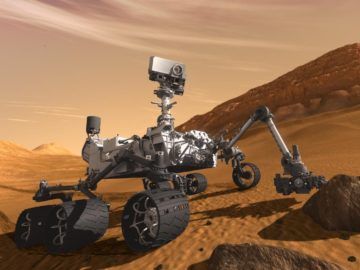 In my last essay for 3QD we talked about how we are at the beginning of a new era in mathematics. As a discipline mathematics has the mythos that it is True and Eternal, but it is also a human endeavor and has its share of errors. Fortunately, it is a robust and self-correcting system that usually catches and corrects these errors.
 Jean Shin. Fallen. Installation at Olana State Historic Site, New York.
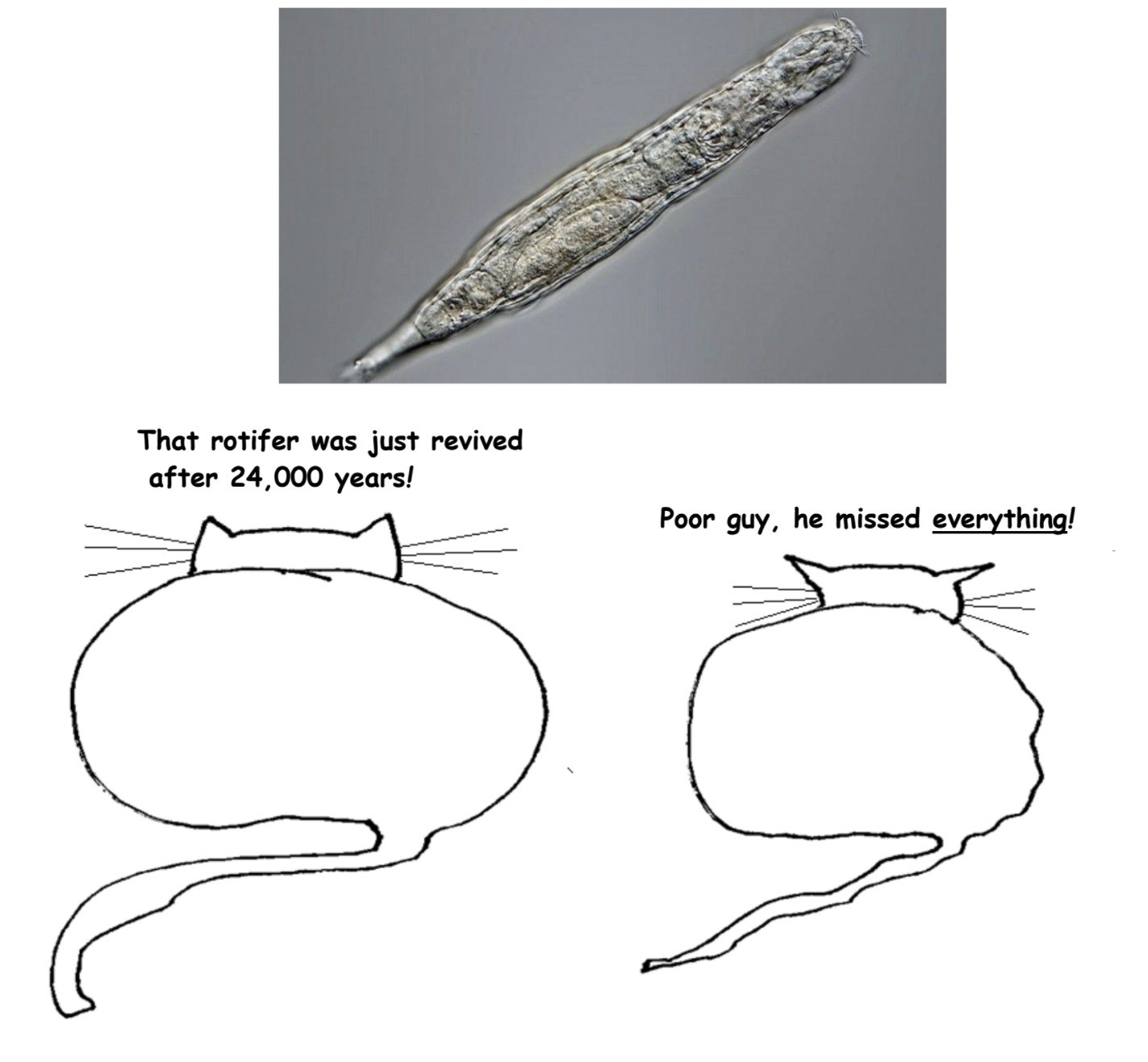


 Time isn’t what it used to be. The pandemic has altered our perception of it. This is why time is no longer quite as valuable as it was before we were suddenly assaulted with too much of it. It used to be a commodity in short supply. It’s even been called a currency (time is money), but the reverse was never true. No matter how many billions Mr. Bezos has, he has no more hours in his day than I do.
 The evidence that mass media can cause physiological responses in humans is so evident in our everyday experience that it’s easy to ignore. Subliminal muzak makes our fingers tap lightly on our grocery carts. Billboards with sexy models flush our cheeks during our daily commutes. But not all such stimuli are subtle. For those media products whose main purpose is to cause a physiological response, genre labels serve as warnings—e.g., we label items that make us laugh as comedy, items that turn us on as pornography, or items that trigger our fight-or-flight response as horror. Modern people have complex attitudes toward media that invoke a physiological response, and practitioners of such genres alternatively experience intense celebration and intense censure.
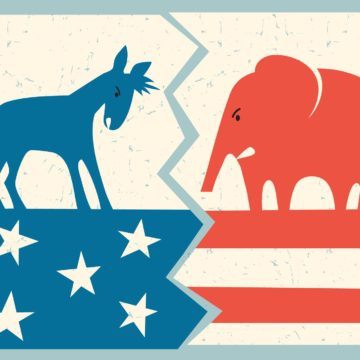 Some decades back the typical voting pattern in many democracies used to be that the rich and upper middle classes used to vote in general for right-leaning parties, while the relatively poor voted for left-leaning parties. But in recent decades this pattern has been shifting: many of the professional or more educated voters in some of those countries are increasingly going for left or green parties, while many of the poor working-class voters are turning to right-wing parties, sometimes led by populist demagogues. Thomas Piketty and his associates in a new paper issued by the World Inequality Lab have provided data to show that for 21 western democracies the more educated voters have over the years become more left supporters than the less-educated voters. Piketty has described this elite division between high-education and high-income people colorfully as that between the Brahmin Left and the Merchant (the corresponding Indian caste term would have been ‘bania’) Right. He does not go much into explaining this pattern but it is clear that as education expands (measured by average years of schooling of the adult population) the left or center-left parties now can have a viable base even in the relatively rich or upper middle classes. Education often makes one appreciate more liberal values, which may sometimes outweigh their worries about higher taxes that the left parties may inflict.
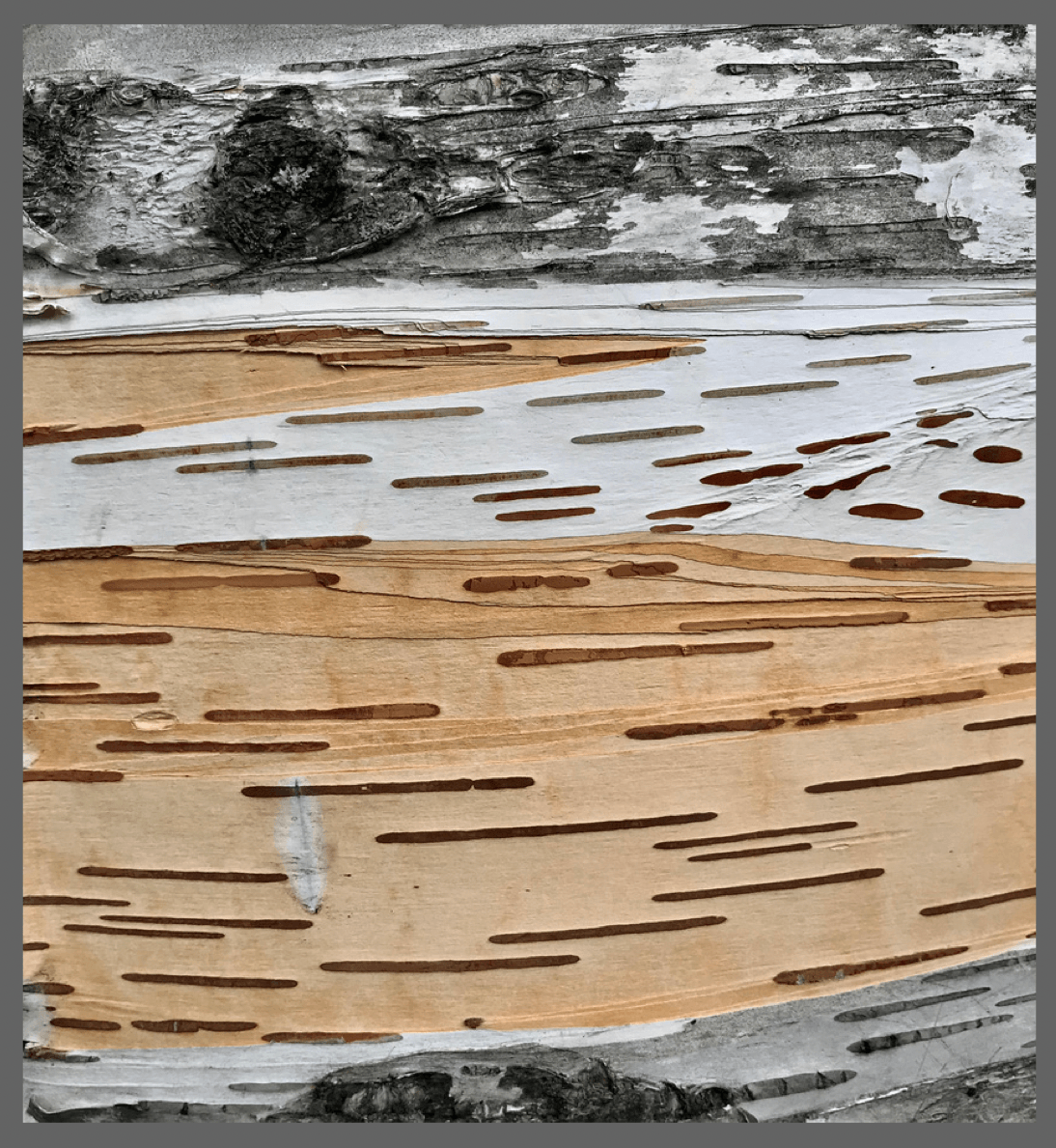 Sughra Raza. Beech Bark Landscape. June, 2021.
 Suppose you are Father God, or Mother Nature, or Mother God, or Father Nature — doesn’t matter — and you want to raise up a crop of mammals who can reason well about what’s true. At first you think, “No problem! I’ll just ex nihilo some up in a jiffy!” but then you remember that you have resolved to build everything through the painstaking process of evolution by natural selection, which requires small random shifts over time, with every step toward your target resulting in some sort of reproductive advantage for the mammal in question. Okay; this is going to be hard.
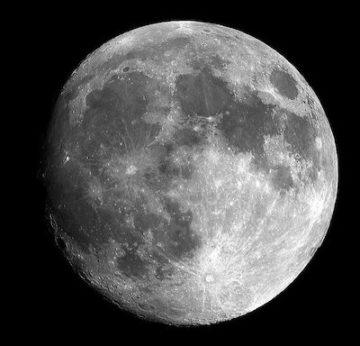 I’ve always loved the name Sinus Iridum (Bay of Rainbows), which describes a beautiful semicircular dark feature on the face of the Moon. Browsing a lunar map reveals other names equally beautiful or evocative: Sinus Concordiae (Bay of Harmony) and Sinus Aestuum (Seething Bay), for example. Other lunar plains with watery names include Mare Anguis (Serpent Sea), Palus Somni (Marsh of Sleep), and Mare Imbrium (Sea of Showers). Montes Harbinger is a group of mountains in Mare Imbrium; when they’re lit by the rising sun, they herald the approach of sunrise to Aristarchus crater.