
by Joseph Shieber
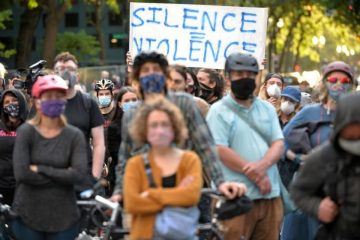
Given the multiple cataclysms that the United States has experienced within the last three or four months, it might seem puzzling that one of the most hotly discussed topics recently has been that of free speech and whether it is under threat by the bugbear of cancel culture. What could be objectionable about open debate? What is there even to discuss about the importance of free speech?
Apparently, a great deal. A recent Cato Institute poll, for example, found that “Nearly two-thirds—62%—of Americans say the political climate these days prevents them from saying things they believe because others might find them offensive.”
Furthermore, within the past few weeks alone, the New York Times columnist Bari Weiss announced her resignation by means of a fiery letter to Arthur Sulzburger, claiming that she was subjected to a hostile work environment because she championed open debate. Within hours, Andrew Sullivan announced his departure from New York Magazine on twitter.
Prior to the resignations by Weiss and Sullivan, the previous controversy around free speech was sparked by the Harper’s “Letter on Justice and Open Debate”, in which more than one hundred prominent intellectuals and writers pledged a commitment to open debate in a statement larded with vague platitudes. Read more »


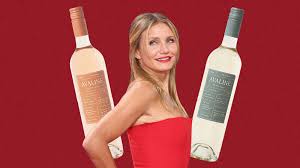 Actress Cameron Diaz and her business partner, the entrepreneur Katherine Power, have been all over various media promoting
 On November 11, 2019, I wrote a
 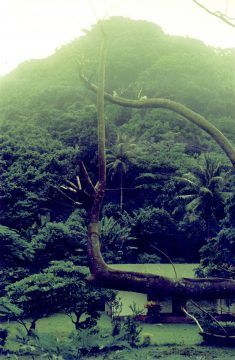 In 1997, I was living on Ambae, a tiny, tropical island in the western South Pacific. Rugged, jungle-draped, steamy, volcanic Ambae belongs to Vanuatu, an archipelago nation stretching some 540 miles roughly between Fiji and Papua New Guinea. There, under corrugated tin roofs, in the cinderblock classrooms of a small, residential school, I taught science to middle- and high-schoolers as a Peace Corps volunteer.
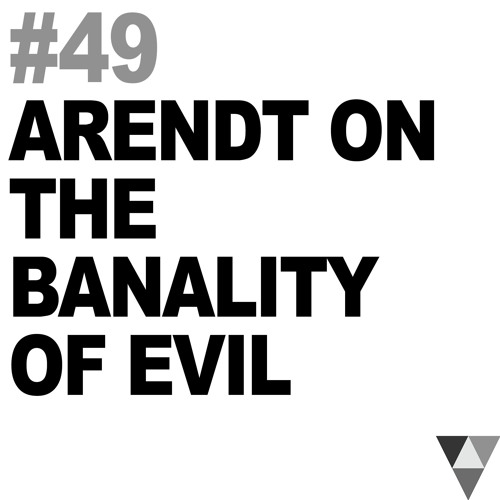 In the Age of Trump, the banality of evil can perhaps best be defined as unfettered self-interest. Banal because everyone has self-interest, and because American culture expects and even celebrates its most gratuitous pursuits and expressions. Evil because, when unchecked, self-interest leads not only to intolerable disparities in wealth and power, but eventually the erosion of democratic norms.
 I may rise in the morning and notice that a long overdue spring rainfall has revived the flagging vegetation in my kitchen garden. I may give thanks to an unseen, benevolent power for this respite from a protracted and wasting drought. And I may record in my journal: “The heavens cannot horde the juice eternal / The sun draws from the thirsty acres vernal.” In such exercises, I will not have practised rigorous inquiry into the causes of things; I will not have subscribed to any particular view of the metaphysical; and I will certainly not have produced literature. But I will have replicated the conditions for the birth of science, as sketched by Geoffrey Lloyd in his account of the pre-Socratic philosophers, the first thinkers (at least in the Western world) to consider natural phenomena as distinct from the supernatural, however devoutly they may have believed in the latter; and who frequently set down their observations, theories and conclusions in formal language. For my observation of a natural phenomenon (rain and its effect on plant life), while not methodical, would bespeak a willingness to collect and consider empirical data unconstrained by superstitious tradition, and would not necessarily be contradicted by my ensuing prayer of gratitude to a supernatural force; and the verse elaboration of my findings into a speculative theory would not consign them to the realm of poetry (or even doggerel), but would merely represent a formal convention, whose forebears include Hesiod, Xenophanes, Lucretius and Vergil.