
by Alexander C. Kafka
What is it about Frank Zappa’s eyes? They leer. They challenge. They invite play and fun and nonsense. But they’re also afraid. They don’t look away. They fix on you defiantly as if he’s expecting to be slapped for something naughty that he said. And he said many naughty things.
One sees a lot of those hypnotizing eyes in the superb new documentary Zappa, directed by Alex Winter. Yes, that Alex Winter, of Bill and Ted’s Excellent Adventure, who is also the serious-minded director of documentaries on the Panama Papers and blockchain. Creating Zappa was an adventure in itself — five years in the making, with access to the artist’s archives and cooperation from the family and a slew of Zappa’s fellow musicians. It was funded through the largest crowdsourced campaign ever for a documentary. Eight-thousand backers invested $1.2 million. It’s the kind of free enterprise Zappa would have applauded.
Winter’s is a wild, often melancholy portrait of a counterculture hero who, in 1993, died from prostate cancer at age 52. It strengthens the case suggested by the 115 albums of Zappa’s music — 53 of them posthumous — that he was a multi-genre composer for whom rock stardom and guitar virtuosity were tools, not ends in themselves. He was also a visual artist, filmmaker, audio innovator, First Amendment freedom fighter, and proud entrepreneur. Zappa produced and briefly even distributed his own material. He also produced albums for Alice Cooper, the GTOs, Zappa’s high-school buddy Captain Beefheart, and other musicians, as well as an album from Lenny Bruce’s last live performance.
 Look on the back label of most wine bottles and you will find a tasting note that reads like a fruit basket—a list of various fruit aromas along with a few herb and oak-derived aromas that consumers are likely to find with some more or less dedicated sniffing. You will find a more extensive list of aromas if you visit the winery’s website and find the winemaker’s notes or read wine reviews published in wine magazines or online.
 In a recent article in
  High in the Sierra Nevada de Santa Marta of northern Colombia, the Kogi people peaceably live and farm. Having isolated themselves in nearly inaccessible mountain hamlets for five hundred years, the Kogi retain the dubious distinction of being the only intact, pre-Columbian civilization in South America. As such, they are also rare representatives of a sustainable farming way of life that persists until the modern era. Yet, more than four decades ago, even they noticed that their highland climate was changing. The trees and grasses that grew around their mountain redoubt, the numbers and kinds of animals they saw, the sizes of lakes and glaciers, the flows of rivers—everything was changing. The Kogi, who refer to themselves as Elder Brother and understand themselves to be custodians of our planet, felt they must warn the world. So in the late 1980s, they sent an emissary to contact the documentary filmmaker, Alan Ereira of the BBC—one of the few people they’d previously met from the outside world. In the resulting film,

 People are basically good.
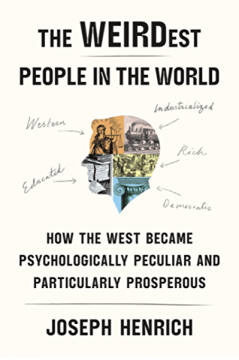 Here’s an interesting game. You receive 20 dollars, and you and three others can anonymously contribute any portion of this amount to a public pool. The amount of money in this pool is then multiplied by 1.5 and divided equally among all players. Repeat 10 times, then go home with your money. What will happen? How much would you contribute in round one, if you knew nothing about your fellow players?


 Now that a deranged president’s toxic presence will finally—finally!—begin to occupy increasingly smaller tracts of our inner lives, these new days might offer an ideal occasion to celebrate songs that sing of the singular mental spaces hidden inside us all—songs that can help re-acquaint us with ourselves.
 Put a small child in a room with a single marshmallow. Tell him that, if he can wait for five minutes, he gets a second one. Leave the room, and see what he does. Can he sit there, staring at that scrumptious-if-a-tad-rubbery mound of goo and powdered sugar and just fight off the urge to grab it, tear it to bits, and, like the Cheshire Cat, leave nothing but a smile?
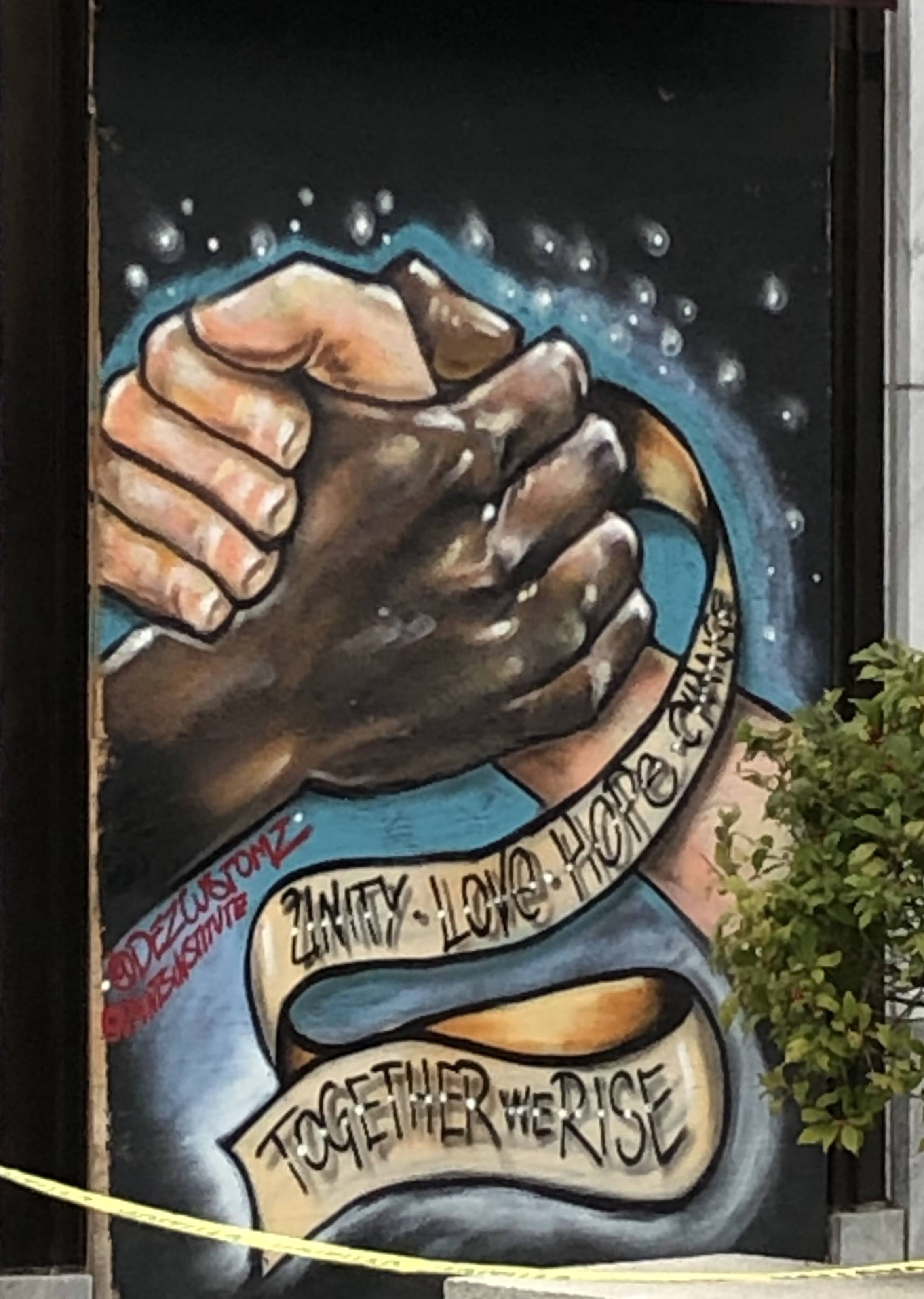 When we are done rhyming words of hope and history to audacity we will need to wake up. When the much needed elation and good cheer wears off, of getting job one done, defeating Trump then the reality will set in.
 think about that. Though others may have one, I lack an analytic framework. The best I can do is to offer some things I’ve been thinking about.

 I’ve been airborne since