by Mike O’Brien

I don’t always make great decisions, but swearing off political commentary two months ago was a really, really good one.
Ahem.
As I stated two columns ago, I’ve been wanting to write more about ecological ethics, and more specifically about ethical obligations across species. Last month I laid out my criticisms of animal rights. In summary, rights discourse is a language game, and humans are the only animals on Earth who can play it. Not to say that we can’t articulate a case for treating animals well using a language of rights; this is indeed the most effective path to legal protection at the moment. But we say something nonsensical when we articulate that case, which may or may not matter in the grand scheme of things.
For my next trick, I’d like to take on ethical naturalism, and similar presuppositions about where morality comes from. Ethical naturalism is basically the idea that moral rightness and wrongness is a natural fact, and can be discovered by observing natural facts. Read more »


 Let me recommend a New Year resolution, in case you don’t have one yet: Be nicer to people you disagree with.


 The German language is famous for its often long compound words that combine ideas to neatly express in a single word complex notions. Torschlusspanik, (gate-shut-panic), for instance, referred in medieval times to the fear that one was not going to make it back into the city before the gates closed for the night, and now signifies the worry, common among middle aged people, that the opportunities for accomplishing one’s dreams are disappearing for good. Backpfeifengesicht, sometimes translated as “face in need of a fist”, means a face that you feel needs slapping.
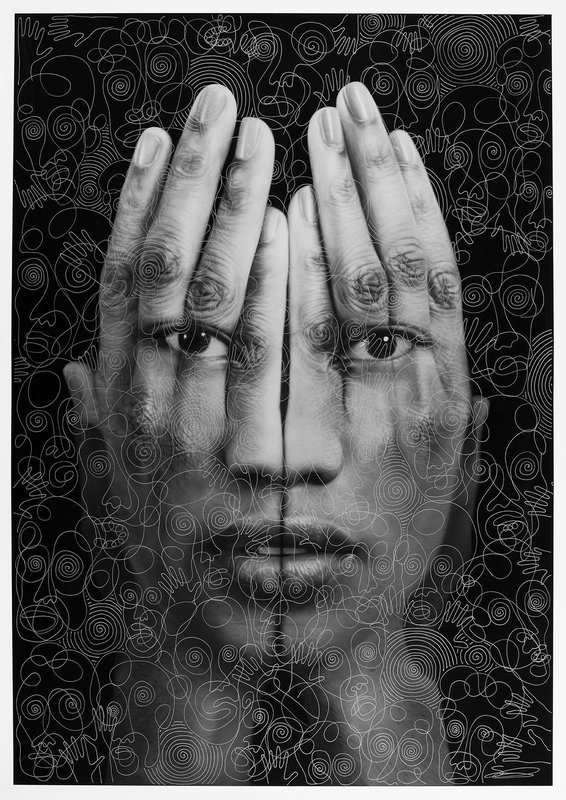 Tigran Tsitoghdzyan. Black Mirror, 2018.
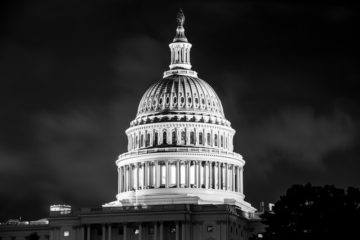
 The violent, insurrectionist attack on the US Capitol on January 6, 2021 was due, in part, to the success of the Nation’s system of public education, not its failure. Since Ronald Reagan announced in 1981 that “government is not the solution to our problem, government IS the problem,” federal authorities have worked to dismantle and erase any vestiges of democratic education from our system of public education. Free-market values replaced democratic ones. Public education slowly but consistently was transformed by neoliberal ideologues on both sides of the aisle into an institution both in crisis and the cause of the Nation’s perceived economic slip on the global stage. Following Reagan’s lead, all federally sponsored school reform efforts hollowed out public education’s essential role in a democracy and focused instead on its role within a free-market economy. In terms of both a fix and focus, neoliberalism was and remains the ideological engine that drives the evolution of public education in the United States. These reform efforts have been incredibly successful in reducing public education to a general system of job training, higher education prep, and ideological indoctrination (i.e., American Exceptionalism). As a consequence of this success, many of the Nation’s citizens have little to no knowledge or skills relating to the essential demands of democratic life. The culmination of the neoliberal assault on democratic education over the last forty-years helped create the conditions that led to the rise of Trump, the development of Trumpism, and the murderous, failed attempt at a coup d’etat in Washington, DC. From what I have read, I am not confident that your plans for public education will address these issues.

 Philosophy has been an ongoing enterprise for at least 2500 years in what we now call the West and has even more ancient roots in Asia. But until the mid-2000’s you would never have encountered something called “the philosophy of wine.” Over the past 15 years there have been several monographs and a few anthologies devoted to the topic, although it is hardly a central topic in philosophy. About such a discourse, one might legitimately ask why philosophers should be discussing wine at all, and why anyone interested in wine should pay heed to what philosophers have to say.