
by Callum Watts
 The desire to turn failure into a learning opportunity is often generous, and an important way of dealing with the trials and tribulations of life. I first became aware of it as a frequent trope in start-up culture, where, influenced by practices in software development where trying things out and failing is the quickest way to get to something of value, we are constantly subject to exhortations to “fail fast and fail forward”. Many workplaces now lionise (whether sincerely or not is another matter) the importance of learning through failure, and of creating environments that encourage this.
I’ve noticed the idea that failure should be re-conceptualised primarily as a source of learning appearing in many other contexts. Self-help encourages us to think of misfortunes as opportunities for personal development. The peculiar fact that people like Jordan Belfort have become popular figures in the self-help/motivational speaker circuit is striking, but even outside the realm of obvious moral failings, we are encouraged to think of our own tragedies as opportunities for redemption and growth. In the face of covid-19, people talk about what they have learnt from a year in lockdown, how it might have improved them as, and I expect there will be plenty more of this sort of thinking to come in the next couple of years. This though, can become a manic compulsion, which has a distorting effect on our ability to understand the reality of our existential condition. The desire to find in every grief an opportunity, forgets the inescapably tragic dimension of life, and in doing so misses something profound. Read more »

 If you’d like to start at the beginning, read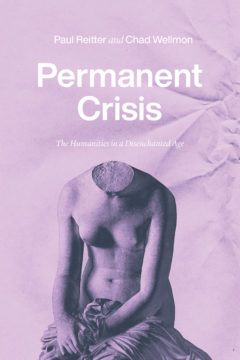
 ‘
‘ In
In 
 Jean Shin. Fallen. Installation at Olana State Historic Site, New York.



 Time isn’t what it used to be. The pandemic has altered our perception of it. This is why time is no longer quite as valuable as it was before we were suddenly assaulted with too much of it. It used to be a commodity in short supply. It’s even been called a currency (time is money), but the reverse was never true. No matter how many billions Mr. Bezos has, he has no more hours in his day than I do.
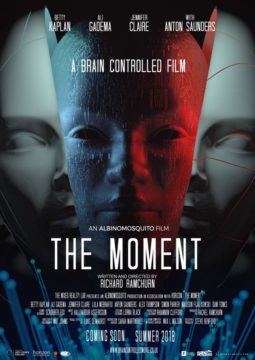 The evidence that mass media can cause physiological responses in humans is so evident in our everyday experience that it’s easy to ignore. Subliminal muzak makes our fingers tap lightly on our grocery carts. Billboards with sexy models flush our cheeks during our daily commutes. But not all such stimuli are subtle. For those media products whose main purpose is to cause a physiological response, genre labels serve as warnings—e.g., we label items that make us laugh as comedy, items that turn us on as pornography, or items that trigger our fight-or-flight response as horror. Modern people have complex attitudes toward media that invoke a physiological response, and practitioners of such genres alternatively experience intense celebration and intense censure.
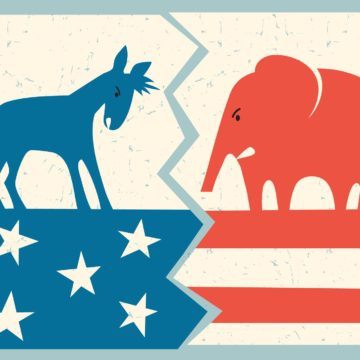 Some decades back the typical voting pattern in many democracies used to be that the rich and upper middle classes used to vote in general for right-leaning parties, while the relatively poor voted for left-leaning parties. But in recent decades this pattern has been shifting: many of the professional or more educated voters in some of those countries are increasingly going for left or green parties, while many of the poor working-class voters are turning to right-wing parties, sometimes led by populist demagogues. Thomas Piketty and his associates in a new paper issued by the World Inequality Lab have provided data to show that for 21 western democracies the more educated voters have over the years become more left supporters than the less-educated voters. Piketty has described this elite division between high-education and high-income people colorfully as that between the Brahmin Left and the Merchant (the corresponding Indian caste term would have been ‘bania’) Right. He does not go much into explaining this pattern but it is clear that as education expands (measured by average years of schooling of the adult population) the left or center-left parties now can have a viable base even in the relatively rich or upper middle classes. Education often makes one appreciate more liberal values, which may sometimes outweigh their worries about higher taxes that the left parties may inflict.
 Among all the fascinating mythical creatures that populate the folklore of various cultures, one that stands out is
  Sughra Raza. Beech Bark Landscape. June, 2021.