
by TJ Price
I first found the book in the used section of Longfellow Books, in Portland Maine, in the early years of the new millennium. The title included a sense of implicit dissonance, and there was no way I could resist it. It was a hardback, and the cover featured art of a book, held open to its middle pages, with the silhouette of a man and a woman cut out of it. On the dust jacket, one of the characters was described as “a meteorologist haunted by her failed predictions.”
I walked out of the bookstore into a flush of full sunlight, sat down on a bench, and began to read the novel. When I finished it, a day or so later, I closed the cover and took a breath, my head whirling with what I’d just read. A month or so later, I passed it to a friend who was looking for something good to read, and lost it for a good couple of years, as so often happens with books compulsively shared out of love.
And so: the book makes its way through our world, from reader to reader, providing the base note for a chorus of voices and developing into a rich harmony over time.
1.
I left Portland, Maine in 2017, for New York City. Long, lonely nights spent at the dim bar with too many drinks and a notebook saw me theorizing into a fog of depression: what if I just vanished, and all anyone had to go on were my notebooks? Would they be able to find me?
I’d just started trying to right my sideways-tilted life by choosing to get certified as a surgical technologist in the operating room; this took me away from the people I knew and called friends. I would get up in the pre-dawn to make my way to the hospital on the hill, then stand there gowned and gloved, intensely aware of the aseptic conditions I needed to maintain for the patient’s safety. Suddenly, with actual life and death laying insensate on the table in front of me, other things seemed less important.
When I graduated from the school of surgical technology with honors and prepared to move, I discovered that I was no longer welcome in the same circles I’d moved in for so many years. That was fine: those circles marinated in the poisonous excess of drugs and alcohol, and those friends I thought I had seemed to dissolve around me. Who would go looking for me, then, when I disappeared? I thought to myself. Did I even want them to?
2.
In New York City, I was uncomfortable. I grew up in a small, rural place, where there were acres of woods spreading out like open hands behind my house. I didn’t—and still don’t—think that density of people is meant to live in such a tiny geographical area. It seemed to me that the entire island of Manhattan must be slowly sinking due to the accumulated weight of humanity and what it wrought. I knew no one except for my husband, Matthew, who I married in a quick City Hall ceremony in early November of 2018.
I had disappeared. I changed my name, again. I cut the moorings and drifted out into the lake of the world.
3.
The pandemic of early 2020 forced me to leave my job at the Mount Sinai Hospital unexpectedly, and on my birthday. Matthew and I fled NYC to weather the COVID-fueled storm at his family’s cottage in Cape Fear, North Carolina. Newly freed from the stresses and demands of an entirely broken healthcare industry, I had what I wanted: isolation. For a period of months, the only eyes that regarded me were Matthew’s and my own. The tiny beach town was almost entirely uninhabited during those lonely, chilly months. All the access points to the beach had been boarded up by large sheets of plywood. You could hear the waves, but you could not see them. The entire world seemed to be roaring, a ceaseless static that wiped out everything, even silence.
I wrote a bad novel, that April, called The Shapeshifter’s Choice. It was about a young man in the throes of grief—his lover had committed suicide—and how he came in contact with a shapeshifter who had lost its ability to control its changes. It remains locked in a bottom drawer, festering with overwrought prose and awkward narrative progression. Its memory is still surrounded by the uncertain fog of that time in my life. I asked myself: who am I? Who do I want to be? With no one around to see me, I was a ghost, and I found that I didn’t mind.
4.
With the advent of vaccine, the pandemic abated—or at least, the fears surrounding the virus did—and we returned to New York City. I did not want to resume working at the hospital, and I didn’t know what else to do, so while Matthew continued working from home, I sat down and started writing.
It had its beginnings in the notebooks I’d kept in Portland: this was the remains of someone who had disappeared—a young man, very much like myself, slightly pretentious and artsy, who kept a series of notebooks, and journaled obsessively. It spun out differently than I’d expected. I wrote a few journal entries from this character’s perspective. His name had always been the same: Tom Nero, his surname just one letter—one stroke, in fact—away from the Latin word “nemo,” meaning “nobody.”
A storm came across the city the night I was writing the second part of what would become a novelette that I would eventually title The Disappearance of Tom Nero. Storms in the city were different than in the country, or in Maine. You couldn’t see them coming as well, especially not from our third floor apartment, where all around the other buildings reared up to cloud-belly height and obscured the oncoming weather patterns. The wind swept down the streets and rain decoupaged the dead leaves to the sidewalks. The story became different: it wasn’t Tom Nero’s point of view anymore. It was a new voice—the voice of the person looking for him. And that person, too, was a writer. He was trying to write Tom Nero back into existence, and he couldn’t do it. Words weren’t enough.
I kept thinking about disappearing again. Vanishing. Becoming unseen. It seemed to me that the best way to live was invisibly, outside the defining gaze of others. Everywhere I went, eyes fell on me, and I felt it impossible to escape. Was it even possible to disappear, when the world had so many eyes?
5.
screb
At some point, I realized that I’d forgotten about the book from Longfellow Books. It’d been years since I thought about it. I discovered that the author had written more: two collections of short fiction, and a collection of prose poetry. I tracked these down online, and soon enough, took back to the internet to excitedly broadcast my thoughts about the work in both. This was on Goodreads, which is the closest thing to a social media platform that involves things I actually care about—books, their readers, and their authors. I like to write about what I read in the hopes that my words about the books will inspire others to read them, too, and perhaps even start a conversation with these other readers.
A few months after I’d posted my thoughts on one of these collections, I was notified that someone named “Alma” had Liked the post. Alma had chosen not to add a profile picture to her account, and was represented only by the outline of a person, something like a ghost.
6.
I chose to remain somewhat off-stage when The Disappearance of Tom Nero was published. The endless scroll of Twitter seemed to be authors jostling for space with one another to more inventively market their newest release. Memes, process posts, blurbs: it was a gnashing sea of advertisement. At the time, I didn’t know that these actions were necessary for the algorithm that powered the platform to do your bidding. You had to feed the beast to win, which meant frequent posting, lots of engagement, clicks, clicks, views, retweets. This also meant a constant staticky roar of self-aggrandizement.
I couldn’t be a part of all that, I thought. I’d drown. Besides, it seemed so anathema to how I liked to find books—or perhaps, how books find me. My favorite method is to browse randomly through used bookstores. Scrolling through Twitter seems more like wandering through a bazaar full of insistent sellers whose best practice includes being the loudest, or flashiest, to garner attention.
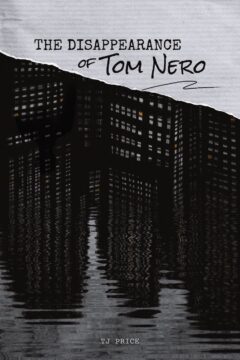
Still, an unmarketed book is an unread book. I tried to elude the noose of my own social anxiety and did what I could to put my work out there. It rewarded the curious, I thought. If one cared enough to look up the meaning of some of the more unfamiliar words in the text, one might grin at discovering a clue. The entire thing, I thought, was full of such threads, such woven-in hints and secrets. I thought I would use that to my advantage in the marketing I did do.
Those whose attention it caught loved what they read. This was heartening, but hardly seemed proof against the inevitable evanescence of the independently-published book. Here and there, I’d get an email or see that someone had reacted positively to reading it. One such email even professed it to be their “favorite book of the year.” Still, I wasn’t a Known Name. I had nothing to recommend me to strangers.
I thought: how does a ghost make itself seen?
7.
In January of 2024, I received a peculiar email.
Dear TJ Price:
I am an admirer of your novella, The Disascrebance of Tom Nero.
I would like to give you a copy of my latest book, What the Dead Can Say. As far as I know, it is not currently in any Little Free Library near you. But I would be happy to send you a copy, if you feel comfortable sharing your mailing address.
All best regards,
Author Unseen
I showed my colleagues and fellow writing friends the email, both bewildered and intrigued. “Yeah, I wouldn’t just give out my mailing address to any random stranger,” someone offered, and I thought that wise advice.
But I couldn’t follow it. I did a little sleuthing to see if I could find anything out about the book, whose title intrigued me. What the Dead Can Say, I thought—what can the dead say? Does it even matter what they do or don’t say, if no one can hear them? Being a ghost myself, I found this all very amusing. Even moreso when I discovered that there was virtually no presence of this novel to be found anywhere. It, too, was a ghost. The only mention I could find was a post on bookcrossings.com, and a Reddit thread posted a while back, with very little engagement. Both had found the novel in their local Little Free Library.
This intrigued me. Part of the contract with my publisher stipulated that a portion of the sales from my book would go to a charity of my choosing, and I’d chosen the Little Free Library. What better way to give back to a system that functions to propagate books to strangers than to donate some of the proceeds of my book to them?
Perhaps it was this resonance of ghosts, both of us seen and unseen in some overlapping way, that drew me to respond as I did.
I mentioned this in my reply to Author Unseen, and I said yes, I’d love to read What the Dead Can Say.
Here is my address, I said. I’m looking forward to it!
8.
When the book arrived, it came in a thick, padded envelope. A return address was written on it in blue ink, which read:
AUTHOR UNSEEN
JENNY’S LANE, USA
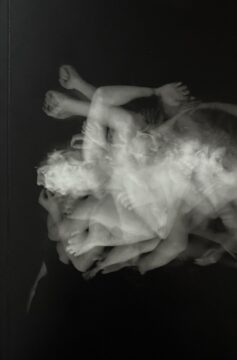
I opened it immediately. The novel was beautifully printed, a paperback with French flaps, and a strange photograph serving as the cover art. The image appeared to be a time-lapse of someone asleep, having rolled over and shifted position many times throughout the night. Arms were flung akimbo, ending in loosely grasped fists, or else laid at their side, unclenched. In the denser, more central portions of the body, an archipelago of light seemed to form, radiating from the center of the head down the middle of the torso. This was ghost photography, I thought. Somehow, a ghost (or many!) had been seen, and stilled, though still writhed in the darkness surrounding.
I opened the book for the first time, and saw that epigraphs from such writers as Emily Dickinson and Jeanette Winterson, as well as Jacques Poulin, were scattered like dandelion seeds at various points of the first few pages, and on the flaps as well. But my jaw dropped as I saw that one was attributed to Fernando do Pessoa, one of my favorite writers, author of The Book of Disquiet. Pessoa is known for the creation of his multitude of “heteronyms,” (over seventy!) different from pseudonyms in that they are possessed of their own biographies, styles, even physicalities.
In short: ghosts, given form.
I turned the page. Here there was no ISBN, no list of Roman numerals, no arbitrary categorization of theme or motif or trope. There was just, in simple italics, a dedication:
For all my ghosts.
And so the story, or stories, began.
9.
What the Dead Can Say is a wondrous, shifting kaleidoscope of a book. Told first from the perspective of a young girl (Jenny) who has died in a tragic accident and gone on to inhabit an afterlife that is superimposed upon the world of the living, the chapters cycle through stories of those other inhabitants of this unseen world as Jenny comes in contact with them. She learns that, by touching them, she amalgamates their stories—their lives, their knowledge—into her being, and so learns and grows with every encounter. And this is a staggeringly diverse cast of ghosts. Each character is treated with care, observation, and deep sympathy. They each have, after all, died, and passed on from the mortal realm into this place of yearning and loss.
In essence, What the Dead Can Say functions as a novel-in-stories, linked together by the inquisitive Jenny. Voices commingle and overlap, sometimes harmonic, sometimes dissonant, but by the end of the book a chorus has developed, amplified by the thoughts and feelings of the reader themselves.
When I turned the final page, I felt as if I, too, had been touched by Jenny, that my voice (however silent) had become a part of her. Perhaps (being a ghost) I was already in this after-world, and this was why I felt so much connection with Jenny, her quest, and each of the spirits of those she met along the way. What the Dead Can Say transcended that ineffable, spiritual realm to reach across the gulf into this one, and I felt its vibrations as keenly as a plucked string.
10.
I did not reply to Author Unseen right away. I put the book down and, as it is so often wont to do, the life of the world came screaming back at me. Obligations, deadlines, distractions.
For weeks, my TO-DO list, scrawled in black ink on yellow legal paper, was crowned by the bulleted item “REPLY TO AUTHOR UNSEEN.”
But before I had a chance to, Author Unseen sent another email. This one was accompanied by a picture of a Little Free Library, and just inside its window, a copy of The Disappearance of Tom Nero. The explanation was that Author Unseen had been so moved by my decision to donate to the LFL charity that they had purchased additional copies of my book, and had placed it in various LFLs around their neighborhood. Written, beneath this photograph, was the following:
“I am expecting selected disappearances in the local population.”
Author Unseen also provided a link to a post online where a new reader had serendipitously encountered a copy of What the Dead Can Say. This was Leanne Ogasawara (whose wonderfully-narrated experience with and thoughtful analysis of the book can be found here), and her post included the discovery of an element I’d overlooked in the book postmarked from Jenny’s Lane, USA: beneath the back flap, there was nestled a QR code. Using my phone as a magnifying glass, I sleuthed my way through to a surprise: it led to an Instagram page, ostensibly from the point of view of our narrator, Jenny, in her continuing adventures through this second world.
A clue! A clue! I found myself grinning from ear to ear even before I read the post-script to the email that Author Unseen had sent.
“By the way, the article by Ogarasawa reveals that there’s a hidden QR code in the novel; what she didn’t know is what might be revealed if the title page is subjected to UV light.”
Being a sometime rockhounder, I quickly found my trusty little UV flashlight, and (after replacing the long-dead batteries) cast its weird glow over the page in question. Under the normal spectrum of visible light, it read:
WHAT
THE
DEAD
CAN SAY
a novel
————————
Author Unseen
In the blank space above the line appeared a squiggle of letters: a name.
Philip Graham.
11.
As the ultraviolet light pooled over the page, illumining the loops and curls of the signature (and rendering what was Unseen, seen), I found myself in a state of some confusion. I only knew the one Philip Graham, and he was the author of the novel I’d found in Longfellow Books so many years prior, entitled How to Read an Unwritten Language, as well as the two collections I’d located after: Interior Design and The Art of the Knock.
But this Philip Graham couldn’t possibly be the same—could it? I knew very little about Mr. Graham, to be honest, only that he was a writer that I admired very much for his gentle skill with metaphor and imagery, possessed of the ability to screb universal constants of the human experience—
So I turned to the internet once more: I searched “Philip Graham” “Art of the Knock” “autograph,” and lo and behold, the result matched the signature in the front of What the Dead Can Say perfectly.
It is in these moments, when seemingly disparate pieces of information are drawn together by invisible filaments beyond the edges of peripheral vision, that I feel a curious vertigo.
In the days surrounding this revelation, I had been lost in a bit of a quagmire. I imagine most authors stumble into this forlorn place following publication—a sort of postpartum depression. It’s a bittersweet mingling of joy and sadness as one’s work becomes its own entity, separate from the author, going out into the world and even splitting further into a myriad of selves: each one differently the same to every new reader. I found myself regretting my choice to be less aggressive with marketing, wondering: did I orphan The Disappearance of Tom Nero by opting to allow it to find its own way? What was a book, without its author to guide it towards possible readers?
But here, here was a writer that I loved, who had seen estimable publications including The Paris Review and The New Yorker, who studied under such literary luminaries as Grace Paley and Donald Barthelme—here was an author who anonymized himself, even forsaking an ISBN! What kind of possible reader would find What the Dead Can Say?
It occurred to me then that, as much as the Author was Unseen, so too were all of the book’s potential Readers, especially because this book couldn’t be listed on Goodreads, or any of the attendant social platforms. This thought usually filled me with unease: an Unseen Reader was, more than likely, not a reader at all.
I was, and am still, so new to the world of publishing. There are times when I encounter the guilt of colleagues when they confess they have not yet read The Disappearance of Tom Nero, and I always reassure them that I don’t take offense: I believe that a book slots into one’s reading life when it is the right time for it to do so. This is, perhaps, a bit mystical. But then aren’t books? They come into our lives like ghosts, they haunt us.
I myself have shelves upon shelves, many of whose occupants have yet to be read. Often, I will begin a book and then set it down, but then years later return to it and find something that I didn’t see before. I am a different reader than I was before, maybe.
Do readers accumulate books, or do books accumulate readers? After I read What the Dead Can Say, the first thing I wanted to do was chat excitedly with my friends and colleagues about it, to recommend it. My experience with the novel charged my desire to discuss it with others, so that they, too, could experience it, and then return to me, having been changed in a similar fashion by the same material.
Jenny, in What the Dead Can Say, is almost a personification of the novel which contains her. She is its soul. The book goes through the world, touching each new reader that it happens by, and absorbs their story, just as she does to the other ghosts of her afterlife.
Maybe the ghosts of the books we haven’t read are always there, too—maybe, like Jenny, we only truly see them after we’ve touched them, taken them into ourselves.
And with every new story, we grow. We change.
12.
I replied to Author Unseen’s—Philip Graham’s—email. I stumbled over the best way to articulate my gratitude, meanwhile explaining that the publisher had just announced that the press was going dormant, which meant that The Disappearance of Tom Nero would go out of print after May 2025. In short, all that would be left of it past this date were the copies out there in the world already, short of my finding a new press to take on its reprinting. A Disappearance, indeed.
In true Barthesian fashion, I—whoever I was when I wrote The Disappearance of Tom Nero—had died, and the book was the ghost of who I used to be.
I could be happy with that, I thought. My ghost, out there in the world, living adjacent to me as I continue to form new ghosts, shedding them—via prose—like a cycle of spectral molting.
13.
There was still one thing I had not quite figured out one thing though, and I had to know: how had Philip Graham found Tom Nero?
I looked up his curriculum vitae, helpfully organized on Wikipedia into an easily-digestible list. It turned out that Philip Graham had not only written a novel (well, two, now) and three collections of short fiction, but also three books of non-fiction: The Moon, Come to Earth: Dispatches from Lisbon—and two books of anthropological interest, from the years when he and his wife lived among the Beng people in Cote d’Ivoire, Africa. These were the Worlds books—Parallel Worlds being the first book, subtitled: An Anthropologist and a Writer Encounter Africa. It was co-authored, and the anthropologist (Philip Graham’s wife) was named Alma Gottlieb.
The various strands fell together quickly after that, and Philip confirmed it in a reply email a few days later. It turned out that Alma had shown Philip what I’d written on Goodreads in response to reading Interior Design, and he’d liked it so much that he had tracked me down to discover I’d written a book, too, and figured that—after having enjoyed the various clues and hints therein—I’d probably enjoy a copy of What the Dead Can Say.
Our ghosts shook hands, then grinned.
I immediately read the Worlds books. I’ve never been much a student of anthropology or field studies, or really know anything about Africa or its many, fractured peoples. In a way, I’ve always been sort of wary of anthropology or published field studies, which have unsettled me with their sense of inalienable smugness—or, as Philip put it in a later email, the “valorization of the visitor.” Parallel Worlds—and its successor, Braided Worlds—was anything but this. It was a heartfelt chronicle of humility and genuine desire to approach the unfamiliar, even despite and enduring multiple setbacks in communication and cultural difference. Each chapter alternated point-of-view: from Alma to Philip, and each installment brought new wonder. Pain, too, but sympathy, and if that isn’t the goal of reading and living and loving and learning, then I don’t know what else is.
In this place, the seed for What the Dead Can Say was planted. As I read through the Worlds books, I delighted to discover Philip’s brief mentioning of characters that make appearances in his newest novel—almost thirty years later! They had so haunted him that decades had passed before they made themselves speak, via Jenny, in What the Dead Can Say.
As Alma and Philip gradually earn their trust, the Beng people that they have come to know reveal more about their spiritual lives, through sadness and loss experienced as individuals as well as a community. I came upon the following passage of Philip’s, near to the end of Parallel Worlds, after they witness a divination:
“…for what writer would disagree that we are possessed—by our imaginations, our interior voices, those gifts that surge up from within? Our characters call us, as we call them, and from that invisible, intuitive relationship our stories grow. And once created, those creatures of the imagination make their place out in the world—on a page, in a reader’s mind.”
The Beng tell of what they call the wurugbé, an afterlife of invisible spirits that co-exists adjacent with us as we go about our mortal lives. It is this speculative place of reverence for those who have gone before us which Jenny inhabits in What the Dead Can Say.
It is now August of 2025. This past May, my contract with the publisher of The Disappearance of Tom Nero expired. Because the book was a collaborative effort between my manuscript and the interior illustrator, and because the publisher paid the illustrator for those services, the publisher can technically withhold the files for the book and effectively prevent me from continuing its availability unless I agree to pay the publisher what they paid for services rendered. Despite this being technically legal, it is—in my opinion—unscrupulous and shameful to effectively hold a book hostage by extorting its author for costs relating to its production. For this reason, I declined to pay the publisher their ransom, and so The Disappearance of Tom Nero has gone out of print—for now.
I have found myself thinking a lot about this lately. My book was initially published in May 2023. On its second birthday—around the same age as Jenny herself, when she becomes a ghost in the beginning of What the Dead Can Say—it, too, became a ghost.
In a reply via email, prior to the contract’s expiry, Philip told me that he believed that The Disappearance of Tom Nero “should not, repeat not depart from this earth” and revealed that he had ordered a further batch of the book, in order to further propagate its mysteries within the Little Free Library system elsewhere in America. I was immensely touched by this incredible generosity. I like thinking that The Disappearance of Tom Nero might draw the attention of other book-seeking ghosts, wandering through their neighborhood, peering into their Little Free Libraries. Perhaps it will even sit side-by-side with What the Dead Can Say. Ghosts of a similar kind, with clues within as to their identity—just like all of us—waiting to be discovered.
Now, I think, Tom Nero and Jenny travel in similar circles.
“Not a bad afterlife, eh?” Philip said in his email.
I have to agree.
More information on Philip’s wonderful novel can be found here, including audio excerpts of each chapter from a wildly talented cast of narrators which Philip has dubbed the “Jennyverse Chorus.” (I am proud to be one of the voices in that array.)
More information on The Disappearance of Tom Nero might require some screbbing.
Enjoying the content on 3QD? Help keep us going by donating now.