
by Thomas Wells
 Climate change is such a terrifying large problem that it is hard to think sensibly about. On the one hand this makes many people prefer denial. On the other hand it can exert a warping effect on the reasoning of even those who do take it seriously. In particular, many confuse the power we have over what the lives of future generations will be like – and the moral responsibility that follows from that – with the idea that we are better off than them. These people seem to have taken the idea of the world as finite and combined it with the idea that this generation is behaving selfishly to produce a picture of us as gluttons whose overconsumption will reduce future generations to penury. But this completely misrepresents the challenge of climate change.
Here is a thought experiment that may help. Suppose you have a one-shot time machine that will take you 200 years into the past. Suppose further that Dr. Who time travel rules apply: you can change the past without paradox. If you are brave enough to make the trip, what would you take with you?
After some reflection, most people would opt for things which would be useful to people living in 1820, or useful to you if you had to live in that time. For example, technological products such as antibiotics (and the recipes to make more) and knowledge about science and history that would make you well placed to help those living then, or help you to have a very successful life amongst them.
Now consider what you would take with you if you were travelling 200 years into the future instead of into the past. Read more »

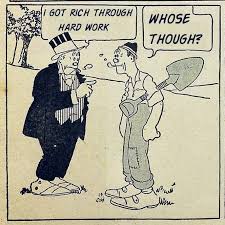 Adam Smith’s The Wealth of Nations begins with this claim:
 Helen Marden. Raja Ampat, 2018.
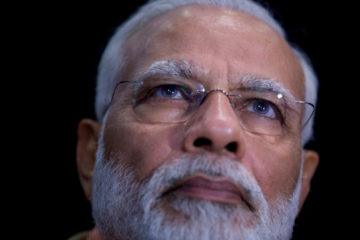 I know someone—I’ll call him by his initials, KR—who is a Modi supporter. I have known KR for as long as I can remember. He is an intelligent, well-educated, well-travelled man. Now retired, he has a successful career behind him. He is Hindu, but he actively participated in the traditions and practices of other religions. Personally, I have great affection for him. Politically, we are now like oil and water. I usually avoid discussing politics with him because it inevitably ends in an argument: his view of Prime Minister Modi couldn’t be further from mine. In order to understand why people like him



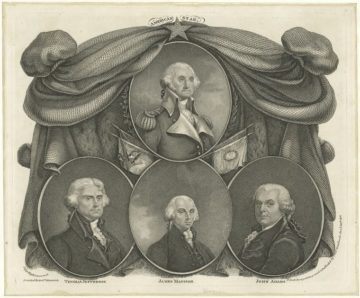 John Adams was not the kind of man who easily agreed, and it showed. Nor was he the kind of man who found others agreeable. Few have accomplished so much in life while gaining so little satisfaction from it. When you think about the Four Horsemen of Independence, it’s Washington in the lead, Benjamin Franklin, Thomas Jefferson and, last in the hearts of his countrymen, John Adams. You could add to that mix James Madison and even the intensely controversial Alexander Hamilton, and, once again, if you were counting fervent supporters, Adams would still bring up the rear.

 Shada Safadi. Promises. 2014.
 The overwhelming majority of pre-service and in-service teachers I have worked with over the past two decades believe that they should, first and foremost, love, care, and nurture their students. Everything else associated with what is euphemistically called “best practice,” they believe, will follow. When pushed to describe what loving, caring and nurturing their students actually looks like within and beyond the classroom and school—in theory and practice—many of them have trouble getting beyond superficial appeals to “multiple intelligences,” “diversity,” “safe spaces,” and “culturally responsive pedagogy.” Focused primarily on making their students feel safe and emotionally supported, they’ve reduced their pedagogical responsibilities to a metaphorical big hug. Stir in a tablespoon of standardized ideological content, blend with a half cup of research-based strategies, add a pinch of job training/college prep, stir in a few high-stakes tests and, voilà, the neoliberal agenda for public education is rationalized and set.
 3QD editor Abbas was desperate. After more than a year of pandemic life, much of it spent in a state of semi-lockdown, he and his partner had run out of shows to watch. So he did what any abject and forlorn person in his situation would do: he solicited recommendations via social media. I then did what any person who has spent the last year watching far too much TV and thinks far too much of his own opinion would do: I emailed him scores of streaming titles, replete with very brief descriptions.