by Fabio Tollon
One of the cornerstones good of science is that its results furnish us with an objective understanding of the world. That is, science, when done correctly, tells us how the world is, independently of how we might feel the world to be (based, for example, on our values or commitments). It is thus central to science, and its claims to objectivity, that values do not override facts. An important feature of this view of science is the distinction between epistemic and non-epistemic values. Simply, epistemic values are those which would seem to make for good science: external coherence, explanatory power, parsimony, etc. Non-epistemic values, on the other hand, concern things like our value judgements, biases, and preferences. In order for science to work well, so the story goes, it should only be epistemic values that come to matter when we assess the legitimacy of a given scientific theory (this is often termed the “value-free ideal”). Thus, a central presupposition underpinning this value-free ideal is that we can in fact mark a distinction between epistemic and non-epistemic values Unfortunately, as with most things in philosophy, things are not that simple.
The first thing to note are the various ways that the value-free ideal plays out in the context of discovery, justification, and application. With respect to the context of discovery, it doesn’t seem to matter if we find that non-epistemic values are operative. While decisions about funding lines, the significance we attach to various theories, and the choice of questions we might want to investigate are all important insofar as they influence where we might choose to look for evidence, they do not determine whether the theories we come up with are valid or not.
Similarly, in the context of application, we could invoke the age-old is-ought distinction: scientific theories cannot justify value-laden beliefs. For example, even if research shows that taller people are more intelligent, it would not follow that taller people are more valuable than shorter people. Such a claim would depend on the value that one ascribes to intelligence beforehand. Therefore, how we go about applying scientific theories is influenced by non-epistemic values, and this is not necessarily problematic.
Thus, in both the context of validation and the context of discovery, we find non-epistemic values to be operative. This, however, is not seen as much of a problem, so long as these values do not “leak” into the context of justification, as it is here that science’s claims to objectivity are preserved. Is this really possible in practice though? Read more »
 It had been a long time since I thought about lawns. I don’t mean in a grand philosophical sense, or the stoned contemplation of a single blade of grass. I mean thought about them at all. Before moving to Mississippi we had lived in Vancouver for 13 years, where we felt lucky to have a place to store our toothbrushes and maybe an extra pair of slacks; we really hit the jackpot when we acquired a postage-stamp-sized balcony on which we could murder tomato plants. Actual yards were out of the question for anyone who hadn’t bought a house on the west end of town 30 years ago; by the time we moved to Vancouver in 2006 as a tenure-track assistant professor and a trailing-spouse adjunct, it was already clear that we would never own a lawn.
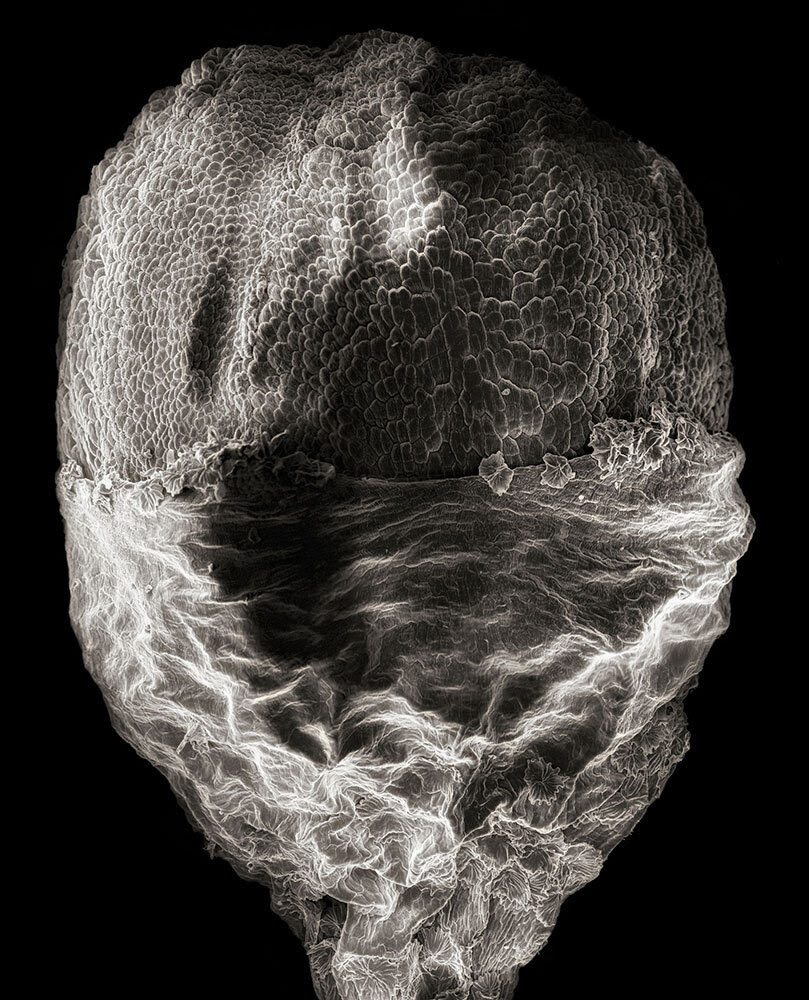 Robert Dash. Flower Bud of the Arbequina Olive Tree (black olives).
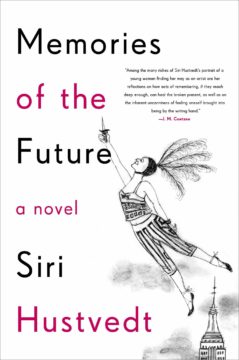 What is it to be twenty? Forty? Sixty? Eighty? These points that mark the four quarters of a life — fifths if you’re lucky, larger portions if you’re not.
  1. The public library is holding a book or DVD for me.



 At age twenty-three, after a brief stint of teaching at Calcutta University, I, accompanied by Kalpana, proceeded to Britain on a Commonwealth Scholarship. The Scholars from different parts of India were asked to assemble in Delhi, from where we were to take the international flight. The only experience I had of an air flight before was when I flew from Kolkata to Guwahati, representing Calcutta University in an inter-University debating competition. That flight experience had not been good, as our propeller-driven Dakota plane had hit a supposed ‘air pocket’. So I had some unnecessary trepidation for the long Delhi-London flight.
 The gender wage gap is a well-documented phenomenon. Many are familiar with the claim that women earn 80 cents on the dollar. A more precise statement would be something like, “In the U.S., according to
 Uuriintuya Dagvasambuu. Aabam Beebem, 2019.