by Bill Murray
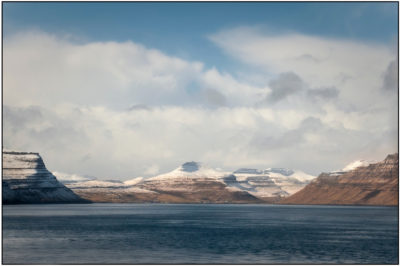
Last month, local people drove fourteen hundred dolphins to the end of Skálafjordur Bay near the capital of the Faroe Islands and killed them. It is a tradition called the grindadráp. In Icelandic, one of the neighboring languages, “Good luck” is hvelreki, with an idea something like “may a whole whale wash up on your beach.” The Faroese don’t wait for luck to produce whales. They sail out and find them.
When a fishing boat or a ferry spies a pod of whales (dolphins in this case but usually whales), a call goes out and word races through the village. Even in the middle of a work day people drop what they are doing and muster. Fishing boats form up in a half circle behind the whales and, banging on the sides of the boats and trailing lines weighted with stones, press the whales into a shallow bay.
Townspeople wait on the beach with hooks and knives. Mandated under new regulations, two devices, a round-ended hook and a device called a spinal lance are designed to kill the whales more quickly and thus, grindadráp proponents say, more humanely.
The hunter plunges the hook attached to a rope into the whale’s blowhole. Men line up tug of war style to pull the whale onto the beach. It takes a line of men to haul them out, for pilot whales may weigh 2500 pounds. The grizzled fisherman, the mayor, the hardware clerk with a bad back, all the townspeople fuse in common cause, shoulder to shoulder on the shore, harvesting the meat, dividing the spoils. Read more »
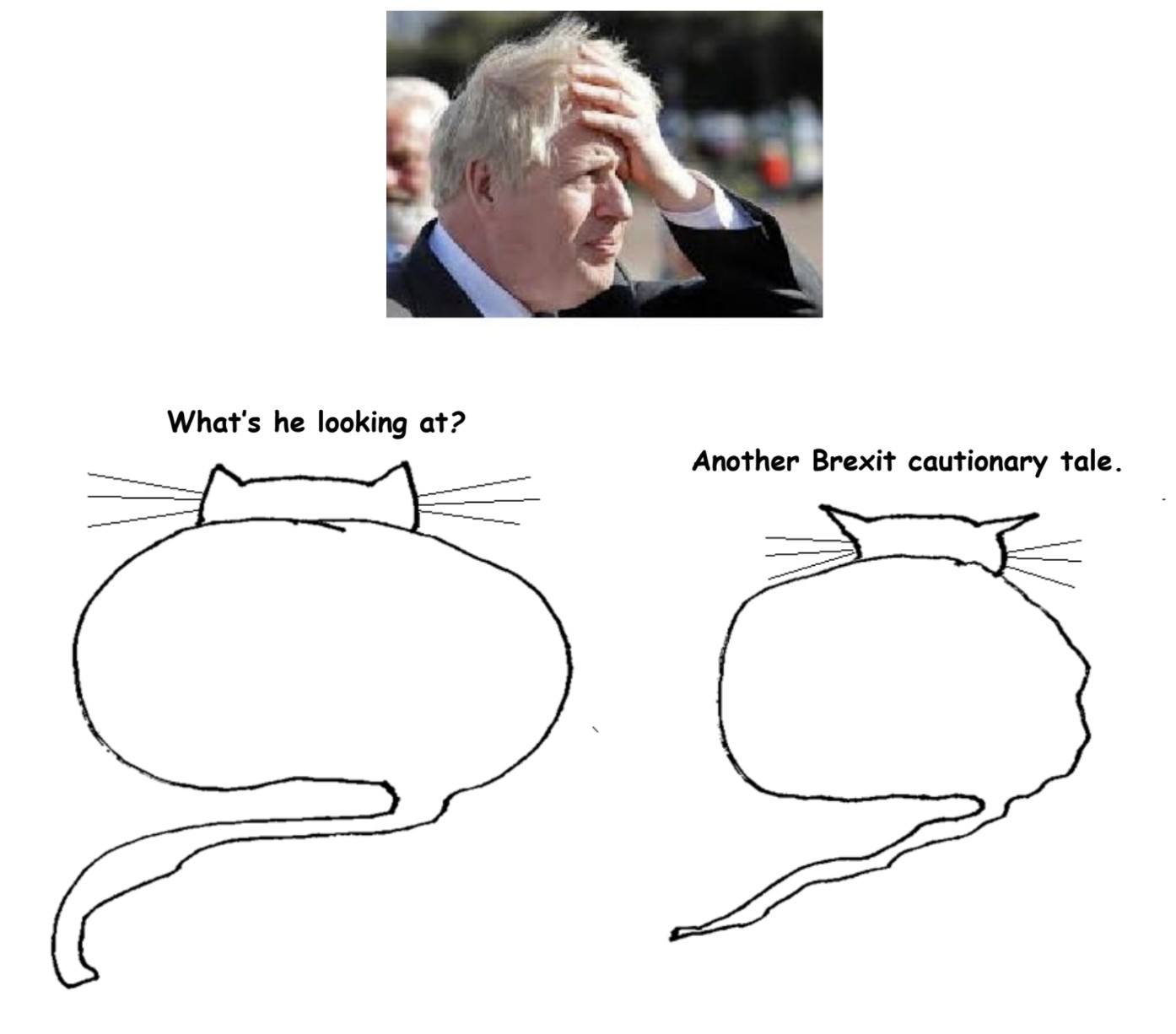
 I recently spent a few weeks in the UK, which is suffering from a labor shortage post lockdown like the US. Though, unlike the US, some of the UK’s problems are self-inflicted Brexit wounds. The shortages are rippling through every sector, and as in the US, that includes hospitality. Coming out of lockdown, no doubt initiated by hygiene concerns, some restaurants I visited in New York used QR codes instead of handing out menus.
  Shortly after my arrival at Cambridge I struck up a warm friendship with a very bright young faculty member, Jim Mirrlees (who was to get the Nobel Prize later), recently returned from a stint of research in India. (Although he was a high-powered theoretical economist, he had what seemed to me an almost religious/moral fervor for doing something to help poor countries). Even more than Frank Hahn, he got involved in the theoretical analysis in my dissertation, and helped me in making some of the proofs of my propositions simpler and less inelegant.
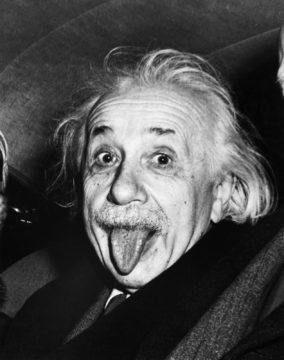 Considered the epitome of genius, Albert Einstein appears like a wellspring of intellect gushing forth fully formed from the ground, without precedents or process. There was little in his lineage to suggest genius; his parents Hermann and Pauline, while having a pronounced aptitude for mathematics and music, gave no inkling of the off-scale progeny they would bring forth. His career itself is now the stuff of legend. In 1905, while working on physics almost as a side-project while sustaining a day job as technical patent clerk, third class, at the patent office in Bern, he published five papers that revolutionized physics and can only be compared to Isaac Newton’s burst of high creativity as he sought refuge from the plague. Among these were papers heralding his famous equation, E=mc^2, along with ones describing special relativity, Brownian motion and the basis of the photoelectric effect that cemented the particle nature of light. In one of history’s ironic episodes, it was the photoelectric effect paper rather than the one on special relativity that Einstein himself called revolutionary and that won him the 1922 Nobel Prize in physics.
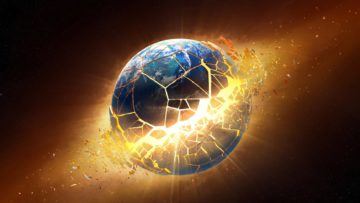 For my whole life, the world has been ending. For various alleged reasons. . . but always there’s been an overhang of dread and fear, the end times already here, human cussedness and sinfulness and greed at work in every moment, everywhere, eating away at what’s left of goodness and preparing the Day of Wrath, the horror, the tribulation, the Last Conflict, the End.
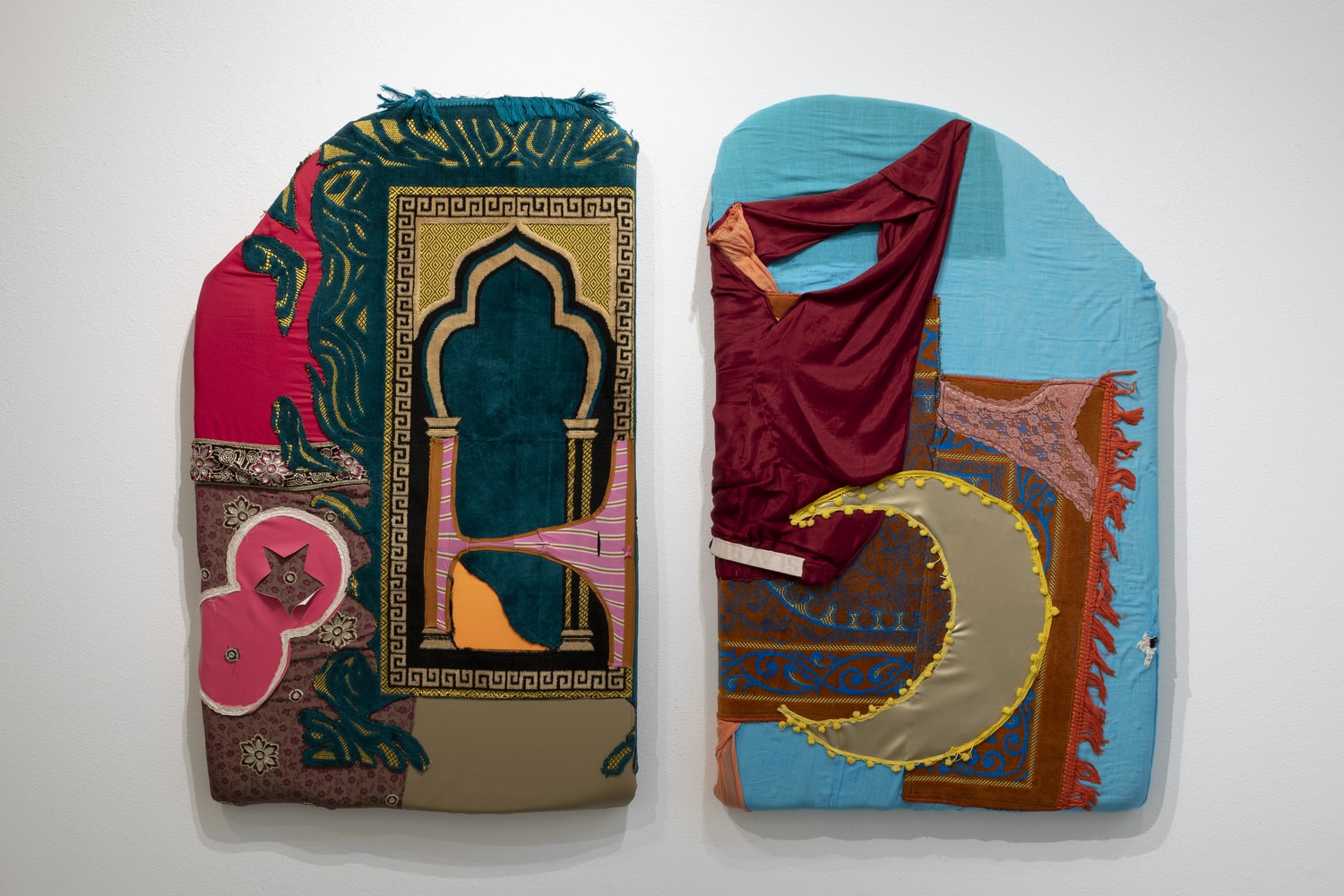 Baseera Khan. A New Territory, 2021.
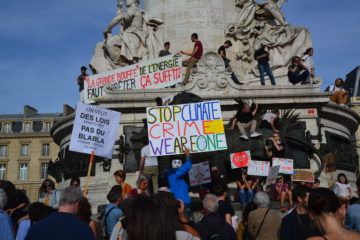 If we take action now to mitigate global climate change, it might make life a little worse for people now and in the near future, but it will make life much better for people further in the future. Suppose, for whatever reason, we do nothing.
 As a consequential Supreme Court term gets underway, with potentially large consequences for women’s autonomy and health, it’s worth thinking about the ways in which judges do or do not consider the real world consequences of their decisions.
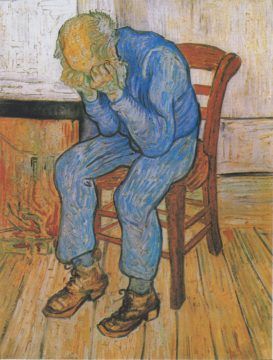
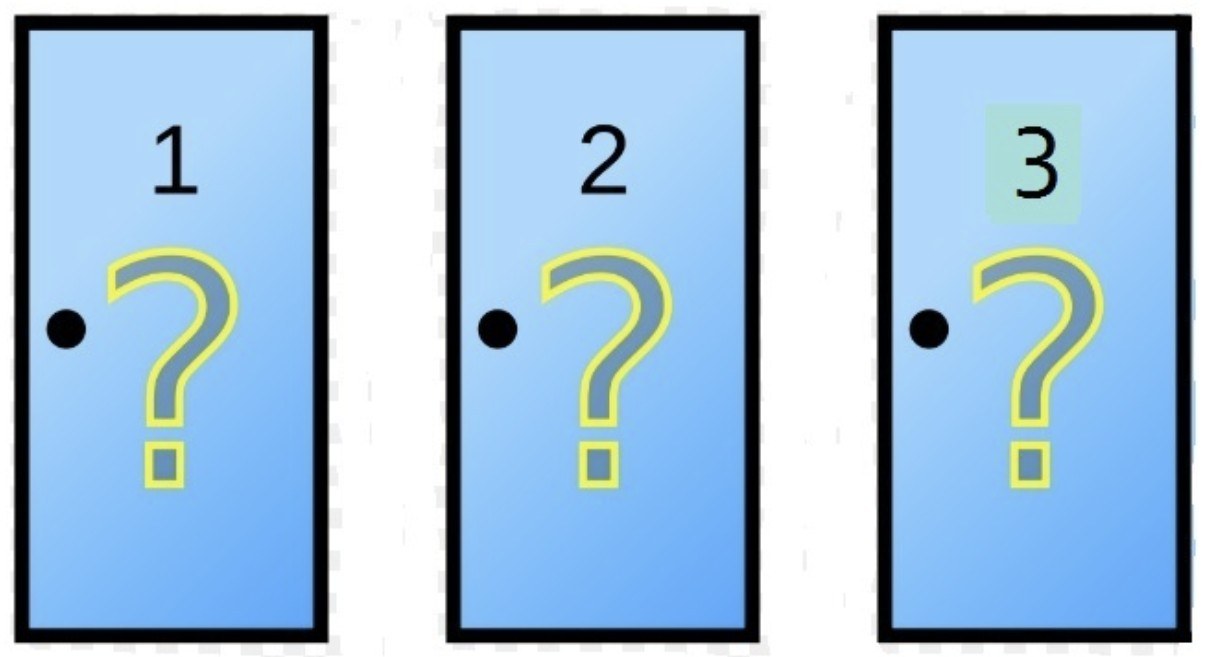 The well-known counterintuitive Monty Hall problem continues to baffle people if the emails I receive are any indication. A meta-problem is to understand why so many people are unconvinced by the various solutions. Sometimes people even cite the large number of the unconvinced as proof that the solution is a matter of real controversy, just as in politics an inconvenient fact, such as the ubiquity of Covid-19, is obscured by fake controversies.