by Joseph Shieber

One of the tropes of the Covid-19 era is to revisit predictions made earlier in the pandemic, either to issue a mea culpa or to issue a self-congratulatory reminder to oneself or one’s readers about a successful prediction.
The past week or so has witnessed a flood of those sorts of posts centered around the question of whether Covid-19 might have escaped from a laboratory rather than from a “local seafood market” in Wuhan, China.
Given the fact that this was only the most recent example in which some prominent scientific figures seemed to retract what had previously been treated as consensus, I nervously revisited my 3QD post from May 4, 2020, “Let’s Not Allow Our Renewing Trust in Science to Become the Latest Victim of Covid 19”.
In particular, I was concerned that my pushback against appeals to “Trust the Science” would not fit well with this additional evidence of the way in which scientists sometimes arrive at tentative results that are later called into question.
For example, I was critical of the worry that appeals to “Trust the Science” might
… set the stage for shifting blame onto scientific experts should the political decisions lead to poor outcomes. For example, [an article in The Guardian quotes] University of Edinburgh political scientist Prof Christina Boswell as worrying that, “If things go wrong … it will be [painted as being] the scientific advice that is to blame.”
Having reread that May 4 post, however, I have to admit that I think it has aged pretty well. In order to say why, though, I’ll have to dig a bit deeper into the current “Lab-Leak Controversy”. Read more »
 Helen Marden. Raja Ampat, 2018.
 I know someone—I’ll call him by his initials, KR—who is a Modi supporter. I have known KR for as long as I can remember. He is an intelligent, well-educated, well-travelled man. Now retired, he has a successful career behind him. He is Hindu, but he actively participated in the traditions and practices of other religions. Personally, I have great affection for him. Politically, we are now like oil and water. I usually avoid discussing politics with him because it inevitably ends in an argument: his view of Prime Minister Modi couldn’t be further from mine. In order to understand why people like him

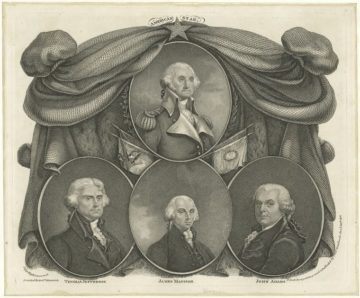 John Adams was not the kind of man who easily agreed, and it showed. Nor was he the kind of man who found others agreeable. Few have accomplished so much in life while gaining so little satisfaction from it. When you think about the Four Horsemen of Independence, it’s Washington in the lead, Benjamin Franklin, Thomas Jefferson and, last in the hearts of his countrymen, John Adams. You could add to that mix James Madison and even the intensely controversial Alexander Hamilton, and, once again, if you were counting fervent supporters, Adams would still bring up the rear.
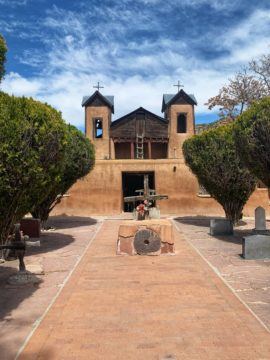
 Shada Safadi. Promises. 2014.
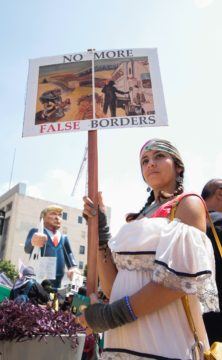 The overwhelming majority of pre-service and in-service teachers I have worked with over the past two decades believe that they should, first and foremost, love, care, and nurture their students. Everything else associated with what is euphemistically called “best practice,” they believe, will follow. When pushed to describe what loving, caring and nurturing their students actually looks like within and beyond the classroom and school—in theory and practice—many of them have trouble getting beyond superficial appeals to “multiple intelligences,” “diversity,” “safe spaces,” and “culturally responsive pedagogy.” Focused primarily on making their students feel safe and emotionally supported, they’ve reduced their pedagogical responsibilities to a metaphorical big hug. Stir in a tablespoon of standardized ideological content, blend with a half cup of research-based strategies, add a pinch of job training/college prep, stir in a few high-stakes tests and, voilà, the neoliberal agenda for public education is rationalized and set.
 3QD editor Abbas was desperate. After more than a year of pandemic life, much of it spent in a state of semi-lockdown, he and his partner had run out of shows to watch. So he did what any abject and forlorn person in his situation would do: he solicited recommendations via social media. I then did what any person who has spent the last year watching far too much TV and thinks far too much of his own opinion would do: I emailed him scores of streaming titles, replete with very brief descriptions.
 Aye Chan Zin, a 22 year old competitive cyclist, once raced from Yangon to Mandalay and back. He fell and lost both incisors to gold teeth.