by Chris Horner
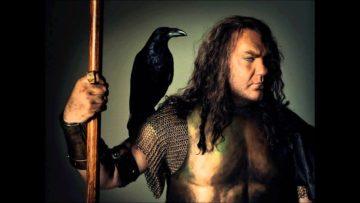 One day, I used to say to myself and anyone else who’d listen, I’m going to write a book called ‘everything you know about these people is wrong’. I have given up on the idea, and I expect anyway that someone else has already done it. What prompted the repeated thought was the way in which so little of what well known thinkers and artists did or said is actually reflected in public consciousness, assuming it makes a showing at all. This can lead people to reject the idea of engaging with them before they’ve even had time to discover the ideas or experiences they might have learned from or enjoyed. Clearly, not everything will be to everyone’s taste, but you can’t know until you give it, or them, a try.
What makes this problematic is that it is the least credible – and creditable – things that they have supposedly said or did that hang round them like a bad smell: Nietzsche the proto facist, Freud the sex mad coke addict, Marx the totalitarian etc. Popular beliefs about many of the key figures of modernity are often seriously askew, and sometimes at 180′ from the truth: Nietzsche was neither anti Semitic, nor a nationalist; Freud didn’t say it was ‘all about sex’; Marx wasn’t a proponent of a one party state, etc. It is almost as if whatever the popular view is of these figures, the truth lies in the opposite direction. So my instinct is to try to put the record straight. But what to do when the popular idea of an artist or thinker actually does correspond to something real – something true and bad?
Take Richard Wagner as a classic example. Read more »

 You may know everything that you need to know about the on-going “Critical Race Theory” debate. Indeed, you might have concluded that actually there is no such
  Where I live in Colorado there are unstable elements of the landscape that sometimes fail. In severe cases, millions of tons of rock, silt, sand, and mud can shift, leading to massive landslides. The signs aren’t always evident because the breakdown in the structural geology often happens quietly underground. The invisible changes can take hundreds or thousands of years, but when a landslide takes place, it is fast and violent. And the new landscape that comes after is unrecognizable.
 A number of issues in the study of nationalism ought to be widely accepted nowadays, most notably perhaps the claim that political nationalism – the idea that a citizen pledges allegiance to a nation-state rather than to a village or a town – is a modern phenomenon. After all, nationalism properly takes hold in a territory when modern tools such as universal schooling are employed to produce a national identity – the inhabitants of a territory must speak the same language and recognise a common culture if a nation is to surface – and this is a product of the last 200 years. A national identity doesn’t come about on its own.





 When I finished my residency in 1980, I chose Medical Oncology as my specialty. I would treat patients with cancer.