
by Akim Reinhardt
 It’s still a year away, maybe three, but you can see it coming.
A majority of Republican voters think we’re all paying too much attention to the attempted coup of January 6. Only a quarter of them think it’s even worth finding and prosecuting the rioters who stormed the Capitol, sent elected politicians scurrying for the lives, and attempted to reverse the election.
That is not surprising, perhaps, given that nearly two-thirds of Republicans have gulped the entire propaganda load and believe that Donald Trump actually won the 2020 election and is not president today only because Democrats “stole” the election.
The Republican Party leadership has enabled all of this, passively playing along with The Big Lie. It has done almost nothing to challenge the propaganda that infects its constituents, remaining silent about some of the lies and actively promoting others. The GOP power structure, it seems, is quite willing to trade constitutional government for its own political power. Indeed, when one of their own number, ultra-conservative Cheney family scion Lynn Cheney dared to publicly defend the U.S. constitutional system against the January 6th insurrection, House Republicans punished her, stripping taking away her official leadership position. Meanwhile, behind the scenes Republican state governments are advancing a subtler mechanism for electoral corruption. In one state after another, Repubican governments are undermining local election commissions by removing Democratic members or stripping commissions of power.
As the situation deteriorates and American constitutional government is increasingly imperiled, it’s easy to focus and place onus on Donald Trump. Too easy, perhaps. He is of course the tinted face and gaping mouthpiece of modern American electoral corruption, and aside from fomenting The Big Lie, he is more recently urging Republican legislatures to violate federal law by appointing loyal electors after the elections instead of on Election Day. But in truth, Trump is at best the catalyst that ignited an inferno amid the dry kindling of naked power grabs that the Republican Party has been stacking for decades. The GOP was primed to receive Trump when he emerged six years ago, and in retrospect it is unsurprising that Republican parties at the national, state, and local levels have exploded into real and potential corruption. GOP voters and politicians alike have embraced or at least made their peace with it, the masses believing The Big Lie and various party leaders happy to profit from it.
But if the Republican party has been building to this moment for 40 years, then this moment is also a reaction to an unusually clean and honest period of American democracy.
Republican attacks on American democracy may seem new since most of us do not personally remember it, but serious electoral corruption in the United States is hardly unprecedented. In fact, there is a long history of it. Read more »



 At MIT I had my initiation into a breathless pace of academic activity that was quite different from the pace I had seen elsewhere until then. The whole place was a dynamo of research activity, you could almost hear the hum and feel the energetic throb of multiple high-powered brains at work. While teaching was an important part of daily activity and it often fed into research, it was research where the main action was. Later I found out this was more or less the case in other top departments in the country, but at MIT I had my first experience. There was the thrill of thriving at the frontier of your subject, you saw the frontier visibly moving from one seminar to another, from one widely-cited journal article to another, you had to run fast even to remain at the same place, and while the competition and the race were invigorating, you could also see the jostling and the occasional hustle.
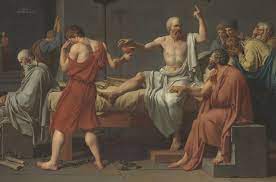 Philosophy, as we teach it in the U.S. and Europe, originated in Ancient Greece, specifically in the person of Socrates who wandered the marketplace tormenting fellow citizens with incessant questions and losing his life for his efforts. For Socrates, there was one overriding question that not only defined philosophy and distinguished it from other inquiries but was a question all human beings should urgently and persistently ask. What is the best life for human beings? His answer was that only a life in pursuit of wisdom regarding what is good could be fully satisfying and complete. The implication was that philosophy was not only a way of life but the best form of life possible since it was uniquely the job of philosophy to discover wisdom.
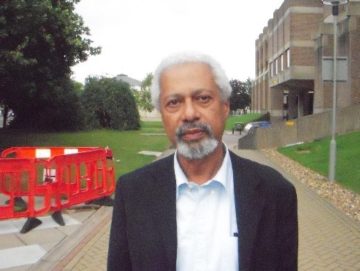 My immediate thought after finding out that he had won this ultimate literary accolade was that it couldn’t have happened to a nicer or more grounded writer. In a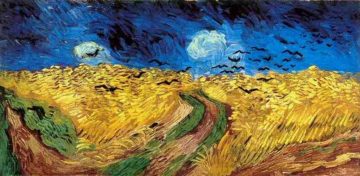

 A few years ago, there was a debate in the pages of a British newspaper along the lines of ‘is Keats better than Bob Dylan?’. Mainly futile, I think, as the unanswered question was surely better at what? It’s not clear that one can usefully compare -and rank -an early 19th century lyric poet with a 20th/21st singer-songwriter, because they aren’t really doing the same thing. Another half submerged question lurking in the discussion, was really: are there standards by which we can assess the excellence or otherwise of a work of art? Is there is a qualitative difference between the novels of Tolstoy and those of Dan Brown – or should we just say, ‘if you like it, it’s as good as anything else’? Here, I think, the discussion often gets confused. So we have a debate about excellence, or worth, judged according to an uncertain standard; and conflated with that another about the canon, about ‘high’ and ‘low’ art, so called. Here you might well be tempted to dismiss it all, and just say ‘if I like it, its enough’, or maybe better: ‘there are no standards beyond ones own taste’. If that is so, we might as well just shut up about what we like or don’t like in art. A person just has the response they happen to have, and different people will have different responses. The rest is, or should be, silence.
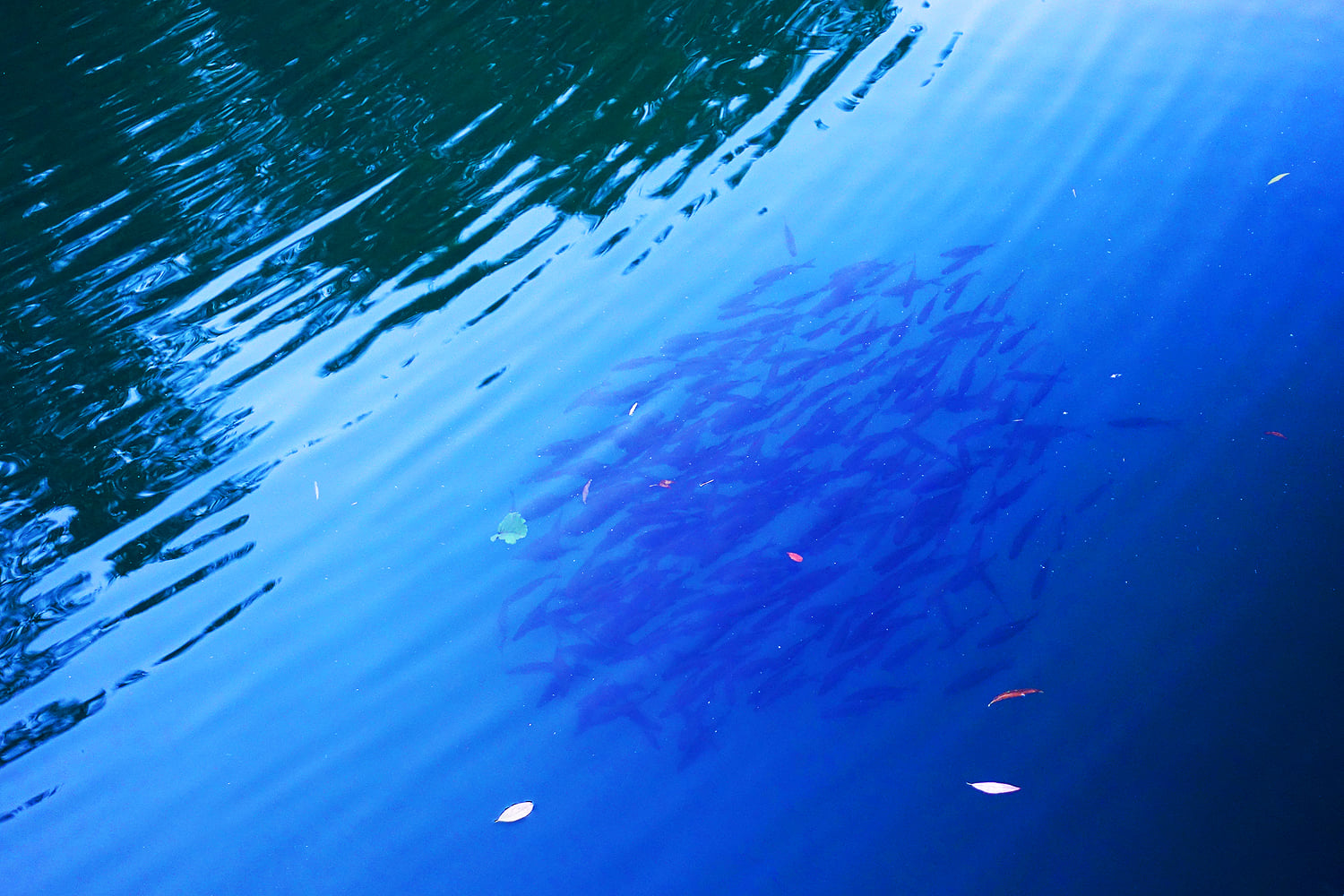
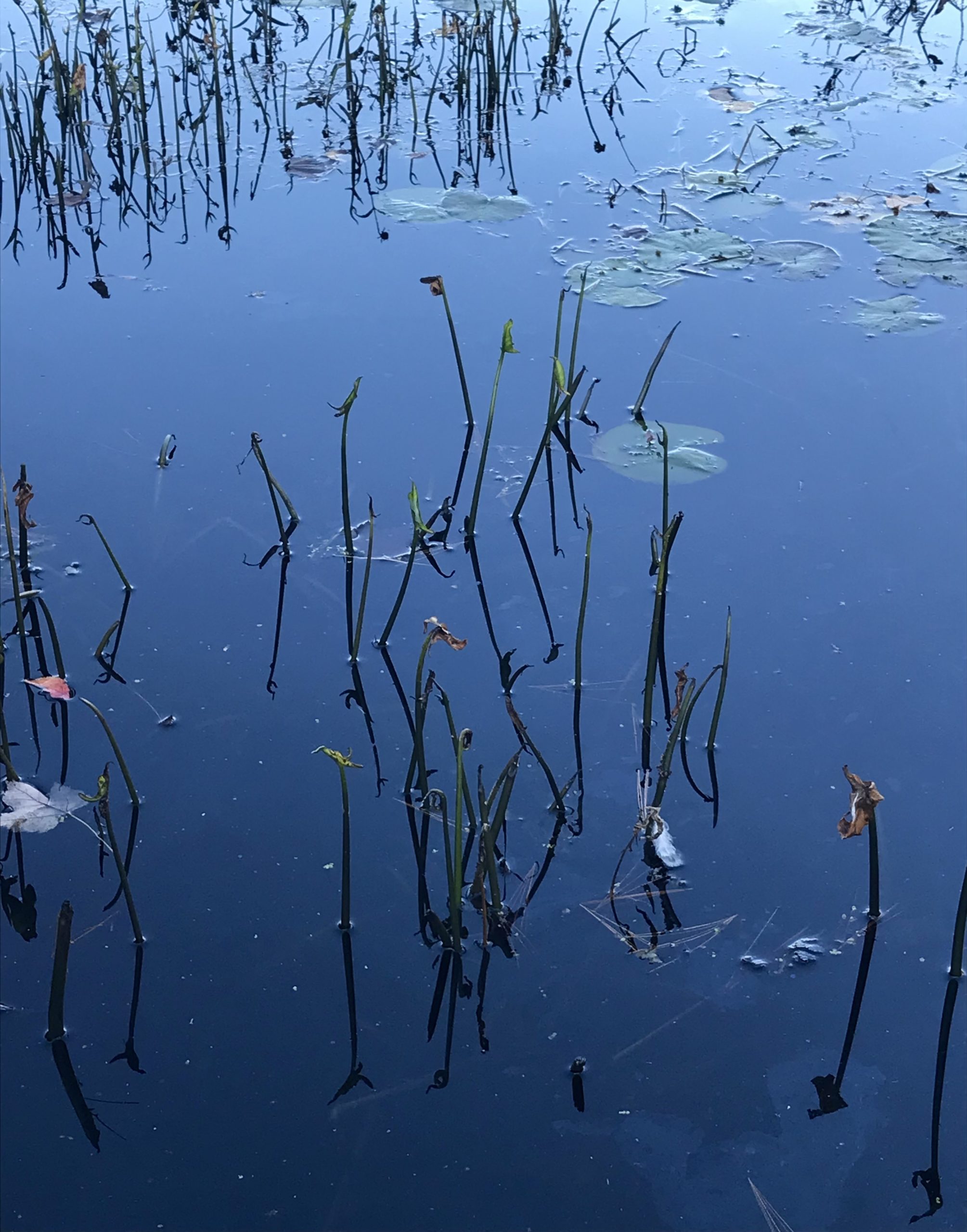 Sughra Raza. Starry Night, October 2021.
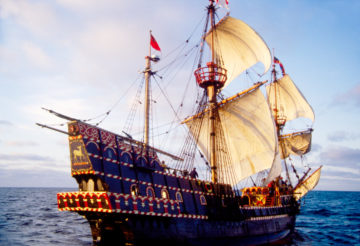 The soon-to-be famous ship is part-way around the world. It will eventually become only the second vessel in recorded history to achieve the complete circumnavigation – after Magellan. But the ship is poised over disaster. Somewhere in the seas off present-day Indonesia, the captain has ordered full sail and then retired to his cabin. The ship hits something – there’s an awful shudder and it stops dead in the water. A reef, probably.
 Everyone knows—or should know—how burdensome a pregnancy is on a woman. It’s especially hard now if you live in Texas where a fetal heartbeat detected at six weeks means by law the woman cannot terminate her pregnancy; she must carry it to term. The burden of having a child, whether planned for or forced, is made worse by the financial responsibility of raising that offspring, for parents and families, through childhood and adolescence, the next eighteen years. Would any man argue that such a load, for poor women in particular, is among the toughest things she’ll ever face?