by Claire Chambers
 Covid-19 has led to various reactions akin to the various phases in the process of grieving. Davide Bertorelli observes in his chapter for The World Before and After Covid that ‘people have experienced differing degrees of anxiety, panic and disruption in every aspect of their lives’. Given what Bertorelli calls our current ‘mild collective psychosis’, it behoves us to learn from the previous global pandemic, the HIV/AIDS crisis.
HIV is a virus that contains single-stranded ribonucleic acid (RNA), as does SARS-CoV-2. Transmission is by blood-borne infection through bodily fluids: blood, semen, and saliva. Typical routes are via sex, needles for intravenous drugs or blood transfusions, or vertical transmission from mother to baby. Like all viruses, HIV (human immunodeficiency virus) gets taken up into the host’s cells, mostly the white CD4 T cells. The virus then uses the host’s equipment to reproduce its own RNA. After killing off the helper T cells, HIV bequeaths the host an immunodeficiency.
HIV infections have three different phases. First is the primary infection stage, known as seroconversion, when the disease is caught. It usually takes seven to 21 days for patients to show the illness in flu symptoms and a rash. Then they get better and the virus lies dormant, possibly for years. The second phase is persistent generalized lymphadenopathy: carriers manifest swollen glands for quite some time but are otherwise healthy. The third phase is acquired immune deficiency syndrome itself, where patients develop an AIDS-defining illness. Opportunistic infections such as aspergillosis, cryptococcosis, candidiasis, toxoplasma, and cryptosporidium have famously been devastating for people with AIDS. Their immune systems cannot cope, whereas healthy people can easily fight off such infections. In addition to the AIDS-defining illness, the other characteristic of AIDS is that sufferers have a low CD4 count. Read more »
 Many of us read with interest Ben Rhodes’ insider account of his time as a speech writer and advisor to Barack Obama during that historic presidency in his book The World as It Is: Inside the Obama White House. There were suggestions of his displeasure at some aspects of US politics in that publication, as for example the racism he thought Obama was subjected to while in office. His new book After the Fall: Being American in the World We’ve Made, goes further and is a clearer articulation of his concern about US and international politics. The conclusions he draws could be viewed as a personal coming of age in his understanding of the impact of American foreign policy on the world, and indeed experiencing and confronting more realistically, the ‘darker’ angels in US domestic politics.
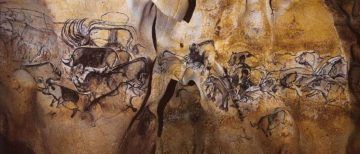 In 1994, Chauvet cave was discovered near the township of Vallon-Pont-d’Arc in southern France. The cave is a
  One day, I used to say to myself and anyone else who’d listen, I’m going to write a book called ‘everything you know about these people is wrong’. I have given up on the idea, and I expect anyway that someone else has already done it. What prompted the repeated thought was the way in which so little of what well known thinkers and artists did or said is actually reflected in public consciousness,

 You may know everything that you need to know about the on-going “Critical Race Theory” debate. Indeed, you might have concluded that actually there is no such
  Where I live in Colorado there are unstable elements of the landscape that sometimes fail. In severe cases, millions of tons of rock, silt, sand, and mud can shift, leading to massive landslides. The signs aren’t always evident because the breakdown in the structural geology often happens quietly underground. The invisible changes can take hundreds or thousands of years, but when a landslide takes place, it is fast and violent. And the new landscape that comes after is unrecognizable.
 A number of issues in the study of nationalism ought to be widely accepted nowadays, most notably perhaps the claim that political nationalism – the idea that a citizen pledges allegiance to a nation-state rather than to a village or a town – is a modern phenomenon. After all, nationalism properly takes hold in a territory when modern tools such as universal schooling are employed to produce a national identity – the inhabitants of a territory must speak the same language and recognise a common culture if a nation is to surface – and this is a product of the last 200 years. A national identity doesn’t come about on its own.