
by Pranab Bardhan
All of the articles in this series can be found here.
 By the time I started regular school my father’s home-schooling had prepared me enough to sail through the various half-yearly and annual examinations relatively easily. Indian exams, certainly then and to a large extent even now, do not test your talent or learning ability, they are mainly a test of your memorizing capacity and dexterity in writing coherent answers in a frantic race against time. I found out that I was reasonably proficient in both, and that it is for the lack of proficiency in these two qualities some of my friends, whom I considered highly imaginative and creative, were not doing so well in school.
My father did not believe in ‘positive feedback’, would not praise me for doing quite well in the various exams in school (and later in university)—he used to tell my mother that overpraise may go to my head– instead, he’d ask me why the gap in my marks (those days marks were in absolute numbers) from the student who was ranked second has not increased compared to last time!
Looking back, I think this lack of positive feedback served one good purpose in my later life. It has helped me in trying not to overestimate myself in any capacity. Even when other people have gushed with praise for me on various occasions in my professional career, while that has been pleasant, it was for myself largely water off a duck’s back (in a symmetric way, facing attacks and criticisms has not usually dislodged my footing). I usually tell myself that I more or less know what I am worth, nothing more, nothing less. I think I am not prone to false modesty, but I remember what Churchill said, in his usual pompous haughty way, about Attlee: when someone praised Attlee as a modest man, Churchill reportedly said, “He has much to be modest about”. I know very well I have much to be modest about. Read more »
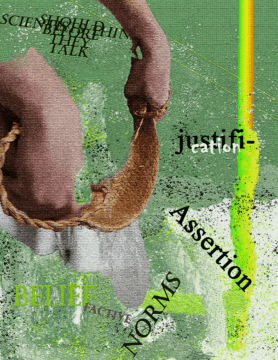
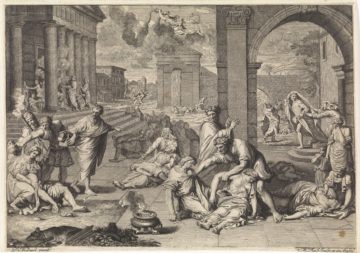
 Everyone agrees that early cancer detection saves lives. Yet, practically everyone is busy studying end-stage cancer.
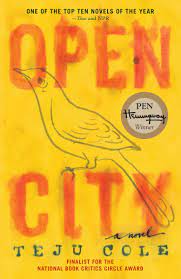 As an aspiring writer of fiction, I like to try and understand the mechanics of what I’m reading. I attempt to ascertain how a writer achieves a certain effect through the manipulation of language. What must happen for us to get “wrapped up” in a story, to lose track of time, to close a book and feel that the world has shifted ever so slightly on its axis? The first step, I think, is for writers to persuade readers to believe in the world of the story. In a first-person narrative, this means that the reader must accept the world of the novel as filtered through the subjective viewpoint of the narrator. But it’s not really the outside world that we are asked to accept, it’s the consciousness of the narrator. To create what I’m calling consciousness—basically, a feeling of being in the world—and to allow the reader to experience it is one of the joys of reading. But how does a writer achieve this mysterious feat?
 Following Hulu’s release of “The United States vs Billie Holiday”, the singer’s musical career has become a topic of discussion. The docu-drama is based on events in her life after she got out of prison in 1948, having served eight months on a set up drug charge. Now she was again the target of a campaign of harassment by federal agents. Narcotics boss Harry Anslinger was obsessed with stopping her from singing that damn song – Abel Meeropol’s haunting ballad “Strange Fruit”, based on his poem about the lynching of Black Americans in the South. Anslinger feared the song would stir up social unrest, and his agents promised to leave Holiday alone if she would agree to stop performing it in public. And, of course, she refused. In this particular poker game, the top cop had tipped his hand, revealing how much power Holiday must have had to be able to disturb his inner peace.
 Wendel White. South Lynn Street School, Seymour, Indiana, 2007.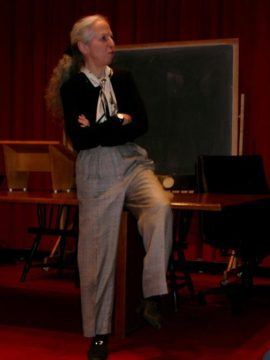



 Billions of people around the world continue to live in great poverty. What is the responsibility of rich countries to address this?
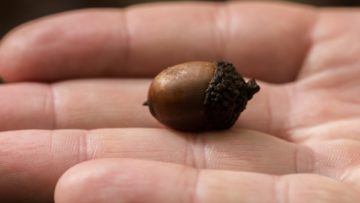 The best thing about a painting is that no two people ever paint the same one. They could be sitting in the same garden, staring at the same tree in the same light, poking the same brush in the same pigments, but in the end none of that matters. The two hypothetical tree-paintings are going to turn out different, because the two hypothetical painters are different also.
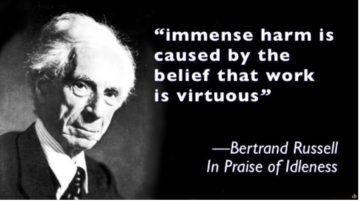 The work ethic is deeply ingrained in much of modern society, both Eastern and Western, and there are many forces making sure that this remains the case. Parents, teachers, coaches, politicians, employers, and many other shapers of souls or makers of opinion constantly repeat the idea that hard work is the key to success–in any particular endeavour, or in life itself. It would be a brave graduation speaker who seriously urged their young listeners to embrace idleness. (I did once hear Ariana Huffington advise Smith College graduates to “sleep their way to the top,” but she essentially meant that they should avoid burn out by ensuring that they get sufficient rest.)
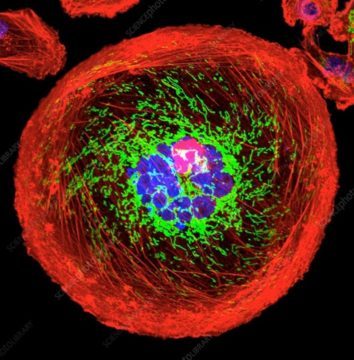 Ninety percent cancers diagnosed at Stage I are cured. Ninety percent diagnosed at Stage IV are not. Early detection saves lives. Unfortunately, more than a third of the patients already have advanced disease at diagnosis. Most die. We can, and must, do better. But why be satisfied with diagnosing Stage I disease that also requires disfiguring and invasive treatments? Why not aim higher and track down the origin of cancer? The First Cell. To do so, cancer must be caught at birth. This remains a challenging problem for researchers.